

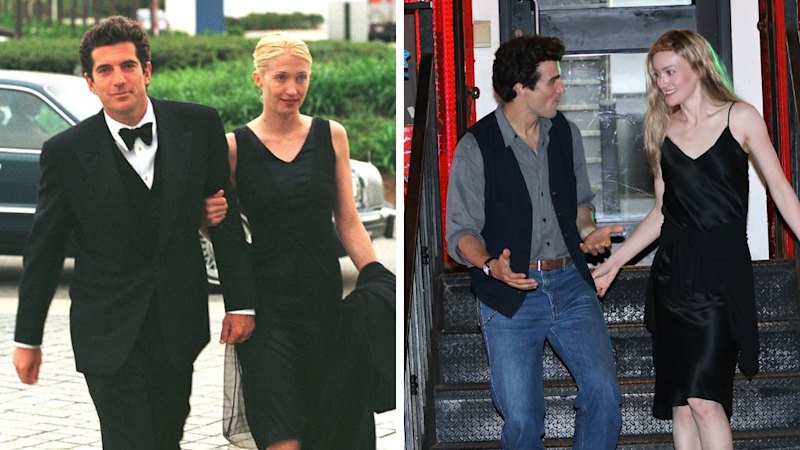
In June, a social media storm erupted over the costume test shots for Ryan Murphy’s upcoming TV series, American Love Story. Criticism targeted everything from the cut of a Prada coat to the style of a Birkin handbag, all featured in test shots of Sarah Pidgeon and Paul Kelly as Carolyn Bessette Kennedy and John F. Kennedy Jr. The series, set to debut next month, portrays the couple often referred to as “American royalty” before their tragic plane crash in 1999.
Despite the test nature of the costumes, the fashion faux pas ignited outrage across platforms, with mainstream media like The Cut, The Guardian, and British Vogue joining the debate. Critics argued that the costumes failed to capture Bessette Kennedy’s iconic style, which was known for its meticulous curation and subtle luxury.
The Craft of Costume Design
Melbourne-based costume designer Maria Pattison was unsurprised by the fervor. “We all live in a visual culture,” she explains. “We use clothing as a shield or expression, but it always reveals something about us.” Pattison, who lectures on screen production design at the University of Melbourne, emphasizes that costume design is about character storytelling rather than fashion alone.
“People often have a limited concept of what we do,” Pattison says. “We’re character people, we’re story people. Everything you see on screen results from a series of complicated decisions.” Her experience includes working on films like Berlin Syndrome and Partisan, where costume choices subtly influenced audience perceptions.
Subtlety in Costume Design
Pattison recalls designing for the character Grigori in Partisan, played by Vincent Cassell. “We avoided obvious choices like dark, menacing colors,” she notes. Instead, they chose linen trousers and floral shirts to create a nuanced portrayal of a sinister yet charming character. “It’s a balancing act; very delicate, very intuitive,” she adds.
International costume designer Katherine Milne echoes this sentiment, describing her work on Peter Farrelly’s upcoming film, Ricky Stanicky. “It came down to a hat for John Cena’s character,” Milne shares. “We chose a slouch hat to add complexity and confusion to the character, avoiding the obvious safari hat choice.”
The Puzzle of Costume Design
Marion Boyce, a legendary Australian costume designer, compares costume projects to solving “giant puzzles.” Known for her work on The Dressmaker and Miss Fisher’s Murder Mysteries, Boyce emphasizes the importance of authenticity in costume design. “Audiences quickly recognize a falsehood,” she says. “It’s jarring when something’s not truthful.”
Boyce’s approach to designing for the character Phryne Fisher involved a deep understanding of the character’s essence. “There was pressure to make her sexier, but that wasn’t her essence,” Boyce explains. Instead, she created a wardrobe that reflected Phryne’s complexity and individuality.
Character Through Clothing
Oscar-winning costume designer Jenny Beavan believes that ordinary people can express their character through clothing. “It’s your story to tell,” Beavan states. Her career spans from Merchant Ivory films to Mad Max: Fury Road, and she emphasizes storytelling through costume.
Beavan’s work on Mrs. Harris Goes to Paris involved creating a wardrobe that captured the character’s traits. “We avoided obvious choices and instead focused on what felt right for the character,” she explains. Her favorite costume, dubbed the “treble floral,” perfectly encapsulated Mrs. Harris’s personality.
Moving Forward in Costume Design
The controversy over Ryan Murphy’s test costumes has prompted the producer to consult fashion experts to ensure authenticity. As the series premiere approaches, the pressure is on to accurately capture the iconic style of Carolyn Bessette Kennedy and John F. Kennedy Jr.
Costume designers continue to play a crucial role in storytelling, using their craft to reveal character nuances and enhance narratives. As audiences become more discerning, the demand for authenticity and attention to detail in costume design will only grow.