



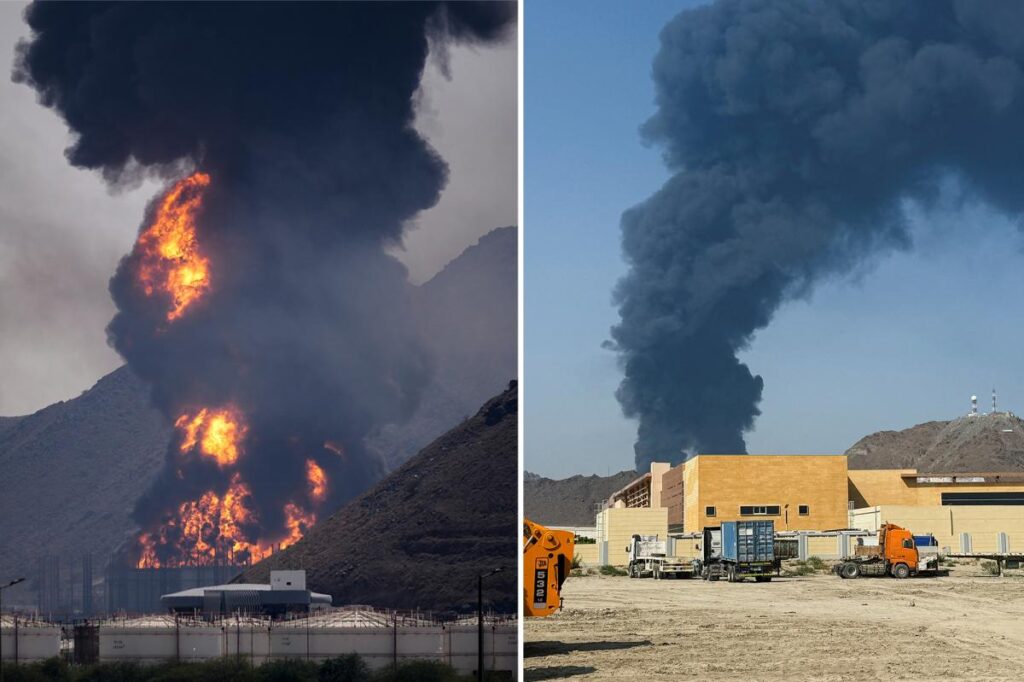
A fire erupted near the Port of Fujairah, a key crude oil export terminal in the United Arab Emirates, following a suspected Iranian drone strike. The incident, which occurred outside the strategic Strait of Hormuz, led to the suspension of some oil-loading operations as smoke billowed from the site. The UAE’s media office confirmed that the missile was intercepted and no injuries were reported.
Fujairah is critical in the global oil market, serving as an outlet for approximately 1 million barrels per day of the UAE’s Murban crude oil, accounting for about 1% of global demand. While it remains unclear if the oil supply was directly impacted, the strike underscores the region’s vulnerability to geopolitical tensions.
Geopolitical Implications and Expert Analysis
The attack has been interpreted as a strategic message from Iran amidst escalating regional hostilities. Helima Croft, an analyst at RBC Capital, remarked,
“The IRGC is sending a message that there is no safe harbor in this rapidly expanding conflict. This strike signals that Tehran will not let Washington control the terms of escalation and impose dominance.”
Although Iran has not officially claimed responsibility, the timing coincides with heightened tensions following U.S. military actions.
Hours before the incident, the United States conducted operations targeting Iran’s Kharg Island oil export terminal. Iran’s Revolutionary Guard subsequently threatened to target UAE cities, accusing the nation of facilitating U.S. strikes. Ebrahim Zolfaghari, spokesperson for Iran’s Armed Forces, warned of potential attacks on regional oil infrastructures linked to American interests.
Regional Escalations and Broader Impact
This development is part of a broader pattern of escalating military actions and retaliations in the region. In Kuwait, two drones struck the Ahmed Al-Jaber air base, injuring three soldiers. The Kuwaiti Defense Ministry reported intercepting additional drones, preventing further damage. Meanwhile, the U.S. Embassy in Baghdad faced another attack, targeting its helipad, amid renewed security alerts warning of potential threats from Iran-aligned groups.
Simultaneously, a powerful explosion in Tehran, attributed to an Israeli airstrike, targeted Iran’s main space research center. The Israel Defense Forces stated that the facility housed strategic laboratories for military satellite development. This strike was part of a larger wave of Israeli military actions in Tehran, aimed at degrading Iran’s aerial defense capabilities.
Historical Context and Future Outlook
The Strait of Hormuz, through which a significant portion of the world’s oil supply is transported, has long been a flashpoint for regional tensions. The latest incidents highlight the fragile balance of power and the potential for further escalation. Historically, similar conflicts have led to disruptions in global oil markets and heightened international diplomatic efforts to stabilize the region.
Looking forward, the international community faces the challenge of navigating these complex geopolitical dynamics. Diplomatic efforts may be necessary to de-escalate tensions and prevent further military confrontations. The situation remains fluid, with potential implications for global energy security and regional stability.
As the situation develops, stakeholders will closely monitor the responses from involved nations and the international community’s role in mediating peace and stability in the region.