



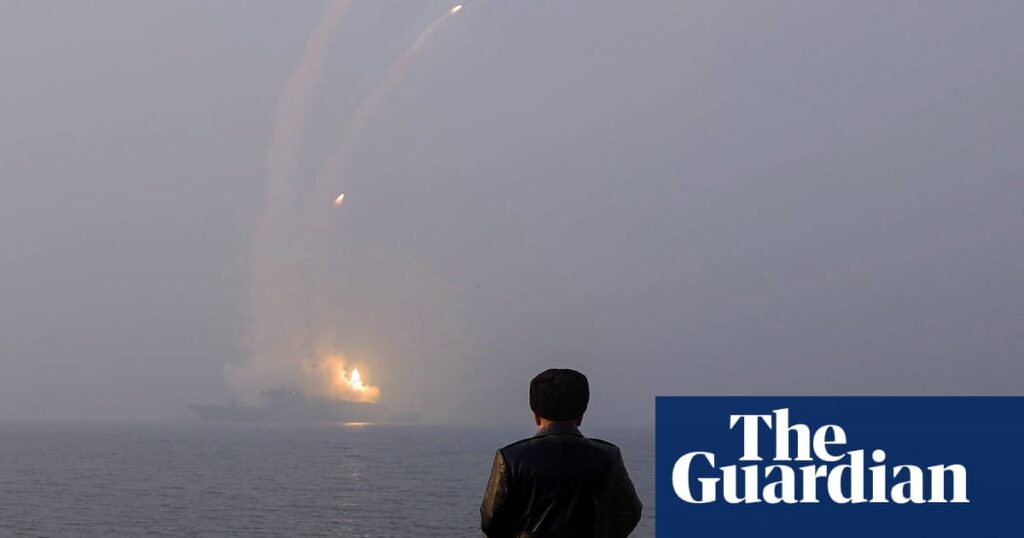
In a significant escalation of tensions, North Korea fired over 10 ballistic missiles into the sea on Saturday, according to South Korea’s military. This aggressive move coincided with joint military exercises conducted by the United States and South Korea, and amidst renewed diplomatic overtures by former US President Donald Trump towards Pyongyang.
Japan’s coast guard reported the detection of what appeared to be a ballistic missile, which fell into the sea outside Japan’s exclusive economic zone, as confirmed by public broadcaster NHK citing military sources. The launches occurred around 1:20 p.m. from an area near Pyongyang, targeting the sea off North Korea’s east coast, as detailed by South Korea’s joint chiefs of staff.
Historical Context of Missile Tests
North Korea has been actively developing its missile capabilities for over two decades, aiming to create a reliable delivery system for its nuclear arsenal, which it is believed to have successfully developed. Despite facing multiple United Nations Security Council sanctions since 2006, Pyongyang remains defiant, continuing its missile tests despite the significant economic and trade restrictions imposed.
The ongoing military drills by Seoul and Washington, described as purely defensive, are intended to ensure readiness against potential threats from North Korea. However, Pyongyang perceives these exercises as provocative, labeling them as “dress rehearsals” for potential aggression by the allies.
Diplomatic Efforts and Challenges
Amidst these military tensions, diplomatic efforts have been in flux. On Thursday, South Korea’s Prime Minister met with Donald Trump in Washington to discuss the possibility of reopening dialogue with North Korea, which has been stalled since 2019. Kim Min-seok, a spokesperson for the South Korean government, indicated that Trump viewed a meeting with North Korean leader Kim Jong-un as beneficial.
“Meeting (Kim Jong-un) would be good. It’s really good to meet. But it could happen when we go to China this time, or it might not, or it could even be later, couldn’t it?” – Donald Trump
Despite numerous summits, sanctions, and diplomatic efforts led by the US to dismantle North Korea’s nuclear program, tangible progress remains elusive. The Trump administration has been keen on reviving high-level talks, with discussions of a potential summit with Kim Jong-un during Trump’s upcoming visit to Beijing in April.
Prospects for Future Dialogue
The potential for dialogue remains uncertain. While Trump has expressed openness to meeting with Kim Jong-un, the North Korean leader has largely ignored these overtures, recently suggesting that relations could improve if Washington acknowledges Pyongyang’s nuclear status.
Furthermore, North Korea has recently dismissed South Korea’s peace efforts as a “clumsy, deceptive farce,” casting doubt on the possibility of a diplomatic thaw. Despite these setbacks, Kim Min-seok emphasized the importance of dialogue, stating that any form of contact would be significant.
“But even if not, what matters in essence is that dialogue or contact takes place, and (Trump) appears firm on that point.” – Kim Min-seok
The situation remains fluid, with geopolitical implications for the region and beyond. The international community watches closely as these developments unfold, aware of the delicate balance required to maintain peace and stability on the Korean Peninsula.
As the world anticipates the next steps, the focus remains on balancing military readiness with diplomatic engagement, hoping for a resolution that ensures long-term security and cooperation.