

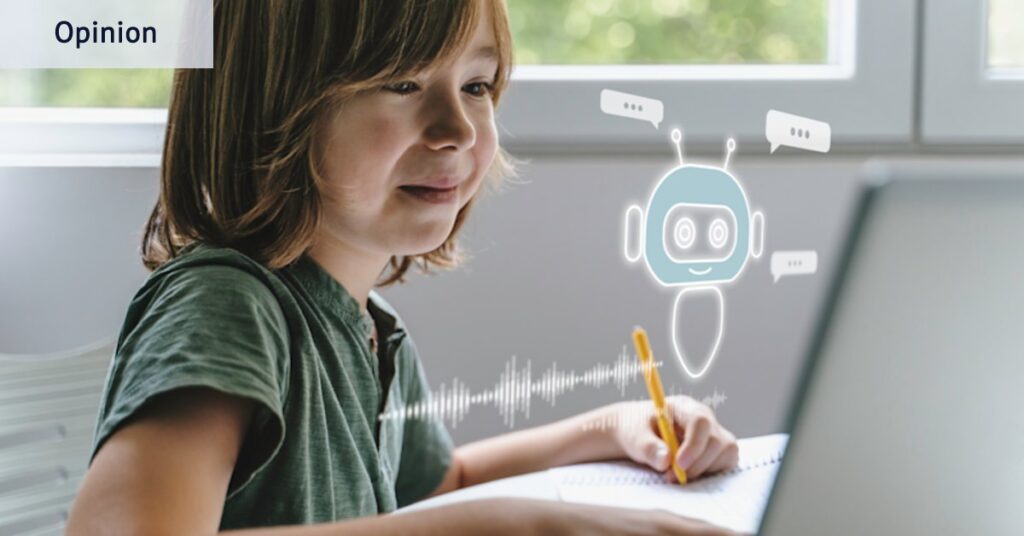
In a rapidly evolving educational landscape, the integration of artificial intelligence (AI) into learning environments is stirring debate. A scenario playing out in Australian schools highlights the challenges and opportunities AI presents. A Year 10 student spends hours researching her history essay, while her classmate uses an AI bot to generate a superior paper in minutes. The latter receives a higher grade, raising questions about fairness and the role of AI in education.
This development follows the recent SMH Schools Summit, where Paul Martin, CEO of the New South Wales Education Standards Authority (NESA), addressed the issue. Despite the widespread use of AI tools like ChatGPT since 2022, Martin urged caution, suggesting a period of observation before implementing policy changes. However, critics argue that this approach is already outdated.
The Rise of AI in Education
Since its introduction, AI has become a ubiquitous tool in classrooms, often used by students to complete assignments with minimal effort. Attempts to restrict access to AI websites in schools have proven ineffective, as tech-savvy students easily bypass these measures using personal devices.
According to Ed Cavanough, chief executive of the McKell Institute, the current educational system inadvertently encourages students to exploit AI for better grades. “If an assessment can feasibly be gamed by AI, you can assume it’s being gamed,” he notes, emphasizing that the system’s focus on grades incentivizes such behavior.
AI: A Tool for Learning, Not Cheating
Experts suggest that instead of viewing AI as a threat, educators should embrace it as a learning tool. By integrating AI into everyday learning while restricting its use during assessments, students can benefit from its capabilities without compromising academic integrity.
Cavanough proposes a straightforward solution: “Welcome AI into all aspects of learning; restrict it from all forms of assessment.” This approach encourages students to use AI for exploring topics and self-assessment, while ensuring that evaluations reflect their true understanding and skills.
Reimagining Assessments in the AI Era
To maintain the integrity of assessments, educational institutions must adapt. Traditional methods such as in-class essays and oral exams with unpredictable prompts can effectively prevent AI-assisted cheating. These techniques, combined with technological safeguards like internet-restricted devices during exams, can ensure fair evaluations.
Implementing these changes requires minimal innovation, relying on established educational practices. “We must accept that take-home assessments and unsupervised laptop work now have a value of zero,” Cavanough asserts, advocating for a return to proven methods.
Empowering Educators in the AI Age
Empowering teachers to experiment with AI in the classroom is crucial. By trusting educators to integrate AI thoughtfully, schools can foster an environment where students learn to use technology responsibly. Mistakes may occur, but they are preferable to the consequences of ignoring AI’s impact on education.
The McKell Institute emphasizes that addressing AI in education requires little political risk. “Who would be against making education AI cheat-proof?” Cavanough asks, highlighting the lack of opposition to such reforms.
Moving Forward: A Call to Action
The urgency of adapting to AI in education cannot be overstated. As society grapples with AI’s broader implications, the educational sector must act swiftly to ensure that students are equipped for a future where AI plays a significant role.
By adopting a proactive stance, educational leaders can prevent a generation of students from learning to cheat or accepting subpar outcomes. As Cavanough concludes, “Every semester wasted is another cohort of students learning to cheat or learning to lose.”
The call to action is clear: embrace AI as a learning tool, safeguard assessments, and empower educators to navigate this new landscape. With decisive action, schools can harness AI’s potential while preserving the integrity of education.