




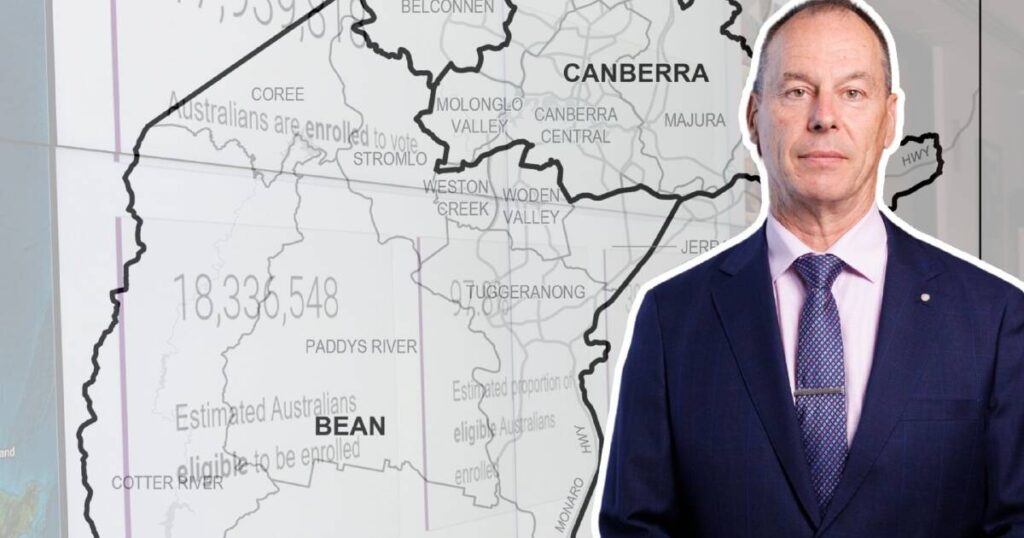
In a significant reshuffle of electoral boundaries, one in ten voters in the Australian Capital Territory (ACT) will find themselves in a different federal electorate. The Australian Electoral Commission (AEC) has proposed new boundaries that would affect 31,778 registered electors across Canberra, Bean, and Fenner. This move is part of a legal requirement to ensure electorates meet projected enrolment quotas.
AEC Commissioner Jeffrey Pope emphasized the challenges of redrawing boundaries in a jurisdiction entitled to only three electorates. “In a jurisdiction entitled to just three electorates, options for how to shape them can be limited,” he stated. The proposed changes are set to take effect at the next federal election, redistributing several suburbs between the electorates.
Proposed Changes and Their Implications
Under the new proposal, suburbs such as Curtin, Hughes, Garran, and Lyons will shift from Canberra to Bean, while Macquarie, Hawker, and Weetangera will move from Canberra to Fenner. Additionally, Coombs and the rest of the Molonglo Valley will transition from Bean to Canberra, and Crace, Kenny, and Mitchell will move from Fenner to Canberra. Norfolk Island and part of Duffy will also shift from Bean to Canberra.
Commissioner Pope, who chairs the redistribution committee, noted that the proposal considers existing boundaries while making relatively small adjustments to align communities of interest. “All proposed changes were driven by the need to balance not just the current enrolment numbers but also projected enrolment in each electorate,” he explained. This approach aims to account for projected growth corridors and ensure electorates remain balanced moving forward.
Community and Political Reactions
The AEC’s proposal has sparked a variety of responses from political parties and community members. Eleven submissions were considered, including one from the Liberal Party’s ACT division, which suggested moving all or part of Phillip, including the Woden town centre, from Bean to Canberra. However, the committee decided against splitting the Woden Valley district along Hindmarsh Drive, opting instead to unite the entire Woden Valley within Bean.
ACT Labor Secretary Caitlin Cook expressed the party’s intention to make a submission to the AEC in the coming weeks. “No matter the outcome, we remain focused on delivering better health services, cost of living relief, and more housing for Canberra,” Cook stated. She emphasized that the Labor team would continue working for all constituents, regardless of the electorate changes.
Long-term Sustainability and Future Growth
The commission has prioritized long-term sustainability and minimizing future disruptions by distributing areas of high enrolment growth across electorates. Care has been taken to ensure that two existing and future town centers are located in each electorate and, where possible, to keep suburbs and districts wholly contained within electorates.
Despite receiving public suggestions to rename electorates, the committee did not propose any name changes. The ACT’s voter enrolment has grown significantly, with 321,879 enrolled voters at the start of the redistribution process in August 2025, up from 290,851 in July 2018—a 10.67 percent increase. The growth rates are uneven, with the Molonglo Valley experiencing a staggering 54.43 percent increase, while Tuggeranong saw a modest 1.61 percent rise.
By the Numbers: Canberra Central is projected to grow the most, adding 6,090 electors by 2030, followed by 5,637 in the Molonglo Valley and 5,009 in Gungahlin.
The AEC will publish its final determination on October 8, 2026. This decision will cement the new boundaries and set the stage for the next federal election, impacting the political landscape of the ACT for years to come.