

Only Cubans with financial means, such as those earning private salaries, can afford to shop for produce at private markets, according to locals. “They still call themselves a communist government, but it’s sort of a hybrid economy that relies on foreign currency from tourism,” explains James Trapani, a history lecturer at Western Sydney University with a focus on US foreign policy in Latin America.
Inflation has had a “devastating impact,” says Erin O’Brien, an American married to a Cuban who spends part of her time in Havana. “For Cubans with no access to foreign currency, prices for many things have almost tripled since I first started traveling to Cuba in early 2023.” A typical monthly salary in the public sector ranges between 6,000 and 8,000 pesos, according to the Havana Times, an independent news site. A carton of 30 eggs can cost 2,500 pesos. In government shops in Trinidad, Wilson notes, “This month all that has been made available in my barrio [neighborhood] is raw sugar and legumes.”
Even those better off are feeling the pinch: Supermarket 23, a popular online service used by friends and relatives overseas to send supplies to the island, has paused deliveries due to the fuel crisis. An annual cigar festival, celebrating the island’s famously high-quality tobacco, was postponed in February. Without gasoline, workers cannot commute, catch Cuba’s once-ubiquitous buses, operate water pumps, irrigate crops, or run backup generators. Factories are mothballed, radio stations have been off the air.
“So many houses don’t have water at all,” Adria Ellis tells us from Havana, where she is documenting the situation. “Tonight, I watched three different people walking down the street with buckets of water that they’ll take up to their apartments.”
The Historical Context of US-Cuba Relations
The strained relations between the US and Cuba have deep historical roots. Barely 150 kilometers from Miami, the island was once America’s tropical playground, albeit with a rocky past. Brutally colonized by Spain after an expedition led by Christopher Columbus in 1492, many of Cuba’s indigenous people were slaughtered or died of imported diseases.
Cuba moved into the United States’ orbit in the 1800s, as a trading partner and potential acquisition. Thomas Jefferson was an early advocate of absorbing Cuba into the US, calling it a potentially “interesting addition.” The US tried to buy the island from the Spanish, a policy that reverberates today in Trump’s attempts to purchase Greenland from Denmark. Its overtures were rebuffed, and the resulting friction, coupled with Cubans’ frustrated desire for independence, eventually helped trigger the Spanish-American War of 1898, which ended with Spain’s capitulation.
Cuba became independent in 1902 but was run as a quasi-colony by America. US companies were set up to sell Cuban properties to American buyers; the main cash crop, sugar cane, was dominated by US concerns such as the United Fruit Company and the Hershey empire. In 1903, the US struck a deal to occupy land on Guantanamo Bay, which is still leased to the US and is now notorious as a detention center for political prisoners.
US Policy and Its Impact on Cuba
In 1960, Fidel Castro nationalized massive US sugar conglomerates, leading to the US breaking off diplomatic relations and imposing trade embargoes that remain to this day. Two famous incidents cemented mutual ill-will: the Bay of Pigs affair in 1961 and the Cuban Missile Crisis of 1962. The US severely limited the ability of its citizens to travel to Cuba or do business there, a policy that was only partially relaxed in 2016 under Barack Obama.
However, the Trump administration reintroduced severe travel restrictions in 2019, including a ban on US citizens visiting Cuba by cruise ship. Since 2021, foreign visitors to Cuba who also want to visit the US have faced increased bureaucratic hurdles. Today, US citizens are prohibited from traveling to Cuba for tourism but can visit if they meet one of 12 authorized categories. They are also warned to bring cash, as US credit and debit cards do not work in Cuba.
“Tourism numbers have not recovered to pre-COVID levels, sadly, primarily because of the ineligibility for an ESTA visa waiver to the US,” says Wilson, who had worked in marketing in Australia before visiting Cuba in 2002 and marrying a local in 2012. “Many businesses have closed. The economic crisis, reports of food shortages, Hurricane Melissa, and now the fuel crisis are discouraging visitors.”
The Future of US-Cuba Relations
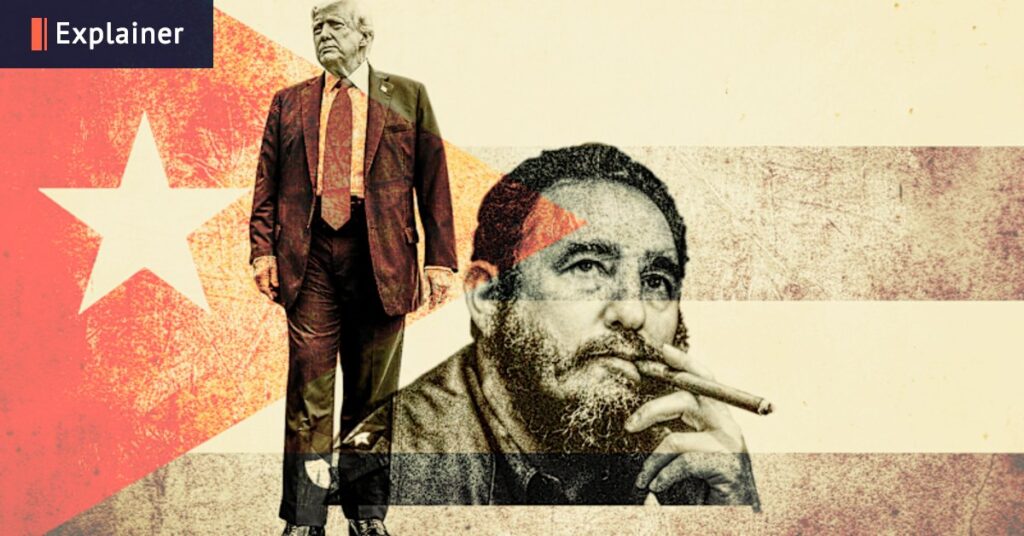
Is Trump planning to overthrow the Cuban regime? Perhaps if this had been decades ago, when Cuba was ruled by Fidel Castro, a Maduro-style regime change would have been on the cards. “Cuba has been a general annoyance to the United States,” notes James Trapani, “because Cuba historically has funded anti-American activity, not just in Latin America, but in other parts of the world.”
Cuba’s president, Miguel Diaz-Canel, has even less name recognition than Raul Castro and is not widely popular, his tenure marred by economic and social challenges. The recent decline in Cuba’s health system is particularly telling, says Pertierra. “Even when many other elements of life in Cuba were difficult, the public health system has been a source of pride for believers and probably the most important flagship program of the revolution.”
“It feels like unfinished business from the Cold War; that is, it has more historical significance than direct geopolitical significance right now,” says Trapani.
Will Cuba’s crisis stir support from US rivals China and Russia? On February 25, reports emerged of a tanker allegedly carrying Russian fuel en route to Cuba using “dark fleet” tactics. If the Russian oil comes in, Cuba can probably continue surviving as they have for the last 65 years. If not, the situation may become untenable.
For its part, Cuba has remained relatively staunch. “[Cuba] is aggressed upon by the United States for 66 years and it does not threaten,” Diaz-Canel responded to Trump on social media. “It prepares, ready to defend the Homeland to the last drop of blood.”
Some endure by working the system as they can, the petty corruption known as “sociolismo.” “The corruption that most people would experience is really more about friends helping friends in desperate circumstances,” says Pertierra. “These kinds of favors, networks of reciprocal favors, are the fabric of everyday life.”
“People are hurting and frustrated. I don’t want to downplay that. But Cubans don’t panic,” says Erin O’Brien. “Cubans survived COVID when there were literally no tourists coming in. I have no doubt Cuba would find a way to endure if this goes on.”