


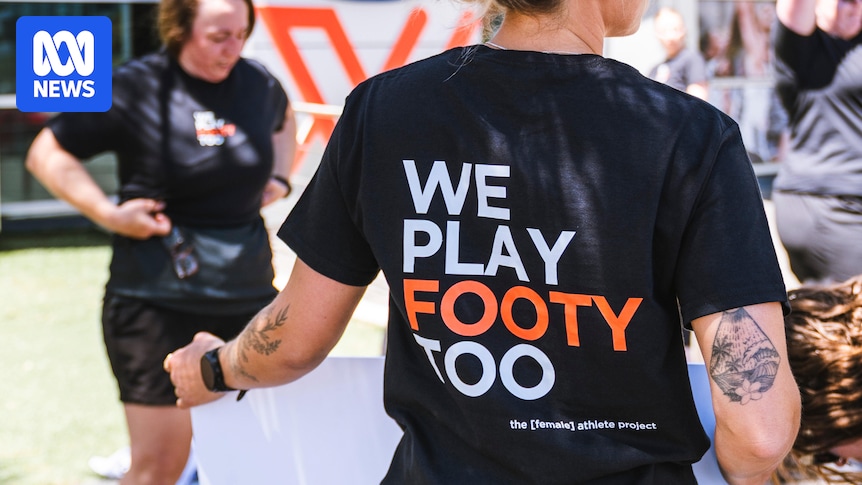
After a public saga lasting more than a year, the women’s football team formerly known as the Kyneton Women’s Football Club has been green-lit to play in the Central Victorian Football League (CVFL) under a new name, the Wedge-Tailed Eagles Football Club. This decision marks a significant victory for the group of more than 30 Victorian women who defected from Kyneton Football Netball Club in late 2024, citing a “horrible, volatile environment” and finding themselves without a league for the 2025 season.
The announcement comes as women and girls are participating in football in record numbers. However, this growth is shadowed by numerous stories of players being turned away from the sport due to negative experiences at local clubs. According to Wedge-Tailed Eagles club president Natalie Korinfsky, the Kyneton story resonated with many across the country, revealing a widespread issue of exclusion and inequity in community sports.
Widespread Challenges in Women’s Sports
A recent report from Federation University and Victoria University highlights that while participation rates for women and girls in traditionally male-dominated sports are on the rise, retention rates lag behind those of men and boys. Rochelle Eime, a professor of sport science and author of the report, notes that the historical male-centric setup of many clubs contributes to this disparity.
“These clubs were traditionally male-only clubs. They were set up by males for males and there’s some of the sort of older generations who don’t maybe accept that they’re a space and a place and environment for women and girls [now],” Eime told ABC Sport.
The Change Our Game State of Play survey further underscores these challenges, with 28 percent of women in community sports considering leaving their clubs due to inequitable treatment. More than half of the 670 Victorians surveyed reported experiencing gendered discrimination, including sexist language and jokes.
Resource Allocation and Cultural Barriers
Resource allocation remains a common problem, with women often receiving less access to facilities compared to their male counterparts. A local player from Melbourne, who wished to remain anonymous, shared her experiences of unequal training conditions, where men often dominated the training fields.
“And the men just run into our side [anyway], not really giving a f***,” she said.
These disparities extend beyond physical resources to include lack of support from leagues and clubs. Sophie Ulcoq, a player at North Brunswick Football Club, expressed frustration over the lack of responsiveness to complaints about scheduling and resource allocation.
Building a Better Future for Women’s Sports
Natalie Korinfsky emphasizes that the biggest barrier to women’s sports is not participation but governance. She argues for the need to evolve policies, structures, and cultural assumptions to match the growing participation rates.
“When we turn up to play sport in our communities, we deserve to know the environment is safe, respectful and equitable. That is not a big demand. It is a basic right,” Korinfsky stated.
The Kyneton women’s story, she adds, is a microcosm of a larger issue about whether women and gender-diverse people have the same opportunities to shape their sporting futures as their male counterparts. The journey of the Wedge-Tailed Eagles Football Club serves as a beacon for change, advocating for a community sport environment that truly includes everyone.
As the Wedge-Tailed Eagles prepare for their debut in the CVFL, their story continues to inspire conversations about equity and inclusivity in sports, challenging clubs and leagues to rethink their approach and ensure that community sport is genuinely for everyone.