




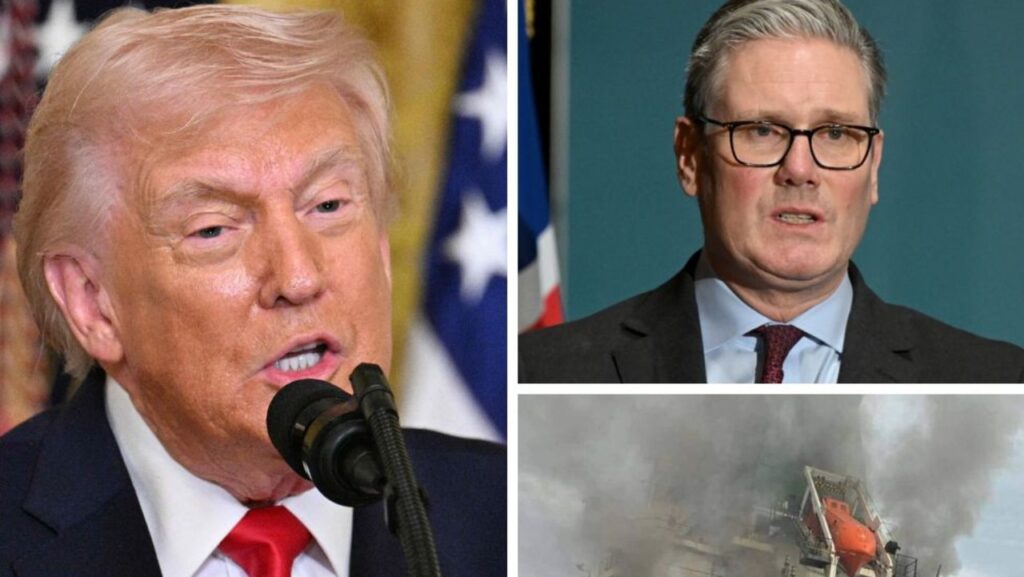
The geopolitical landscape in the Middle East has reached a fever pitch as Iran and Israel exchange threats amidst ongoing military confrontations. On Sunday, Iranian officials declared their intent to target Israeli Prime Minister Benjamin Netanyahu, following Israel’s missile strikes on western Iran. This development has intensified fears of a prolonged conflict that could disrupt global oil supplies.
Iran’s Islamic Revolutionary Guard Corps issued a stark warning through state-run media, vowing to “pursue and kill” Netanyahu, whom they labeled a “child-killing criminal.” The Associated Press reported on the statement, which underscores the heightened tensions between the two nations. In response, Netanyahu appeared to dismiss the threat in a video posted on social media, humorously suggesting he was “dead … for coffee” while seated in a café.
Impact on Global Energy Markets
The conflict, now entering its third week, has had significant repercussions beyond the immediate region. The possibility of Iran blocking the Strait of Hormuz, a vital artery for global oil shipments, has caused a spike in energy prices. The strait, which sees the passage of about 20% of the world’s petroleum, is crucial for maintaining stable oil markets.
The Trump administration has urged international cooperation to ensure the strait remains open. US Transportation Secretary Sean Duffy, in a recent interview, emphasized the need for coordinated efforts to escort oil tankers through the waterway. “Could be a day, could be a week,” Duffy remarked, indicating the urgency of establishing secure passage and insurance for shipping operations.
Diplomatic Standoff and Regional Implications
Amidst the military exchanges, diplomatic solutions appear elusive. Iranian Foreign Minister Abbas Araghchi has dismissed the prospect of negotiations with the United States, countering President Donald Trump’s assertion that Tehran seeks a deal to end hostilities. This diplomatic impasse further complicates efforts to de-escalate the situation.
The ongoing conflict has also drawn in neighboring states, with Iran launching missile and drone attacks in retaliation against perceived threats. This has raised alarms about a broader regional war that could engulf multiple countries, each with its own strategic interests and alliances.
Historical Context and Future Outlook
The current tensions echo past conflicts in the region, where control of strategic waterways has been a recurring flashpoint. Historical parallels can be drawn to the Iran-Iraq War in the 1980s, during which the Strait of Hormuz was similarly threatened. Such blockages have historically led to international military interventions to secure oil flow, highlighting the global stakes involved.
Experts warn that a protracted conflict could have severe economic repercussions. “A sustained disruption in the Strait of Hormuz could push oil prices to unprecedented levels,” noted energy analyst Dr. Sarah Thompson. “This would not only affect energy markets but could also trigger inflationary pressures worldwide.”
As the situation unfolds, the international community faces a delicate balancing act. Diplomatic efforts must be intensified to prevent further escalation, while contingency plans are needed to safeguard global energy supplies. The coming days will be critical in determining whether a diplomatic breakthrough can be achieved or if the world must brace for a prolonged period of instability.
The world watches closely as the US, Israel, and Iran navigate this complex and dangerous standoff, with the potential consequences resonating far beyond the Middle East.