




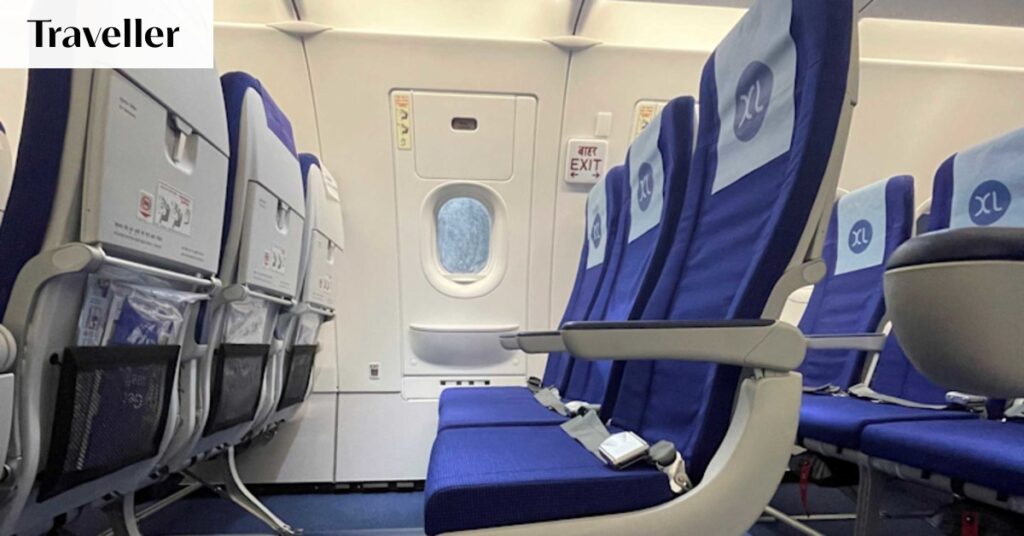
Economy seat padding is being traded for space, and here’s why you should care. On a recent flight from Delhi to Udaipur aboard an Airbus A320neo operated by Indian budget carrier IndiGo, passengers experienced firsthand the implications of this shift. Despite a tight seat pitch of 73 centimeters, the legroom was surprisingly decent for a flight just over an hour long.
This development follows a growing trend across the airline industry where economy class cabins are increasingly fitted with slimline seats. These seats, while thinner, offer more legroom due to their reduced thickness, allowing airlines to maintain or even improve passenger comfort while maximizing space.
The Rise of Slimline Seats
Seats in economy class cabins are getting thinner, and not just among low-cost carriers. Legacy airlines including Qantas and American Airlines have also introduced slimline seats. The move represents a strategic decision for airlines, driven by the benefits these seats offer. Made from composite frames, slimline seats have fewer movable parts, making them more durable and less prone to mechanical issues.
According to sources in the airline industry, the lightest slimline seats, such as Recaro’s R1, weigh just 8 kilograms. This weight reduction translates into significant fuel savings for airlines. A conventional seat with more padding and a seatback entertainment screen can weigh twice as much. Furthermore, the reduced seat thickness allows airlines to add extra rows of seats without compromising passenger legroom.
Comfort vs. Efficiency
Many travelers find that slimline seats, with their improved lumbar shaping and ergonomic design, offer greater comfort. However, the firmer padding can become uncomfortable on longer flights. For most airlines, the priority when selecting seats is weight, durability, and revenue efficiency rather than passenger comfort.
Not all slimline seats are created equal. Top-of-the-line models from manufacturers like Recaro and Safran offer a balance of comfort and efficiency, making them suitable for long-haul flights. Japan Airlines, for instance, uses the Recaro CL3810 seat on its A350-1000s, which is praised for its comfort despite its slim design.
Airlines Leading the Charge
Japan Airlines has been widely applauded for its long-haul economy class experience, using the Recaro CL3810 seat with an 86-centimeter seat pitch. This configuration is part of the reason JAL has won the SKYTRAX “Best Economy Class Airline Seats” award for six consecutive years.
Meanwhile, Qatar Airways and Malaysia Airlines have also adopted the CL3810 for their long-haul flights. Qantas, for its ultra long-haul Project Sunrise flights, has selected the same model, featuring a six-way adjustable headrest and an amenity flap for personal smart devices.
From mid-2026, ANA plans to introduce newly designed Recaro seats on its Boeing 787-9 long-haul aircraft. These R3 seats will offer the same seat pitch as JAL’s and include Bluetooth connectivity, enhancing the in-flight entertainment experience.
The Future of Economy Class Comfort
Ranked fourth best in the world for its economy class seating, Singapore Airlines uses the Recaro CL3710 and Safran Z300 recliner seats, offering a seat pitch of around 81 centimeters and a recline of 15 centimeters, among the best in economy class.
As airlines continue their pursuit of efficiency, the best carriers will be those that prioritize passenger comfort as a competitive advantage. Even a few extra centimeters, used wisely, can make a significant difference in passenger experience. The real test isn’t what the tape measure says, but how passengers feel when they stand up at the other end of their journey.
In conclusion, while the numbers tell part of the story, the balance between seat weight, durability, and passenger comfort will continue to define the future of air travel. As this trend evolves, travelers can expect to see more innovations aimed at enhancing the economy class experience.