




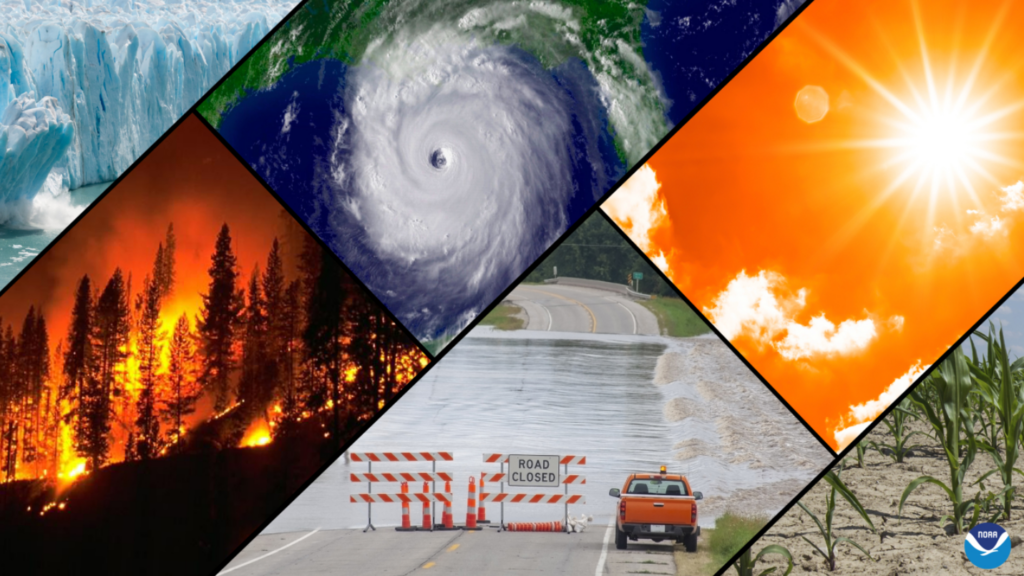
For the first time, scientists have confirmed with statistical confidence that global warming is accelerating, rather than continuing at a steady pace. According to a groundbreaking study published in Geophysical Research Letters, the past decade has been the fastest-warming on record. At the current pace, Earth is projected to exceed the 1.5 degrees Celsius warming limit set by the Paris Climate Accord before 2030.
This revelation, while not entirely unexpected, carries a level of certainty that distinguishes it from previous research. The study’s authors, including Grant Foster, a retired statistician formerly at Tempo Analytics, assert that the data now demonstrates a strong and statistically significant acceleration of global warming since around 2015.
Beneath the Noise, a Speeding Heating
Historically, analyses of global warming have indicated a steady rise in average global temperatures of about 0.2 degrees Celsius per decade since the 1970s. Recent debates among scientists have focused on whether this pace has accelerated, driven in part by exceptionally high average global temperatures in recent years. Stefan Rahmstorf, a climate scientist at the Potsdam Institute for Climate Impact Research and co-author of the study, emphasized the significance of this acceleration.
Previous research suggested possible acceleration, but natural fluctuations in global temperature due to phenomena like El Niño and volcanic activity complicated efforts to confirm this with statistical significance. These natural variations have previously led to misconceptions, such as the post-1998 El Niño speculation that overall warming had slowed or stopped. By accounting for these variations, the study authors demonstrated that the perceived slowdown was insignificant.
The researchers employed a method that filtered out known natural influences in observational data, reducing noise and making the underlying long-term warming signal more visible. This analysis revealed a near-doubling in the rate of warming, reaching up to approximately 0.35 degrees per decade beginning around 2015. This finding held true across all five global temperature datasets considered, including those from NASA and NOAA.
“We filter out known natural influences in the observational data, so that the ‘noise’ is reduced, making the underlying long-term warming signal more clearly visible,” Foster explained.
Implications and Future Projections
The study’s findings align with warming scenarios previously outlined in the sixth Assessment Report by the Intergovernmental Panel on Climate Change. Although climate models possess a relatively broad uncertainty range, an acceleration of this magnitude was somewhat unexpected. If sustained, this acceleration would push Earth past the Paris Agreement limit of 1.5 degrees Celsius of warming over preindustrial levels before 2030, several years earlier than previous estimates.
Rahmstorf noted that while the past decade could be an outlier, the current rate of warming doesn’t need to continue long for the threshold to be breached. “2030 is in four years’ time. The current rate doesn’t need to continue long, and then we’re above 1.5,” he stated.
It’s in Our Hands
The cause of this acceleration remains unsettled, but the leading theory attributes it largely to a reduction in atmospheric air pollution. These aerosols, primarily from fossil-fuel-burning activities, absorb and reflect sunlight, promoting cloud cover and brightness, thus masking some warming. Successful efforts to improve air quality have reduced their abundance since the early 2000s, a factor that climate models may not fully account for.
If aerosol reduction is indeed the key driver, warming could slow if reductions decrease—though given aerosols’ negative health impacts, this is not recommended. Regardless of the cause, the acceleration underscores the insufficiency of current efforts to halt global warming.
“We are not doing enough in terms of climate policy. We see this terrible rollback in the United States and, to a lesser extent, in Germany,” Rahmstorf said. “How quickly the Earth continues to warm ultimately depends on how rapidly we reduce global CO₂ emissions from fossil fuels to zero.”
Continued warming will exacerbate threats to global health and livelihoods, including rising sea levels, heat stress, disease, and natural disasters. The researchers emphasize that halting this trend is within human control.
This study, published in Geophysical Research Letters, highlights the urgent need for enhanced climate action. As the scientific community continues to monitor these developments, the onus remains on global leaders to implement effective policies to mitigate this accelerating threat.