


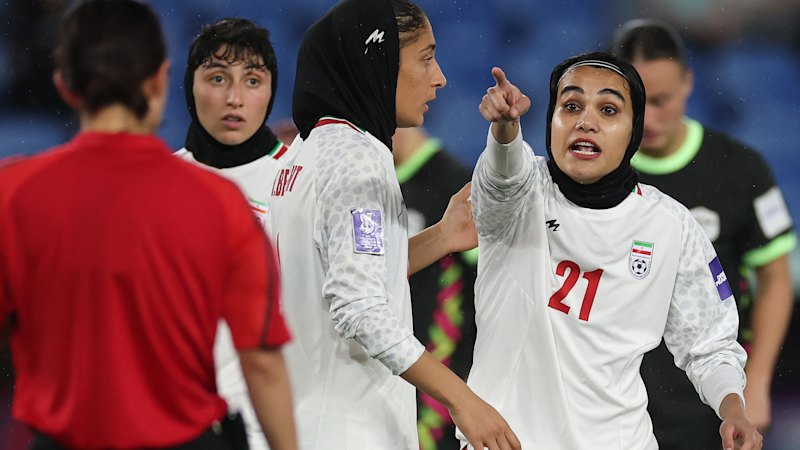
“She was like, ‘I have everything in Iran’,” a source revealed. “I know there’s a war and everything, but I don’t know what’s the right thing to do. I don’t know what they’re going to do to us when we get there’.” This sentiment captures the dilemma faced by many members of Iran’s women’s national football team as they grappled with the decision to seek asylum in Australia or return to their homeland.
Among those who chose asylum are captain Zahra Ghanbari, Fatemeh Pasandideh, Zahra Sarbali, Atefeh Ramezanizadeh, and Mona Hamoudi. For Khosravi, however, the choice meant leaving behind her mother, friends, and a promising football career in Iran. The decision was not easy: stay in Australia to escape potential persecution by an Islamic regime angered by the team’s silent anthem protest during the Asian Cup, or return to loved ones in Iran.
On Tuesday night, as the team prepared to depart from Sydney airport to Kuala Lumpur, Khosravi appeared torn. Home Affairs Minister Tony Burke noted that one player requested to consult with family in Iran before deciding. Ultimately, Khosravi chose to go home, joining a group of players and staff, each with their own stories and backgrounds, united by their love for football.
The Complex Decision to Stay or Go
Among the group returning to Iran is Maryam Yektaei, a Turkish-Iranian goalkeeper who is also a television news anchor and a doctor in sports health science. Her decision to return highlights the personal and professional complexities faced by these athletes.
Melika Motevalli, a defender known for her on-field prowess, also chose to return. Her decision was made despite fears of persecution, reflecting the deep ties and commitments these players have to their homeland.
Striker Afsaneh Chatrenoor, who was seen being led by a teammate to the airport, is another player who returned. Chatrenoor, captain of the domestic club Shahrdari Sirjan, has a father who is a politician advocating for women’s rights in sports, further complicating her decision.
Asylum Seekers: A New Chapter in Australia
For those who sought asylum, like Ghanbari, the decision was equally challenging. Ghanbari, who joined the national team at 14, has been a trailblazer for women in Iranian football, facing numerous challenges, including a suspension for a headscarf mishap during a goal celebration.
Her successful club, Bam Khatoon, offers lucrative salaries, a testament to the growing opportunities for female athletes in Iran, yet Ghanbari’s decision to stay in Australia underscores the broader struggle for freedom and safety.
The highest-profile asylum seeker, Zahra Sarbali, is known for her vibrant personality and comedic flair on and off the field. Despite her success and popularity in Iran, Sarbali’s choice to leave highlights the difficult trade-offs these athletes face.
The Broader Implications
The decisions made by these athletes reflect broader issues of gender rights and freedom in Iran. The women’s football team has been at the forefront of challenging societal norms, advocating for women’s rights in a country where such freedoms are often restricted.
According to sources, these athletes are not just football players but change-makers who have pushed for greater rights and opportunities for women in Iran. Their decisions to seek asylum or return home are deeply personal yet resonate with the ongoing struggle for gender equality in the region.
Khosravi’s choice to return home, despite her personal losses, highlights the enduring ties to family and culture that influence such decisions. Her journey from a young futsal player to a national team member illustrates the challenges and triumphs of women’s football in Iran.
Looking Forward
As these athletes navigate their futures, their stories continue to inspire and provoke discussion about the role of sports in social change. The decision to seek asylum or return home is a testament to their courage and resilience in the face of uncertainty.
For those who have chosen to stay in Australia, the journey is just beginning. They bring with them a wealth of talent and experience, ready to contribute to their new communities while continuing to advocate for the rights of women in sports.
Their stories serve as a reminder of the power of sport to transcend borders and challenge societal norms, offering hope for a future where athletes can pursue their passions free from fear and discrimination.