



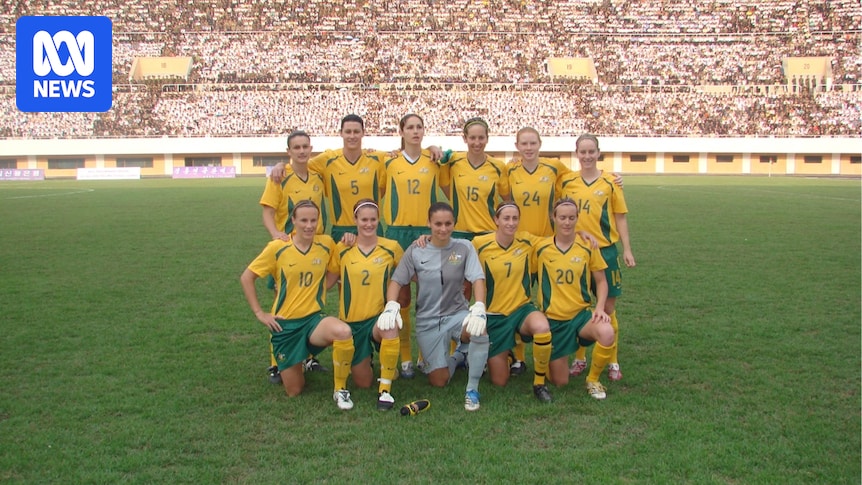
In 2007, the Australian women’s national soccer team, the Matildas, embarked on an unforgettable journey to Pyongyang, North Korea. The purpose of their visit was to compete in an Olympic qualifying match for the 2008 Beijing Games. The experience, as recounted by former Matildas captain and goalkeeper Melissa Barbieri, was unlike anything they had ever encountered before.
“It was very, very quiet,” Barbieri told ABC Sport, describing the surreal emptiness of Pyongyang’s streets. “I remember driving on the bus and looking out into the streets and thinking there’s absolutely no one around.”
A Journey into Isolation
The Australian team was strategically based in Beijing, allowing them to make the short journey across the border for the game. However, the trip came with strict regulations. The players were prohibited from bringing communication devices and could only carry minimal personal belongings. “We had to leave everything in China,” Barbieri recalled. “The laptop that we had on us to analyze our games, they were trying to confiscate it off us.”
The team’s arrival at their hotel in Pyongyang was equally unsettling. The absence of other guests and the sparse presence of staff added to the eerie atmosphere. “We walked into the dining room and every place in the banquet hall was made up with a meal [but] we were the only people staying in the hotel at the time,” Barbieri said.
Experiencing North Korean Football Culture
The contrast between the empty streets and the bustling stadium was stark. “There were people everywhere. You couldn’t fit the bus down the street because of everyone,” Barbieri recounted. The stadium, filled to capacity two hours before kickoff, was a testament to North Korea’s passion for women’s football. At the time, North Korea was a dominant force in the sport, having won the Women’s Asian Cup in 2001, 2003, and 2008, and reaching the quarterfinals of the 2007 FIFA Women’s World Cup.
“Without diminishing us as a team, we were very, very scared of DPR Korea,” Barbieri admitted. “Every time they touched the ball, it was superior. They were fit, they were strong.”
North Korea’s investment in women’s football during the 1990s paid off with formidable performances on the field. The country implemented formal football education in schools and established the Pyongyang International Football School to nurture talent.
The Match and Its Aftermath
The Matildas faced a formidable opponent in North Korea, losing 2-0 with both goals scored by captain Ri Kum Suk. The crowd of more than 30,000 was described as hostile by Australian coach Tom Sermanni. According to Thomas Gerstner, who coached North Korea’s under-20 women’s team in 2017, the crowd often comprised military personnel and students, creating an intimidating atmosphere.
Barbieri’s experience of the crowd’s reaction was unique. “It was almost like they couldn’t believe that this game was happening … It was almost like a comedy for them when we fell over,” she said. The experience left a lasting impact on her, highlighting the stark cultural differences and the challenges of playing in such an environment.
North Korea’s Changing Football Fortunes
Despite their dominance in the early 2000s, North Korea’s football prowess waned after 2011. Five players were accused by FIFA of using a prohibited steroid, resulting in bans from subsequent major tournaments. However, North Korea’s junior teams have continued to excel, winning multiple junior Women’s World Cups in recent years.
“I really feel like maybe they’ve been biding their time for those players to come to a mature age and then dominate Asia,” Barbieri speculated.
As North Korea’s senior team prepares to face the Matildas again in an Asian Cup quarterfinal in Perth, the legacy of that 2007 encounter remains vivid. The match promises to be another chapter in the storied rivalry between the two teams, with Australian star Sam Kerr eager to secure a victory.
The Matildas’ journey to Pyongyang in 2007 was more than just a football match; it was an eye-opening experience that highlighted the complexities of international sport and the unique challenges of playing in one of the world’s most isolated nations.