




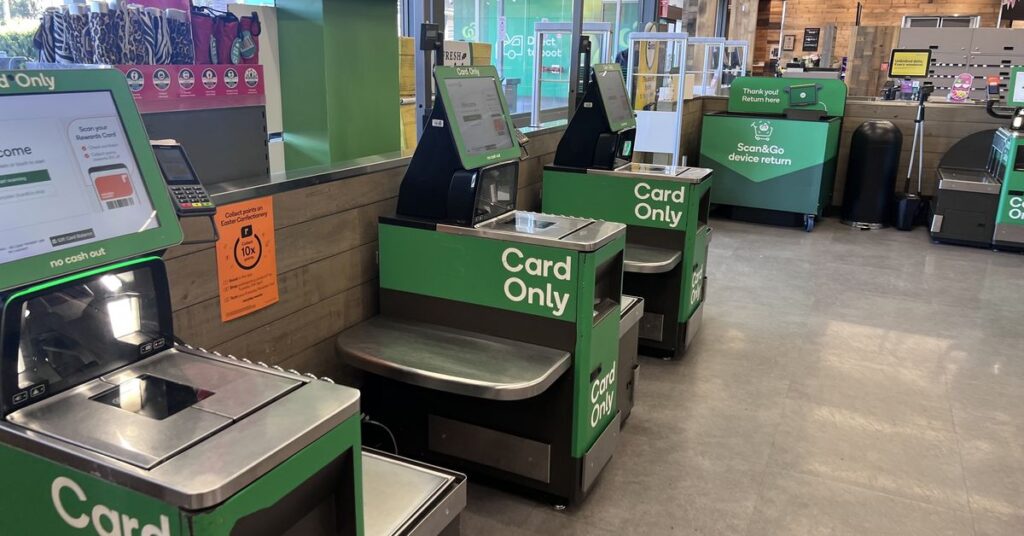
Supermarket self-service checkouts have become the predominant method for grocery transactions across Australia, leaving many shoppers feeling as though they are shouldering the responsibilities of store staff without compensation. This shift comes amid a backdrop of rising grocery prices and technological advancements that show no signs of slowing down.
In major chains like Woolworths, Coles, and Aldi, self-service checkouts now outnumber traditional staffed lanes, compelling consumers to scan, weigh, and bag their own groceries. While some embrace the change, others express frustration at what they perceive as unpaid labor.
The Evolution of Self-Service Checkouts in Australia
The journey of self-service checkouts in Australia began in 2008 when Woolworths launched a trial at its Northbridge store in New South Wales. The trial aimed to assess customer receptiveness to this new technology. By the end of that year, Woolworths had rolled out self-service options to over 70 locations nationwide.
Coles quickly followed suit, introducing self-checkouts in select stores before expanding the service across the country. Aldi Australia joined the trend in June 2021, and Costco Australia followed in August 2023. The rapid adoption of this technology by supermarkets has left many shoppers with little choice but to adapt.
Consumer Reactions and Common Complaints
Despite their prevalence, self-service checkouts are not universally loved. According to consumer psychology expert Gavin Northey, Associate Professor at Griffith University’s Department of Marketing, extensive research indicates that “consumers typically dislike self checkouts.”
“The most common gripe is that many consumers feel it is a form of unpaid labor,” Northey confirmed. “Previous research has labeled this ‘coproduction resentment’ where consumers have a negative feeling when they are asked to perform work that was previously handled by employees.”
This sentiment is exacerbated when technical issues arise, requiring staff intervention, which can increase customer frustration. Nonetheless, self-service checkouts have become an accepted part of the retail landscape, particularly among younger shoppers who appreciate the efficiency for smaller purchases.
The Divide Among Shoppers
Older shoppers and those with accessibility challenges often view self-service checkouts as a hurdle rather than a convenience. Northey explains, “If you’re doing a large weekly or fortnightly shop, a self-service checkout can be extremely tedious.”
Research suggests consumers generally fall into two categories: those who love the speed and efficiency of self-checkouts and those who tolerate them as a necessary aspect of modern shopping. The COVID-19 pandemic further normalized these options by reducing human interaction during transactions.
The Future of Self-Service Technology
By 2022, self-checkout purchases accounted for nearly “60 percent of grocery transactions,” a figure that has since risen to approximately 69 percent. This trend is driven by retailers’ desire to cut staffing costs, which are often their largest variable expense.
“Staffing costs are often the largest variable expense in supermarkets, so any technology that can reduce that expense will be popular with retailers,” Northey said.
As supermarkets continue to refine their service models, the availability of staffed checkout lanes is likely to decrease, while self-checkout terminals proliferate. This shift aims to enhance efficiency and manage in-store traffic during peak times.
Looking ahead, Northey anticipates that self-checkout technology will not only persist but expand into a broader range of retail environments beyond supermarkets. However, he acknowledges that there will always be consumers who prefer human interaction or require assistance during the checkout process.
As the retail landscape evolves, the debate over self-service checkouts highlights the ongoing tension between technological convenience and consumer satisfaction. Whether viewed as a burden or a boon, self-service checkouts are undeniably reshaping the way Australians shop.