

For Hai Trinh, the signs of his illness crept in slowly. Fatigue and easy bruising were dismissed as the toll of long hours spent working as a mechanic. As a husband and father of two daughters, he continued to push through his health challenges, attributing them to his demanding job.
It wasn’t until Hai consulted a doctor that he discovered he had thrombocytopenia, a condition characterized by low blood platelet counts due to the bone marrow’s failure to produce them. This condition led to symptoms like bruising, petechiae, and prolonged bleeding, alongside persistent tiredness.
That revelation came in the early 2010s, marking the beginning of a long and arduous journey.
The Long Road to Recovery
Over the next five years, Hai explored various treatments with little success. Some provided partial relief, while others caused adverse side effects. It was during this time that he met Dr. Mehrdad Abedi, a bone marrow transplant specialist at UC Davis Health.
“One of my hematologists recommended I go see Dr. Abedi,” Hai recalled. “He suggested a bone marrow transplant, but I was scared of the procedure because it would mean months away from work, which was inconvenient as I was the main breadwinner.”
A bone marrow transplant involves infusing healthy blood-forming stem cells into the body to replace defective bone marrow. Despite the potential for a cure, Hai initially declined the procedure. However, as his condition worsened, with frequent hospital visits and blood transfusions, he realized he could no longer delay.
“He had zero chance of any long-term survival without the transplant,” Dr. Abedi stated.
A Daughter’s Lifesaving Gift
With his condition deteriorating, Hai finally agreed to the transplant. The next hurdle was finding a suitable donor. Grace Chan, a stem cell transplant nurse coordinator at UC Davis Health, explained the challenges: “Finding a matched donor who is willing and eligible to donate can be difficult, especially given Hai’s Vietnamese American background.”
The ideal solution was to find a family member, potentially one of Hai’s daughters. UC Davis had recently launched a pediatric stem cell transplant program, offering significant survival benefits due to the robustness of younger stem cells.
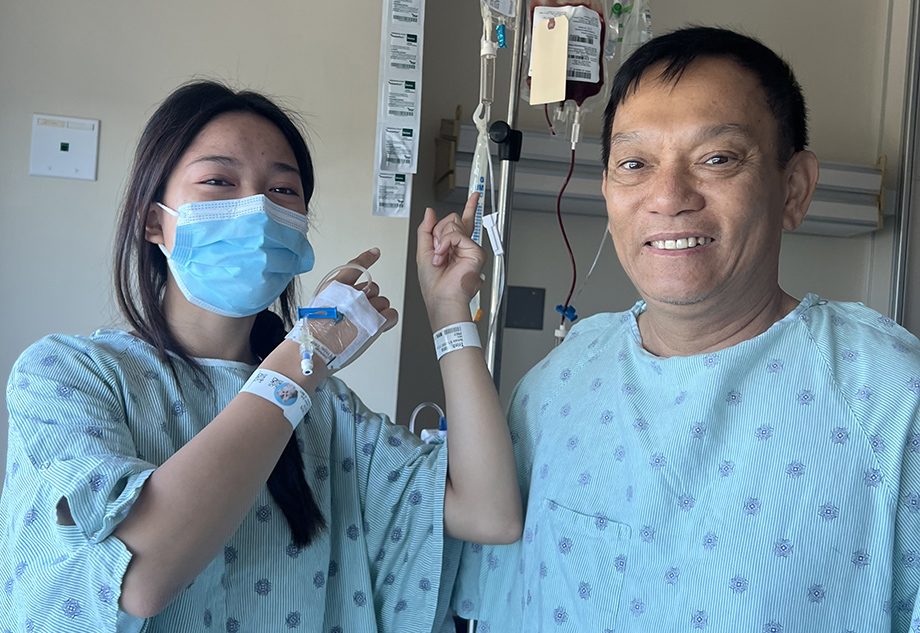
Hai’s daughters, including 17-year-old Viana, were tested, and both were suitable donors. The transplant team recommended Viana, who shared her father’s blood type.
“When we identified Mr. Trinh’s teenage daughter as the best donor, he felt a mix of happiness and worry about the procedure she would undergo,” Chan noted.
Despite her initial fears, Viana was determined to help her father. “The idea of going under anesthesia scared me, but I reminded myself that I wanted to help my dad,” she said.
A New Beginning
By the fall of 2025, the transplant was set. However, Hai needed a round of chemotherapy before the procedure, causing anxiety as Viana prepared to leave for college. “I was worried about Viana,” said Tracy, Hai’s wife. “I wanted to be there for her recovery, but it wasn’t possible.”
As the transplant date approached, Hai counted down the days. Viana’s bone marrow donation went smoothly, and she was eager to see her father post-procedure. “I cried when I saw my stem cells being transfused into him,” she recalled.
Hai’s recovery was promising, with Dr. Abedi estimating a 70-80% chance of a cure. Viana expressed hope for her father’s future: “I want him to be satisfied in his life and free from this disease.”
“I’m feeling OK now,” Hai said. “Much better than before. I don’t get bruising or bleeding. It’s very good news.”
Lessons Learned and Future Aspirations
Hai’s journey has given him a new perspective on delaying medical care. “I thought it would be horrible, but the doctors and staff treated me like family,” he said. He encourages others in similar situations to consider a bone marrow transplant without hesitation.
Viana also advocates for stem cell donation. “It’s a safe procedure and can save a life,” she emphasized.
The experience has inspired Viana to pursue a career in pediatric nursing, influenced by her family’s time at UC Davis. “Our experience makes me hopeful for the future of medicine,” she said.
Hai’s story is a testament to the power of family, medical innovation, and the courage to make life-changing decisions. As he looks to the future, he remains grateful for the support and care that gave him a second chance at life.