




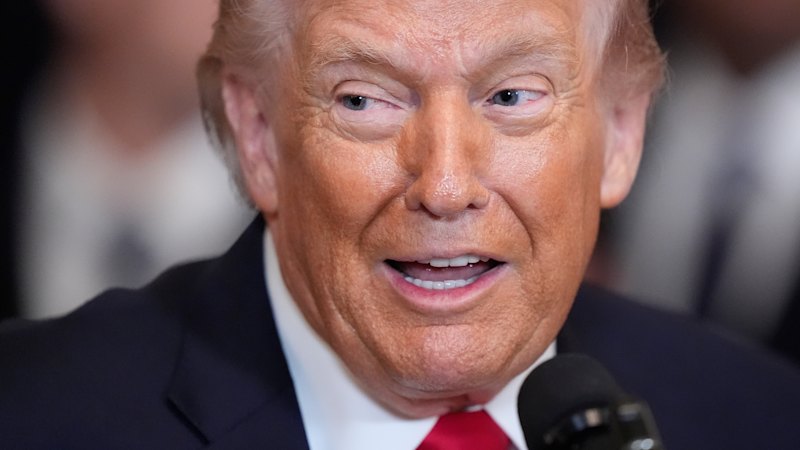
Donald Trump, the former President of the United States, appears to have little regard for the lessons of history, particularly those involving complex international relations and military engagements. This perception was reinforced recently when he criticized Britain and Spain, among other European nations, for their lack of support in his recent military actions against Iran.
Trump’s comments came after Britain hesitated to allow the use of its bases for U.S. warplanes, and Spain outright refused to participate in what it described as “unilateral military action.” Spanish Prime Minister Pedro Sanchez condemned the move, stating, “It’s unacceptable that some presidents use the fog of war to cover up their failures and in the process, line the pockets of a select few.”
Historical Context and Trump’s Oversight
The former president’s remarks reveal a lack of understanding of the historical alliances and the geopolitical complexities that have shaped Western military engagements. During both World Wars, the United States initially adopted a stance of isolationism, only entering the conflicts after significant provocation and strategic necessity.
In World War I, the U.S. joined the Allies in 1917, nearly three years after the conflict began. Similarly, in World War II, the U.S. remained neutral until the attack on Pearl Harbor in December 1941. These historical precedents highlight the importance of strategic alliances and the consequences of unilateral actions.
The Size and Complexity of Iran
Trump’s approach to Iran seems to ignore the geographical and strategic complexities of the region. Iran, at 1.65 million square kilometers, is significantly larger than Iraq, Afghanistan, and Vietnam combined. This vast terrain presents numerous challenges for any military operation, a fact that seems to have been overlooked in Trump’s rhetoric.
Iran is 1.65 million square kilometers, Iraq is just 0.43 million square kilometers, Afghanistan is 0.65 million square kilometers, and Vietnam is about 331,000 square kilometers.
Comparisons to Historical Figures
In his criticism of Britain’s Prime Minister Keir Starmer, Trump remarked, “It’s not Winston Churchill we’re dealing with here.” This comparison is ironic, given that Churchill himself, along with Joseph Stalin, invaded Iran in 1941 to secure a strategic supply route during World War II, despite Iran’s declared neutrality.
This historical parallel underscores the complexities of international diplomacy and the sometimes harsh realities of wartime strategy. However, unlike Churchill, Trump’s actions lack the backing of a coherent strategy or international support, leading to widespread criticism.
The Role of the United States in Global Conflicts
The United States has historically played a decisive role in global conflicts, often stepping in to tip the scales in favor of the Allies. During World War II, the U.S. produced two-thirds of all military equipment used by the Allies, including 297,000 aircraft and 86,000 tanks. This massive industrial effort not only helped win the war but also ended the Great Depression, leading to significant economic growth.
By the end of World War II, America had produced two-thirds of all military equipment used by the allied nations: 297,000 aircraft, 193,000 artillery pieces, 86,000 tanks, and 2 million army trucks.
Implications of Trump’s Actions
Trump’s recent actions and rhetoric have raised concerns among European allies, who fear the consequences of unilateral military actions without a clear strategy or international support. The historical lessons of past conflicts suggest that alliances and strategic planning are crucial for successful military engagements.
As the situation unfolds, it remains to be seen how Trump’s approach will impact international relations and the stability of the Middle East. The lack of a coherent strategy and the alienation of key allies could have significant implications for future U.S. foreign policy.
In conclusion, a deeper understanding of history and international relations might have informed a more strategic and cooperative approach to the current situation. As the world watches, the lessons of the past remain as relevant as ever in guiding the actions of global leaders.