




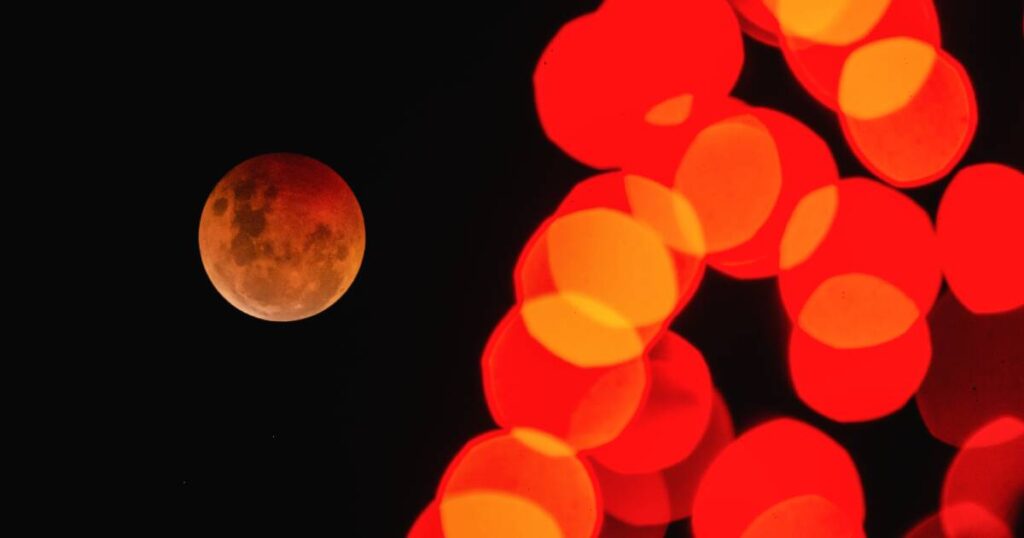
On Tuesday, March 3, Australians on the east coast will have a unique opportunity to witness a total lunar eclipse, where the moon will turn a striking crimson as it passes directly through Earth’s shadow. This celestial event, visible from around 9 PM, will offer a breathtaking display of nature’s grandeur.
Residents can expect to see a gradual shadow envelop the full moon, culminating in a full eclipse around 10:30 PM. At the peak of the eclipse, the moon will be bathed in vivid shades of copper and auburn, creating a mesmerizing red glow as it becomes fully immersed in Earth’s shadow.
The Last Chance for a Crimson Moon Until 2029
Tonight’s lunar eclipse is particularly significant as it will be the last opportunity to observe such deep red hues until 2029. Due to the alignment of the Earth, moon, and sun, the next six eclipses will only partially dip into Earth’s shadow, resulting in a much lighter effect compared to the deep red spectacle expected tonight.
Unfortunately, forecasts predict a 50-60 percent chance of cloud cover during the eclipse, potentially obscuring some of the event. However, enthusiasts are hopeful that at least some effects of the lunar event will remain visible.
Understanding the Eclipse
Unlike solar eclipses, lunar eclipses unfold over several hours, offering a more leisurely viewing experience. The moon will take approximately 75 minutes to enter Earth’s shadow, known as the partial eclipse phase. This will be followed by an hour of totality when the moon turns red, and then another 75 minutes as the moon exits the shadow and returns to full brightness.
The eclipse will also be visible in New Zealand and Western Australia. Due to the vast size of Earth’s shadow compared to the moon, everyone on the planet’s night side can experience a lunar eclipse simultaneously, only needing to adjust for local time zones.
Community Engagement and Expert Insights
Local astronomers are gearing up for the event, with members of the Newcastle Astronomical Society heading to Foreshore Park at Nobbys Beach equipped with telescopes to capture the best view. Mike Anderson, president of the society, emphasized the rarity of seeing the moon so red and encouraged the public to join them for public viewings, weather permitting.
“It’s very rare that you’ll see the moon so red,” Anderson noted. “It’s great. People always are fascinated by the night sky in particular because there’s just so much to see.”
The Newcastle Astronomical Society, active for 30 years, regularly organizes events for both its members and the general public. Anderson highlighted the importance of community engagement, especially for those with a keen interest in astronomy.
Looking Ahead
As tonight’s event unfolds, it serves as a reminder of the beauty and wonder of our universe. While the next opportunity to witness a total lunar eclipse with such vibrant colors won’t occur until 2029, partial eclipses will continue to offer glimpses into the celestial dance between the Earth, moon, and sun.
For those unable to attend in person, the event will likely be covered online, allowing enthusiasts worldwide to share in the experience. As always, the night sky continues to inspire curiosity and awe, drawing people together in appreciation of the universe’s splendor.