


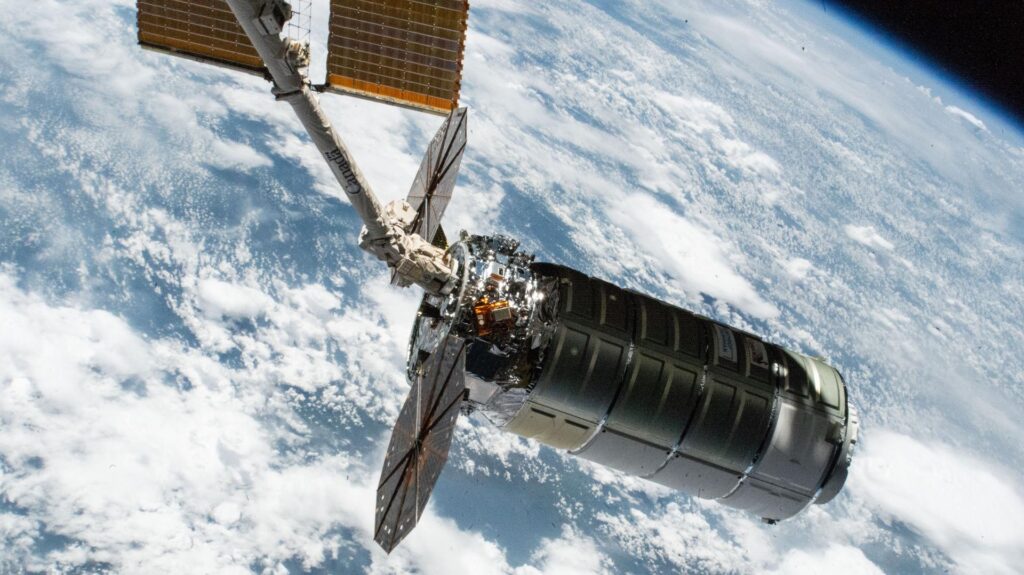
After successfully delivering over 11,000 pounds of crucial supplies, scientific investigations, and hardware to the International Space Station (ISS), the Cygnus XL spacecraft, part of Northrop Grumman’s 23rd Commercial Resupply Services mission, is set to depart the orbiting laboratory on Thursday, March 12. This mission marks a significant milestone in NASA’s ongoing collaboration with international partners.
NASA will provide live coverage of the undocking and departure starting at 6:45 a.m. EDT. The event will be accessible on NASA+, Amazon Prime, and the agency’s YouTube channel, offering viewers multiple platforms to witness the spacecraft’s journey back to Earth.
Technological Coordination and Monitoring
Flight controllers on Earth will initiate commands for the space station’s Canadarm2 robotic arm to detach the Cygnus XL from the Unity module’s Earth-facing port. The arm will then carefully maneuver the spacecraft into position for release, scheduled for 7 a.m. European Space Agency (ESA) astronaut Sophie Adenot will oversee the operation, ensuring all systems function correctly as the Cygnus departs.
Following its release, the Cygnus XL will remain in orbit for a few days before being commanded to deorbit on Saturday, March 14. During its reentry into Earth’s atmosphere, it will dispose of several thousand pounds of trash, burning up harmlessly upon descent.
Historical Context and Mission Significance
The Cygnus XL spacecraft launched in September 2025 atop a SpaceX Falcon 9 rocket from Space Launch Complex 40 at Cape Canaveral Space Force Station in Florida. This mission is notable as it represents the first flight of the larger, more cargo-capable version of the solar-powered spacecraft, designed to enhance the efficiency and capacity of resupply missions to the ISS.
This development follows a series of successful missions under NASA’s Commercial Resupply Services program, which began in 2008. The program aims to leverage private sector innovation to support the ISS, a critical hub for international space research and exploration.
Expert Insights and Future Implications
According to Dr. Emily Johnson, a space logistics expert at the Massachusetts Institute of Technology, “The Cygnus XL’s successful mission underscores the importance of public-private partnerships in advancing space exploration. By expanding cargo capacity, missions like these ensure that the ISS can continue its vital research without interruption.”
“The increased cargo capacity of the Cygnus XL allows for more comprehensive scientific experiments and the delivery of critical supplies, which are essential for the long-term sustainability of the ISS,” Dr. Johnson added.
Looking ahead, the success of this mission could pave the way for further advancements in spacecraft design and logistics, potentially influencing future missions to the Moon and Mars. As NASA and its partners continue to explore deep space, the lessons learned from the Cygnus XL’s deployment will be invaluable.
Public Engagement and Accessibility
The announcement comes as NASA continues to expand its outreach efforts, making space exploration more accessible to the public. By broadcasting the Cygnus XL’s departure across various digital platforms, NASA aims to engage a broader audience, fostering a deeper interest in space science and technology.
Meanwhile, the agency’s commitment to transparency and public engagement reflects its broader mission to inspire the next generation of scientists, engineers, and explorers. As the Cygnus XL prepares for its final journey, the world will be watching, united in a shared curiosity about the mysteries of space.
As the spacecraft departs, attention will inevitably turn to future missions and the ongoing collaboration between NASA and its international partners. The successful execution of this mission highlights the potential for continued innovation and exploration beyond our planet.