
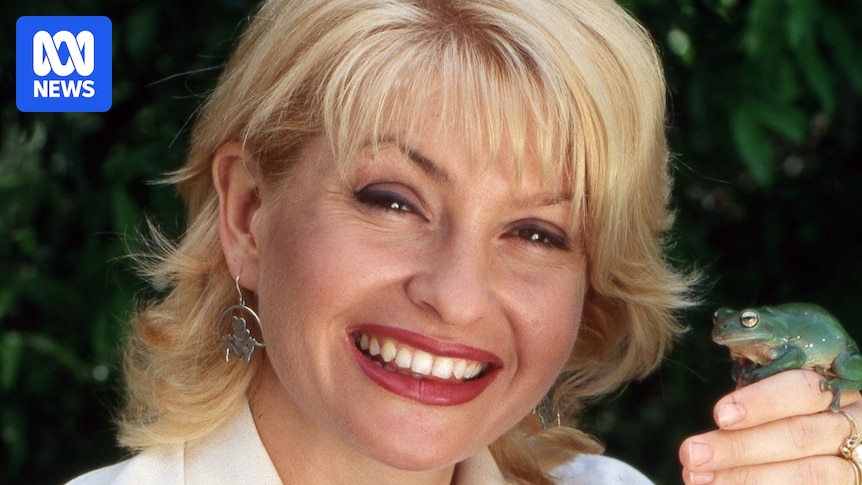
Nineties kids across Australia had a daily ritual that involved rushing home from school to catch their favorite television show, Totally Wild. From its inception in 1992, the show became a beloved staple for nearly three decades, hosted by the ever-smiling Stacey Thomson, affectionately known as Ranger Stacey. Through her engaging presence, she ignited a passion for nature in countless children.
One such child was Jacqueline King, who now works as an assistant behavioral biologist at the Taronga Conservation Society Australia. “I can picture five-year-old me, sitting on the rug watching Ranger Stacey after school, just hoping that I could do that one day,” King recalls. “Now, grown-up me gets to be out in nature, learning from and with critters and inspiring people, and then helping to share that knowledge with the world.”
From Suburban Brisbane to the Great Barrier Reef
Ranger Stacey’s journey to becoming an Australian television icon was anything but conventional. Raised in suburban Brisbane during the 1960s and ’70s, Stacey’s family owned a local cinema and spent significant time outdoors, including adventurous trips to the uninhabited Northwest Island in the southern Great Barrier Reef.
“We’d have to take all of our water, all of our supplies, that was hardcore camping and big adventures,” she shared with Ann Jones on ABC Radio National’s What the Duck?!. These experiences planted the seeds for her future career in nature and conservation.
Becoming a Park Ranger
Encouraged by a friend’s father, Stacey pursued a course at Queensland Agricultural College, leading to her first job with the Queensland National Parks and Wildlife Service in 1983. Her work at Main Range National Park involved maintaining fire breaks and public facilities, but she found joy in engaging with visitors, sharing her love for the natural world.
A Unique Path to Television
Stacey’s next role took her to St Helena Island, a former prison site and Queensland’s first historic national park. Tasked with ferrying prisoners from Boggo Road Gaol to assist with island maintenance, Stacey’s experiences were unique and challenging. “The prisoners would be driven down in the prison van, the warder would walk out to the end of the jetty, I’d take over from there,” she recounted.
Her comfort in front of tourists and cameras led to opportunities in media, eventually transitioning her into a role as an education officer at the Department of Environment. This role opened the door to television, where she became a regular guest on the children’s show Wombat on Channel 7.
The Birth of Totally Wild
In 1992, Network Ten executive producer Cherrie Bottger developed a nature and environment program featuring Ranger Stacey and her colleague Ranger Tim. The show quickly gained popularity, expanding from weekly broadcasts to a daily schedule. Stacey’s ability to connect with young audiences made her a household name, inspiring generations to care about the natural world.
“I remember back in the early days going out to Epping Forest National Park … there were only 70 northern hairy-nosed wombats … left in the whole world,” Stacey recalls. “We went back a number of times over the 29 years of Totally Wild … and although it’s still endangered, it’s certainly not as critically endangered as it was back in 1992.”
The End of an Era and a New Beginning
By 2021, the rise of streaming services had transformed television programming, leading to the cancellation of Totally Wild. “I probably had tears in my eyes,” Stacey admitted upon hearing the news. However, this was not the end of her journey. Today, she works as an education officer at Redland City Council, continuing to inspire the next generation to care for the environment.
Throughout her career, Stacey’s message has remained consistent: “If we all do a little bit, it all makes a bigger impact.” Her legacy lives on through the thousands she has educated, including professionals like Jacqueline King, who credits Ranger Stacey with giving meaning to her love for the outdoors.
“Now, I work across science and education — I’m all about how people and the planet connect and relate,” King says, reflecting the enduring influence of Ranger Stacey’s work.