




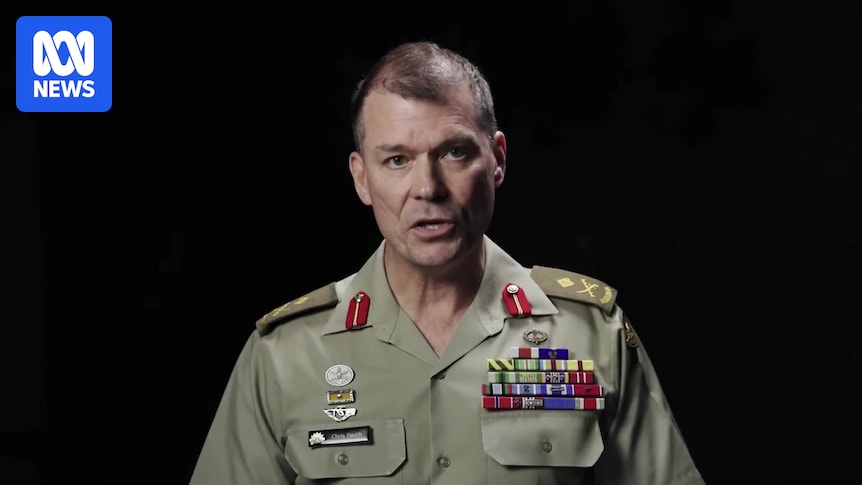
The Australian Defence Force (ADF) is facing a critical internal review following a candid speech by Major General Chris Smith, Deputy Chief of Army, who warned that the force has become “detached” from the violent nature of war. Delivered at the Chief of Army’s History Conference last November, the speech has gained renewed attention after being uploaded to an army-run YouTube channel, where it has resonated with veterans and military analysts alike.
Major General Smith’s address was a stark critique of what he described as the infiltration of “managerial and advertising logic and double speak” within the army, leading to a detachment from the core realities of warfare. He criticized the adoption of “nonsensical and theoretically implausible concepts” and emphasized the need for a deeper understanding of the history and nature of war among army personnel.
Managerial Speak and Historical Ignorance
The speech highlighted a pervasive use of jargon, which Smith argued obscures ignorance and reflects a deeper issue within the ADF. “According to a recent army document, the world isn’t just a ‘dangerous place’. It’s a ‘complex and challenging strategic environment’,” he noted, criticizing the use of euphemisms that disconnect the army from its true purpose.
Smith’s critique extended to the broader cultural shift within Western militaries, including the ADF, towards abstract language that he believes undermines the military’s core mission. “We don’t deliver effects. We seek out, close with, kill, capture, seize, hold and repel attacks,” he asserted, emphasizing the need for directness in military operations.
Implications of Ignorance and Complacency
Smith warned that the ADF’s detachment from the violent nature of war is not merely a linguistic issue but a symptom of historical ignorance and complacency. He pointed out that many officers lack a basic understanding of warfare, which leads to an unquestioning acceptance of managerial language and abstract thinking.
He also criticized the trend of treating war as a “workplace hazard,” suggesting that this mindset diminishes the seriousness of military operations. “To treat killing and dying in war as an incidental workplace hazard has potentially profound implications for how you go about those things,” he cautioned.
Calls for Educational Reform
In response to these challenges, Major General Smith advocated for a stronger intellectual foundation within the army, highlighting recent moves to enhance the education of officers. He announced the introduction of a new Bachelor of War Studies degree, which will be completed by approximately 75% of army officer cadets, aiming to deepen their understanding of warfare and military history.
Australian Strategic Policy Institute senior fellow Elizabeth Buchanan praised this initiative, stating, “The degree will be a welcome development for Australia’s strategic and defence intellectual ecosystem.” She emphasized that this educational reform could help prevent groupthink and foster critical engagement with the philosophical truths of war.
Historical Context and Future Directions
Smith’s speech also drew on historical parallels, referencing a 2012 report that documented poor conduct by Australian soldiers in Afghanistan. He described it as exposing leadership failures and a “general failure of moral courage,” which he linked to a loss of historical perspective.
The deputy chief’s address serves as a wake-up call for the ADF, urging a return to the fundamental realities of warfare and a rejection of complacency. As the army moves to implement educational reforms, the hope is that future officers will be better equipped to navigate the complexities of modern military operations while remaining grounded in the harsh truths of war.
As the ADF grapples with these internal challenges, the broader implications for Australia’s defense strategy and international reputation remain to be seen. The move towards a more historically informed and intellectually rigorous officer corps could potentially redefine the ADF’s role on the global stage, setting a new standard for military professionalism and strategic thinking.