



For many, food is a simple commodity purchased at supermarkets or enjoyed at cafes, with little thought given to the intricate systems that produce and deliver it—until those systems face disruption. Australia, often seen as a land of agricultural abundance, is not typically associated with food insecurity. With vast expanses of fertile land, the nation has the capacity to feed its population multiple times over, exporting around 70% of its produce.
However, the recent scorching heat in the southeast and widespread flooding in the north have highlighted the vulnerabilities in food production. As climate change exacerbates temperature extremes, heatwaves, droughts, floods, and shifting seasonal patterns, the risks to agriculture intensify. While people can seek shelter indoors, the crops and livestock we depend on lack such protection. In response, some farmers are adopting a strategy known as protected cropping, which shields crops from environmental threats.
Understanding Protected Cropping
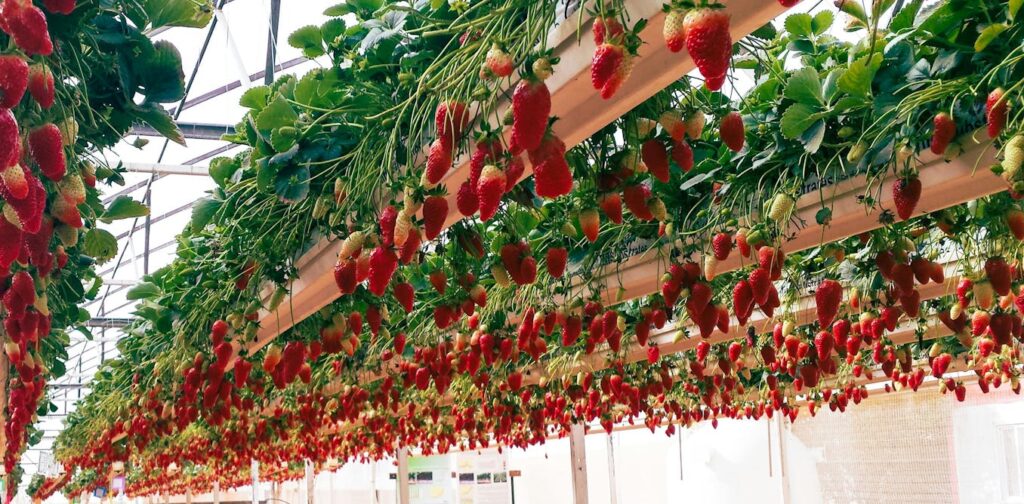
Protected cropping encompasses a variety of methods, ranging from low-tech solutions like shade houses and netting to medium-tech polytunnels and sophisticated automated glasshouses. This approach has been particularly embraced by countries with limited agricultural land, such as the Netherlands, which has become a leading exporter of fruits and vegetables by employing high-tech glasshouses under the principle of “twice the food using half the resources.”
The Australian Context
In Australia, protected cropping is gradually gaining traction. As of 2023, approximately 14,000 hectares of fruit and vegetable crops were cultivated under some form of protection, accounting for about 17% of the total area. The majority of these rely on low-tech systems, with over two-thirds (68%) using shade houses or netting, primarily in southern Queensland and northern New South Wales.
Medium-tech systems, such as polytunnels, make up about 30% of the protected cropping area and are mainly found in Tasmania, northern Queensland, and Western Australia. High-tech glasshouses, although only 2% of the total, are situated near major cities like Sydney, Melbourne, and Adelaide. These systems are predominantly used for high-value crops, including tomatoes, capsicums, cucumbers, berries, and leafy greens.
In 2022, Australia’s protected cropping industry was valued at an estimated A$100 million, employing around 10,000 people with a workforce demand growing at 5% annually.
Benefits and Challenges of Protected Cropping
Protected cropping offers numerous advantages across its various technological levels. By creating favorable conditions for year-round plant growth, it enhances the consistency and quality of yields. Farmers can control temperature, plant nutrition, humidity, light, and pests, reducing production risks and improving crop yield and quality.
This control is particularly valuable in the face of climate uncertainty, as it minimizes risks from extreme weather. Additionally, protected cropping allows for more efficient use of land, water, fertilizer, and energy, and enables crops to be grown closer to markets, improving food freshness, reducing transport emissions, and bolstering domestic food security.
For exporters, produce from protected systems is more likely to meet the stringent biosecurity and quality standards of international buyers. However, realizing these benefits at scale requires innovation, including advances in plant breeding, sensors, automation, data analytics, and biological pest controls.
Barriers to Expansion
Despite its potential, protected cropping has not yet achieved significant scale in Australia. The horticulture industry, dominated by small businesses, often lacks the capacity to invest in new systems. High-tech solutions, while offering the best results, are cost-prohibitive for many farmers. Moreover, finding and retaining skilled workers poses an additional challenge.
Protected cropping is a promising solution but remains out of reach for many farmers who could benefit from it.
Pathways to Growth
Countries like Sweden and the Netherlands have successfully promoted protected cropping through government support, world-class research, and innovation precincts. Australia could accelerate adoption by setting expansion targets, providing policy incentives, and investing in infrastructure to reduce installation costs.
Focusing on regions where high-value crops are grown in unprotected environments could foster regional clusters of expertise, shared infrastructure, and skilled jobs. However, government efforts must be complemented by industry collaboration, research, and farmer engagement to translate laboratory innovations into field applications.
While protected cropping is not a panacea—polytunnels, for example, cannot shield against floods—other nations have demonstrated its potential to increase yields, safeguard local food production, and create higher-wage jobs. As Australia’s climate challenges mount, embracing protected cropping could prove essential for the future of its agriculture.