



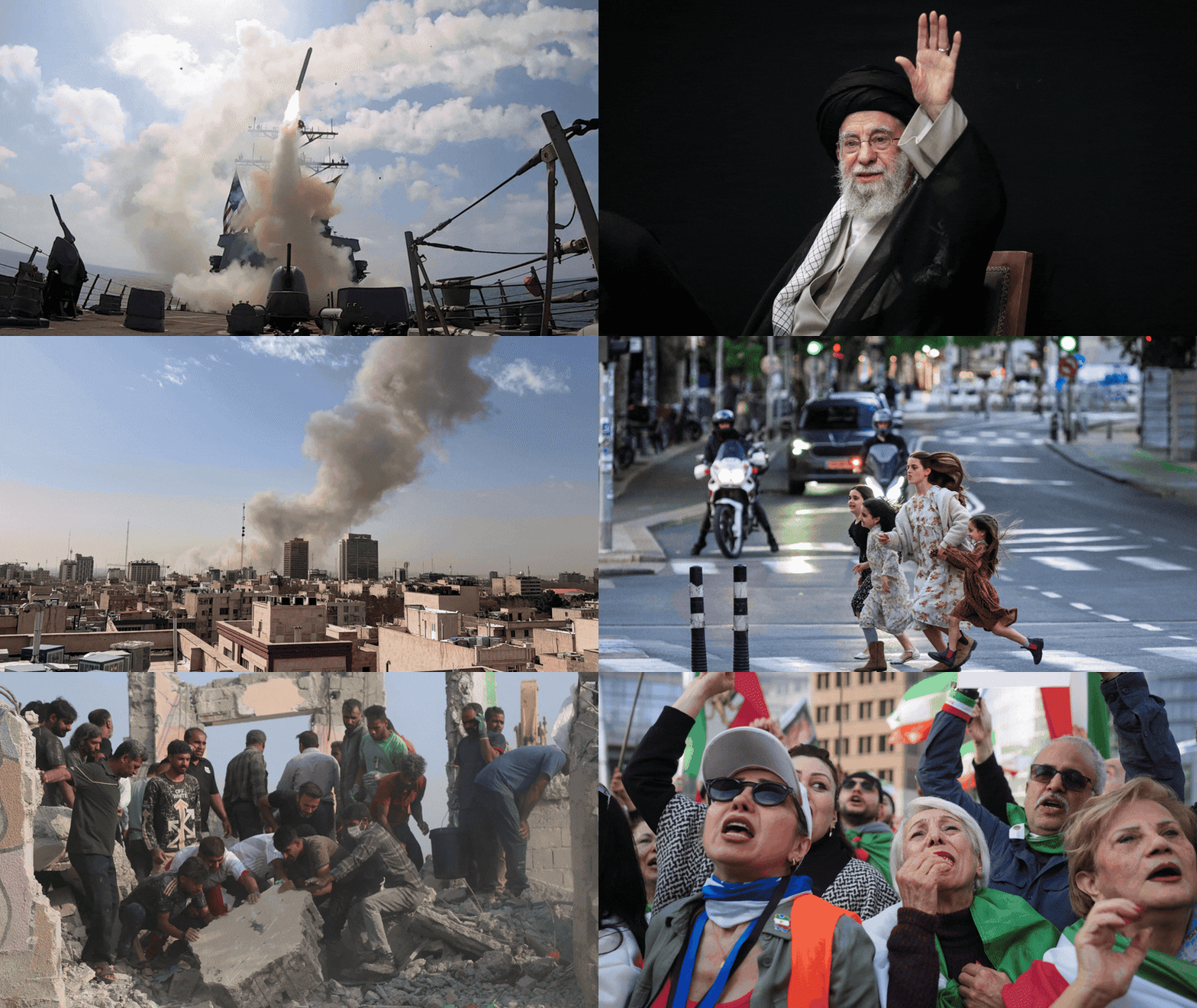
The Middle East is once again at the epicenter of global attention as Israeli airstrikes in Lebanon have resulted in the deaths of at least 31 people. This escalation follows a series of retaliatory attacks between the US, Israel, and Iran after the death of Iran’s Supreme Leader Ayatollah Ali Khamenei. The conflict has also claimed the lives of three US troops in Kuwait, further intensifying the situation.
According to reports, US and Israeli forces have targeted over 2000 sites, sinking nine Iranian naval ships and killing 48 Iranian leaders. In response, Iran has launched attacks on 27 targets across eight countries. The Red Crescent reports that in Iran, at least 201 people have died, including 165 children and adults from a US-Israeli strike on a girls’ school in southern Iran. Meanwhile, Israel has seen at least nine casualties.
Israel’s Military Strategy and Regional Implications
Israel’s military has been actively targeting Hezbollah in Lebanon, a group backed by Iran, following missile attacks on Israel. Brigadier General Effie Defrin, an Israeli military spokesman, stated that Israel is considering “all options on the table,” including a potential ground operation in Lebanon. The mobilization of over 100,000 reservists indicates the seriousness of the situation.
Hezbollah’s missile and drone attacks have prompted swift Israeli retaliation, with significant strikes in Beirut and southern Lebanon. “Hezbollah will pay a very heavy price for this,” Defrin asserted, highlighting the potential for further military escalation.
Leadership Vacuum in Iran
Amidst the turmoil, Iran faces a leadership crisis following the assassination of Ayatollah Khamenei. The Islamic Republic’s foreign minister indicated that a new leader could be appointed soon, with Ali Larijani, Iran’s security chief, rumored to be Khamenei’s chosen successor. However, US President Donald Trump claimed that the initial US-Israel attack eliminated the top three candidates for succession.
Iran’s security chief has firmly stated that there will be no negotiations with the US, further complicating diplomatic efforts. Tehran’s retaliatory strikes against US and Israeli interests underscore its determination to maintain its regional influence.
Global Economic and Political Repercussions
The conflict’s impact is reverberating beyond the Middle East, with global energy markets on edge. The potential for oil prices to surge past $100 a barrel looms large, threatening economic stability worldwide. Motorists and industries reliant on oil are bracing for significant price hikes.
Meanwhile, international diplomatic tensions are mounting. China’s Foreign Ministry has called for an immediate cessation of military actions, warning of potential spillover effects on neighboring countries. Chinese spokesperson Mao Ning emphasized the need to respect the sovereignty and territorial integrity of Gulf states.
Humanitarian Concerns and Migrant Worker Safety
The conflict is also taking a toll on migrant workers, who form a significant part of the Middle East’s labor force. Southeast and South Asian nations are closely monitoring the safety of their citizens, with evacuation plans in place should the situation deteriorate further.
“Migrant workers are crucial to the Middle East economy, accounting for over 40 percent of the region’s labor force,” according to the International Labour Organisation.
Tragically, the conflict has already claimed the life of a Filipino caregiver in Tel Aviv, while others from Pakistan, Nepal, and Bangladesh have also been affected.
Political Reactions and Future Outlook
International political reactions have been mixed. Australian Prime Minister Anthony Albanese criticized Islamic centers in Australia for mourning Khamenei’s death, emphasizing the country’s commitment to human rights and democracy. He also condemned Iran’s retaliatory attacks as a threat to peace and stability.
In the US, Vice President JD Vance’s silence on the strikes has been notable, contrasting with the typically vocal support for President Trump’s military decisions. This has sparked speculation about internal disagreements within the administration.
As the conflict unfolds, the international community watches closely, hoping for a de-escalation that seems increasingly elusive. The coming days will be critical in determining the trajectory of this volatile situation.