



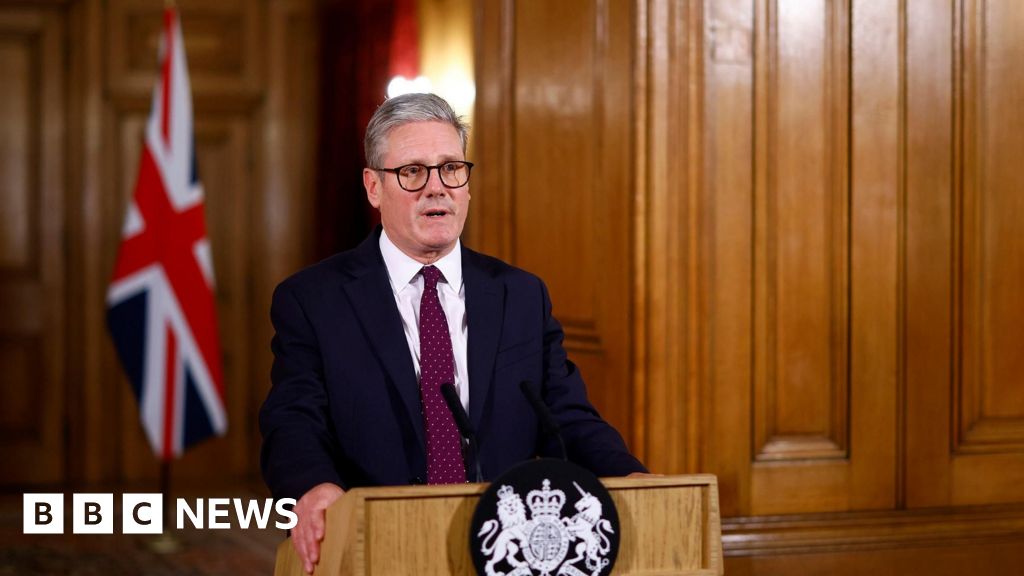
In a speech released by Downing Street on Sunday night, UK Prime Minister Sir Keir Starmer addressed the nation’s approach to the escalating tensions in the Middle East. Nearly 25 years after he penned a critical piece on Britain’s involvement in the Iraq War, Starmer now faces his own complex decisions regarding American military actions in the region.
Starmer, who once campaigned against British involvement in Iraq, emphasized the importance of learning from past mistakes. “We all remember the mistakes of Iraq. And we have learned those lessons,” he stated, underscoring a commitment to protecting national interests. He concluded his speech with a powerful invocation of Britain, highlighting the government’s focus on safeguarding British lives and interests.
Defining a Distinct British Approach
The prime minister’s recent announcement marks a deliberate attempt to carve out a unique British stance, distinct from the broader regime change aspirations of the US and Israel. By choosing not to participate in the initial wave of strikes, the UK government has resisted what some perceive as the logical conclusion that such strikes were potentially unlawful.
Starmer’s announcement of a new position was particularly significant. He declared that while the UK would not join “offensive action” against Iran, it would permit the US to use joint UK-US bases for targeted strikes. These strikes aim to degrade Iran’s capacity to launch missile and drone attacks, particularly in Gulf countries where many British citizens reside.
“This government does not believe in regime change from the skies,” Starmer told MPs, aligning with critics of the US president.
Internal and External Political Pressures
The government’s decision has sparked a spectrum of reactions. Some MPs criticize the allowance of US strikes from British bases, fearing deeper entanglement in the conflict. Others question why the UK is not more supportive of actions that could potentially topple a regime seen as a regional menace.
This internal division is mirrored within Starmer’s own Labour Party, reflecting broader foreign policy disagreements that have intensified since October 2023. The recent Green Party victory in the Gorton and Denton by-election highlighted how foreign policy can influence domestic politics, adding pressure on Starmer’s leadership.
International Alliances and Legal Considerations
Starmer’s approach involves careful coordination with international allies, including Germany’s Chancellor Friedrich Merz and France’s President Emmanuel Macron. However, differences remain, particularly regarding the role of international law. While Starmer emphasizes its importance, Merz has suggested that legal classifications may have limited impact on current events.
Starmer’s alignment with leaders like Australia’s Anthony Albanese and Canada’s Mark Carney further illustrates his strategic positioning on the global stage. Labour MPs have notably praised Carney’s speech on the “rupture in the world order,” urging Starmer to adopt a similar outlook.
Challenges on the Home Front
Beyond international diplomacy, Starmer faces the practical challenge of addressing the safety of over 300,000 British citizens in the Gulf. While officials downplay the inevitability of a government evacuation, they acknowledge that prolonged conflict could increase calls for assistance.
The complexity of these issues underscores the delicate balancing act required of Starmer as he navigates both domestic and international pressures. As the situation evolves, the prime minister’s ability to maintain a distinct British approach while managing internal party dynamics and international alliances will be closely scrutinized.
Looking ahead, the implications of Starmer’s decisions will resonate not only within the UK but also across the broader geopolitical landscape. As tensions in the Middle East continue, the prime minister’s strategic choices will play a crucial role in shaping Britain’s role on the world stage.