


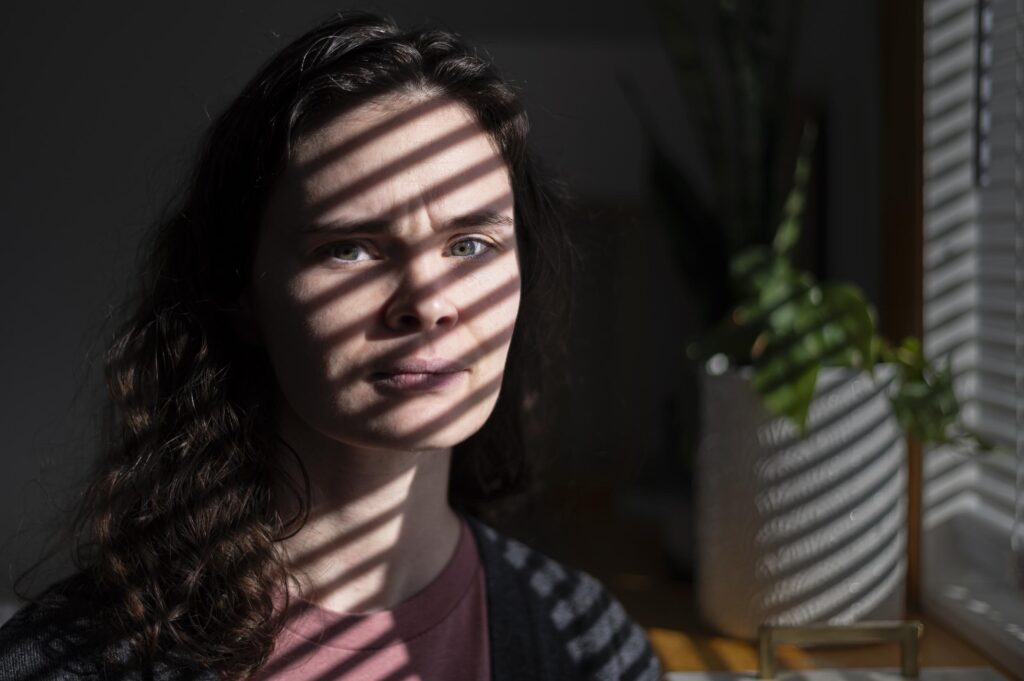
Mary Kate Shanahan has long covid. Seen in South Burlington on Friday, February 13, 2026. Photo by Glenn Russell/VTDigger
Ali knew something was wrong with her body. An active Vermonter and full-time nurse, she began experiencing severe symptoms in 2024, including shortness of breath and chest pain after minimal exertion. Despite multiple emergency room visits and extensive testing, doctors found nothing. “Why do I feel this horrible all the time?” she questioned, unable to understand why her symptoms went undetected.
It took months for Ali to connect these life-altering symptoms to a mild case of Covid-19 she had earlier contracted. A neurologist eventually diagnosed her with long Covid. Nearly six years since Covid-19 first arrived in Vermont, long Covid remains a complex and poorly understood condition, characterized by chronic fatigue, respiratory issues, and cognitive difficulties. Despite millions of Americans reporting symptoms, no definitive diagnostic tests or universally effective treatments exist.
The Struggle for Recognition and Support
Long Covid patients in Vermont find themselves in a state of limbo, facing disbelief and stigma from their communities and struggling to access necessary workplace accommodations and social services. The rising costs and reduced benefits of the healthcare system have exacerbated their challenges. Ali, for instance, learned that her insurer might no longer cover a crucial medication, potentially costing her $80,000 annually.
Interviews with disability rights advocates, clinicians, and long Covid patients reveal systemic barriers that extend beyond any single administration, rooted instead in longstanding issues within healthcare and societal attitudes towards chronic illness. Chawna Cota, from the Vermont Democratic Disability Caucus, emphasized the need for research and resources. “We are still not there yet,” she stated.
Living with Long Covid
Krista Coombs, who leads a support group for Vermonters with long Covid, has made numerous adjustments to continue working, such as working from bed and using headphones to manage brain fog. “I’ve been listening to what people need,” Coombs said. “Giving people a space to actually identify their needs is really powerful.”
The experience of long Covid varies widely. A 2025 survey identified over 40 symptoms associated with the condition, and recent studies have categorized it into eight different trajectories. This variability complicates efforts to assess its prevalence. A 2023 Vermont Department of Health report found that 11% of adult Vermonters who tested positive for Covid experienced symptoms lasting three months or longer.
Despite these varied experiences, Coombs noted a common theme: a widespread lack of understanding. “We’re constantly torn down for just being sick,” she said.
Seeking Recognition and Change
Long Covid is officially recognized by bodies like the CDC and WHO, yet misinformation persists, including unfounded claims linking it to the Covid vaccine. This lack of recognition extends to personal relationships, with patients like Ali struggling to convey the severity of their condition to loved ones.
Efforts to raise awareness and secure funding have faced setbacks. A promising bill proposed by U.S. Sen. Bernie Sanders in 2024 to fund long Covid research has stalled in Congress. Additionally, Robert F. Kennedy, Jr.’s tenure as Secretary of Health and Human Services saw the dismantling of key long Covid initiatives, despite initial promises.
Nonetheless, hundreds of clinical studies continue worldwide. Vermonters with long Covid are experimenting with various treatments, though the fragmented nature of medical specialties poses challenges. The University of Vermont’s COVID Recovery Program seeks to address this, offering a pathway to connect patients with multiple specialists.
“If we lose research, then we lose the opportunity to learn about new things and what works, and what doesn’t,” said David Kaminsky, a lead physician at the program.
Adapting and Moving Forward
For many, living with long Covid involves rethinking how they manage their energy. Mary Kate Shanahan, a birth doula, has learned to pace herself to prevent fatigue. Meanwhile, Ali’s experience has deepened her empathy as a nurse.
Despite the challenges, there are moments of progress and hope. Coombs shared her gradual recovery, noting her improved ability to perform daily tasks. “It was happening,” she said.
For some, the most effective strategy is not a specific treatment but a shift in lifestyle and mindset. Zoe Newmarco, who moved to New York for better healthcare access, has found new tools for self-advocacy and formed a supportive community.
“Of course I miss my body before long Covid,” Newmarco said. “But it has totally changed my world. And I really love my life right now.”
As the pandemic’s memory fades for many, the struggle for those with long Covid continues. Vermont’s long Covid community remains resilient, advocating for recognition, support, and a better understanding of their condition.