
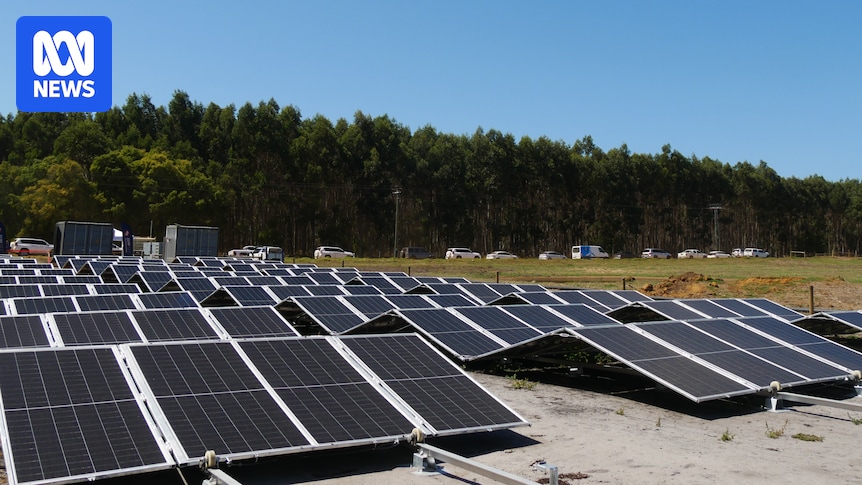
In a bold move to combat soaring energy costs and unreliable electricity, Western Australia’s largest dairy, Peninsula Downs, is investing $650,000 in a hybrid solar and battery system. This strategic investment aims to reduce the dairy’s dependence on the grid and costly diesel fuel, thereby cutting production costs significantly.
Peninsula Downs, a staple in the state’s South West region for over 70 years, operates across eight properties in Scott River and Warner Glen. Historically, the dairy has relied heavily on grid electricity and diesel generators to power its center pivot irrigation systems, which are crucial for pumping groundwater and dam water to sustain feed for its herd.
Innovative Hybrid System
Ross Woodhouse, Managing Director of Peninsula Downs, explained that the new system will integrate solar panels, battery storage, and a diesel generator. “We built a system over 30 years, spent probably $30 million in that vicinity, to develop center pivot irrigation, groundwater, dam water,” Woodhouse stated.
“We had to look for alternatives, and this is what we came up with, which is a hybrid system still using the generator but basically solar and batteries,” he added. The hybrid system is expected to supply approximately two-thirds of the dairy’s energy needs, with diesel filling the remaining gap.
Addressing Costly and Unreliable Power
The decision to move off-grid stems from the dairy’s struggles with unstable electricity supplies. According to Woodhouse, every hour without power costs the dairy about $600, a financial burden that has become untenable. Additionally, power charges have surged by 50% in the past year alone.
“Every hour without power cost the dairy about $600, and that’s too significant,” said Ross Woodhouse.
Western Australia’s dairy industry has faced significant challenges over recent decades, with the number of dairy farmers plummeting from around 400 to fewer than 100 today. Contributing factors include high land values, escalating input costs, and an aging workforce.
“We’ve got land that was worth $1,000 an acre [0.4 hectares], now worth in excess of $11,000 an acre, and our return on that asset is very, very poor,” Woodhouse noted.
Industry Challenges and Opportunities
The decline in dairy farms is a pressing concern for the state, acknowledged by WA Agriculture Minister Jackie Jarvis. She emphasized the importance of innovations like Peninsula Downs’ off-grid project for the future of the dairy industry.
“I think investments like this are showing positive signs for the dairy industry, but we’re keeping a close eye on it. We want to make sure that the fresh milk supply in Western Australia remains,” Jarvis said. “It is a no-brainer that businesses like this that use a lot of diesel or are spending a lot of money on power from the grid can actually go off-grid.”
Woodhouse believes that technology and renewable energy are vital for sustaining the dairy sector. “It should be here in 400 years’ time, exactly the same,” he remarked, underscoring the long-term vision for the industry.
Looking Forward
The move towards renewable energy by Peninsula Downs could serve as a blueprint for other agricultural businesses facing similar challenges. As energy costs continue to rise and the reliability of traditional power sources remains in question, more farms may look to innovative solutions to ensure their sustainability.
While the transition to a hybrid solar and battery system represents a significant upfront investment, the potential savings and increased energy reliability offer a promising path forward. As the dairy industry in Western Australia navigates these turbulent times, Peninsula Downs’ initiative may well mark the beginning of a broader shift towards renewable energy solutions in agriculture.