




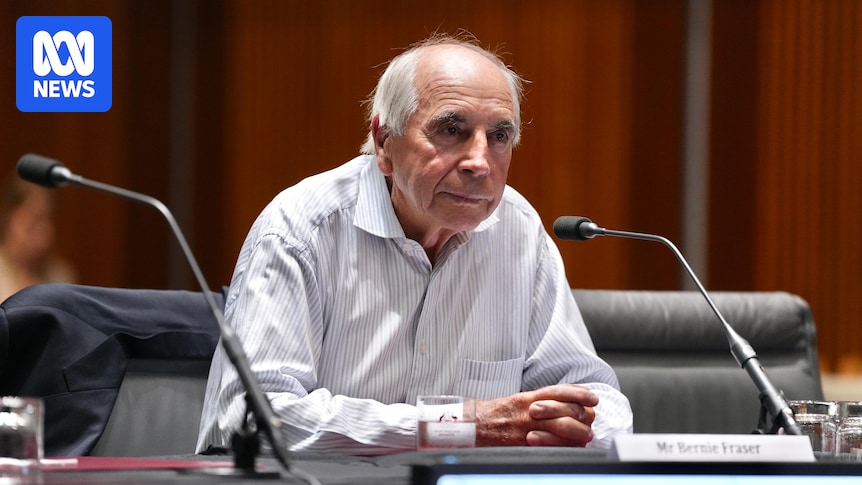
A former Reserve Bank of Australia (RBA) governor has called for the abolition of the capital gains tax (CGT) discount in a bid to improve housing affordability across the nation. Bernie Fraser, speaking at a Senate committee hearing on CGT, argued that eliminating the discount could be a significant step towards making housing more accessible for Australians.
Fraser acknowledged the challenge of changing the current system, citing a “cartel” of vested interests, including politicians, homeowners, and investors, who prefer maintaining the status quo. “Despite that sort of toxic approach to tax changes, I think that a case can be made for doing away with the discount on the gains, capital gains tax, abolishing it altogether,” Fraser stated in Canberra. “I believe that would be a useful step, one of many steps required to move back to an affordable housing market for all Australians.”
Understanding the Capital Gains Tax Discount
The capital gains tax is levied on the profits from selling an asset, with the current 50 percent CGT discount allowing Australians to pay tax on only half the profit if they have held the asset for more than 12 months. Main residences are generally exempt from CGT, a factor that has contributed to the ongoing debate over its fairness and effectiveness.
The Albanese government has signaled openness to revising the CGT discount for property investors as part of its broader housing affordability policy development. However, Fraser noted that any move to scrap the CGT discount would likely face strong opposition from certain sectors.
“I believe it’s true that there are some sectors of the community — there is, in fact, what Alan Kohler called a ‘cartel’ of people who are against changing the tax, dealing with the tax changes,” Fraser said, referencing Kohler’s earlier testimony to the committee.
Market Impacts and Public Sentiment
The former RBA chief highlighted the financial benefits that banks, developers, and property owners derive from the current system, describing their approach to property tax concessions as “toxic.” He pointed to the significant rise in house prices over the past two decades, which has made homeownership increasingly unattainable for many Australians, particularly those on modest incomes.
“It’s not just those people in the housing markets now … feeling the disappointment,” Fraser remarked. “There are all those other generations of people — young home buyers — that are watching what’s going on in the marketplace, but they must be watching with awful dismay.”
Exploring Solutions Beyond Taxation
While the focus on CGT tax concessions remains strong, the Senate committee is also considering housing supply as a crucial element of the affordability puzzle. Economist Cathal Leslie suggested that better utilization of existing properties could alleviate rental pressures. “Of course, people have spare bedrooms for all kinds of reasons, but if we could just utilize some of that, it would make a big dent in our housing crisis,” Leslie explained.
Addressing rising inequality, Tax and Transfer Policy Institute director Robert Breunig emphasized the difficulty of implementing changes due to the high proportion of property-owning voters. “The average voter is a homeowner and has seen a big wealth increase, and doesn’t feel like they should have to share any of that with the government,” Breunig noted. “It’s probably a question about democracy, I think.”
Potential Redirects for Tax Revenue
Labor senator Ellie Whitaker questioned where funds redirected from property tax concessions might be better utilized. Leslie, a former Treasury economist, suggested potential investments in the education and technology sectors, depending on which areas are currently underfunded.
Complexity and Future Implications
Despite calls for reform, Treasury research indicates that changes to the CGT discount might have a limited impact on housing supply and prices. “The impact on the housing market seems to be relatively small,” Treasury first assistant secretary Shane Johnson stated. “Where you are likely to see more of an effect is around the ownership mix of housing.”
As the debate continues, the Senate committee is tasked with considering the broader implications of tax concessions on productivity and economic behavior. Professor Breunig stressed the importance of addressing under-taxation in owner-occupied housing, which he argued contributes to unproductive economic behavior.
“I want to stress owner-occupied housing, which is where I think the egregious under-taxation is, and that is generating a lot of unproductive behavior,” Professor Breunig said.
The discussions at the Senate committee underscore the complexity of the housing affordability crisis and the multifaceted approach required to address it. As policymakers weigh potential reforms, the challenge remains to balance economic incentives with the pressing need for more affordable housing options.