


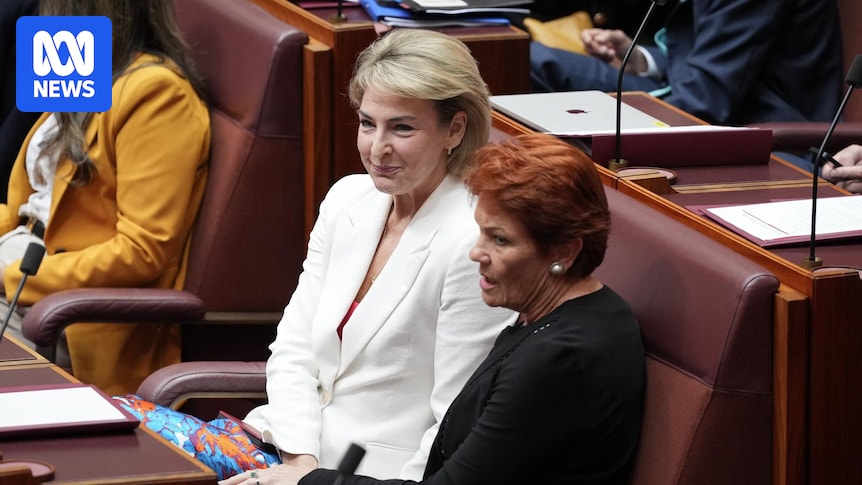
The Coalition has opted not to support a motion censuring One Nation leader Pauline Hanson after she suggested there are no “good” Muslims during a television interview. The decision comes amid arguments that such sanctions should not become the default response to controversial public commentary.
Labor’s motion, spearheaded by Foreign Minister Penny Wong, censured Hanson for her “inflammatory and divisive comments seeking to vilify Muslim Australians” and reaffirmed the parliament’s support for migrants. The motion passed with backing from the Greens and Liberal senators Paul Scarr and Andrew McLachlan, who notably crossed the floor to vote in favor of the condemnation. This marks the second formal sanction against Senator Hanson in four months.
Political Reactions and Implications
Opposition Senate leader Michaelia Cash emphasized that while the Coalition supported the principle behind the motion, they would not vote for Hanson’s censure. Cash argued that such a response should be reserved for conduct within parliament, stating, “However … a formal censure is one of the most serious rebukes available to this chamber and it should be treated as such.”
A censure motion, while stern, serves primarily as a symbolic gesture allowing politicians to express disapproval of a member’s behavior without triggering practical consequences. Senator Hanson was absent for the vote, dismissing it as a “stunt” and accusing the media of misrepresenting her original comments.
Hanson’s Controversial Remarks
The controversy began during a Sky News interview concerning the potential return of women and children linked to Islamic State militants to Australia. Hanson questioned the existence of “good Muslims,” a statement swiftly rejected by politicians across the political spectrum. She later clarified her position to the ABC, stating she did not believe there were no “good” Muslims, and issued a qualified apology.
Hanson’s apology was conditional, addressing those who do not support sharia law or other controversial practices. However, she maintained her stance, asserting, “In general, that is what they want — a world caliphate. And I am not going to apologise … I will have my say now before it’s too late.”
Historical Context and One Nation’s Position
This is not the first time Hanson has faced censure. Late last year, she was suspended from the Senate for wearing a burka in the chamber, a repeat of a 2017 stunt aimed at advocating for a ban on face coverings in Australia. Hanson’s stance on Islam has long been contentious, dating back to her 2016 parliamentary speech warning of being “swamped by Muslims.”
One Nation’s prominence has recently increased, with opinion polls showing the party ahead of the Coalition. The upcoming Farrer by-election will test whether One Nation can convert this support into electoral success, as the party has yet to win a lower house seat.
Looking Ahead: Political Landscape and By-Election
The Farrer by-election will also serve as an early test for new Opposition Leader Angus Taylor. His predecessor, Sussan Ley, held the seat for 25 years. The by-election is shaping up as a four-way contest, with both the Nationals and Liberals expected to field candidates against One Nation and independent Michelle Milthorpe.
As the political landscape continues to evolve, the outcome of the by-election could signal broader shifts in voter sentiment and party dynamics. The implications of Hanson’s censure and the ensuing political maneuvering will likely reverberate through Australia’s political discourse in the coming months.