



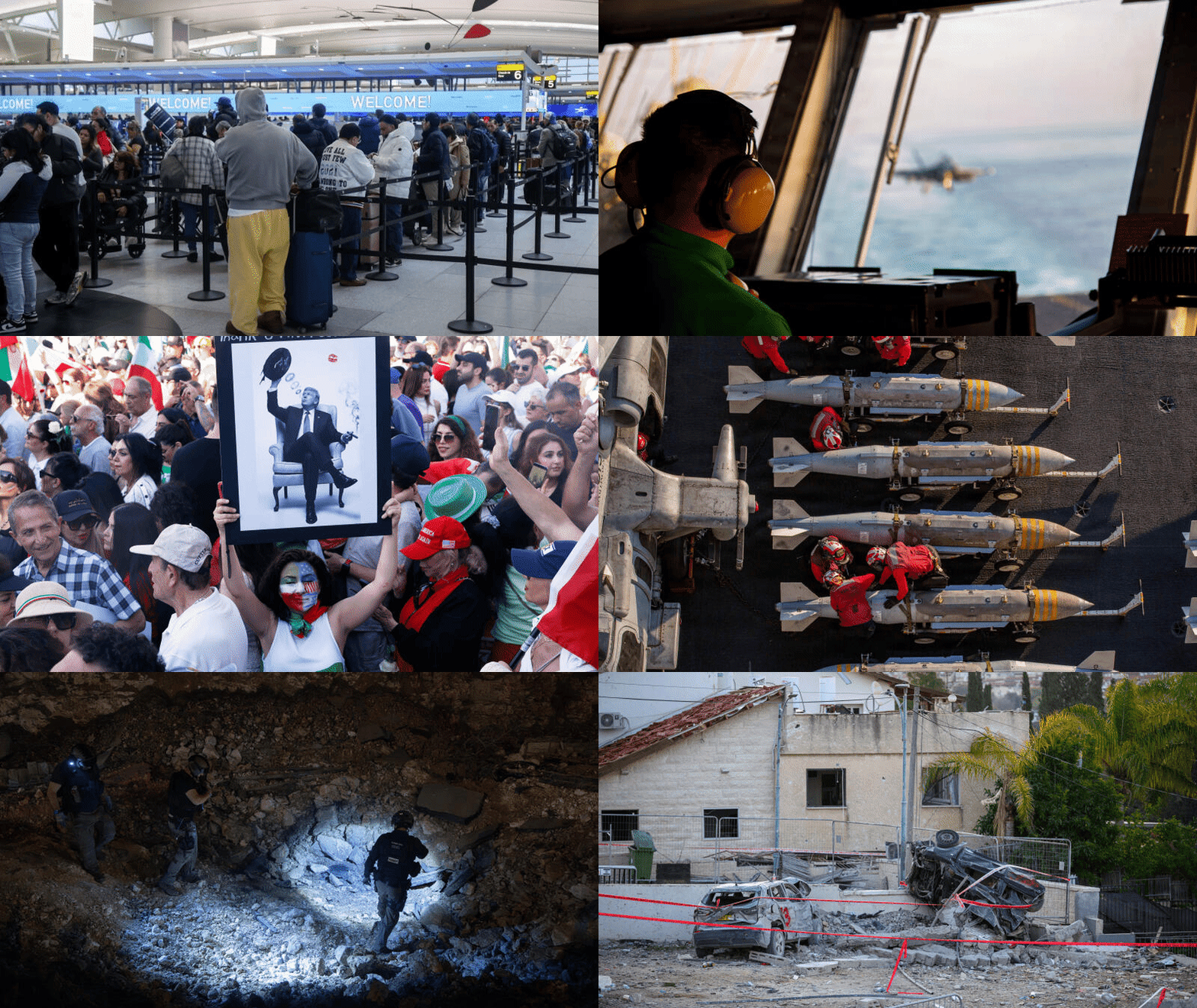
The Middle East is engulfed in a rapidly escalating conflict as US President Donald Trump warns of a prolonged war, following a series of aggressive military exchanges between the US-Israel coalition and Iran. In a recent public address, President Trump indicated that the conflict could extend well beyond a month, emphasizing the likelihood of a “big wave of strikes” in the coming weeks. This announcement comes amid heightened tensions and increasing military actions across the region.
In an interview with The New York Post, Trump did not dismiss the possibility of deploying US ground troops to Iran, further intensifying the situation. Meanwhile, an Iranian Revolutionary Guard official declared the strategic Strait of Hormuz closed, threatening to target any vessel attempting passage, as reported by Iranian state media.
Military Escalations and Casualties
The conflict has seen significant military escalations, with Iran launching strikes on several countries, including Israel, Lebanon, the UAE, Kuwait, and Iraq. Iraq’s Foreign Ministry reported that Erbil has endured over 70 missile and drone attacks since Saturday. Additionally, Saudi Arabia’s Ras Tanura oil refinery was forced to shut down after shrapnel from an Iranian drone ignited a fire.
In a tragic turn, the US Central Command confirmed the deaths of six American soldiers, with the remains of two previously unaccounted personnel discovered. This follows the accidental downing of three US fighter jets by Kuwaiti defenses, though all crew members survived.
The Iranian Red Crescent reports that the death toll in Iran has surpassed 550, as US and Israeli forces focus their efforts on Tehran.
Global Reactions and Implications
As the conflict widens, international reactions vary. The Australian government is exploring contingency plans to assist citizens stranded in the region, with Defence Minister Richard Marles confirming that Australia’s Al Minhad air base was targeted by Iranian drones, though personnel remain safe.
Lebanon’s government condemned Hezbollah’s involvement, calling their actions illegal and demanding disarmament. The conflict has forced civilians to flee southern Lebanon and Beirut’s suburbs, with schools closing due to the violence.
Regional and Global Impact
The closure of Saudi Arabia’s largest oil refinery and the potential threat to the Strait of Hormuz have significant implications for global oil markets, with petrol prices expected to rise. The conflict’s expansion threatens to destabilize the already volatile Middle East, drawing in more nations and complicating diplomatic efforts.
Former Australian Prime Minister Malcolm Turnbull criticized the US’s actions, stating they breach international law and reflect a troubling disregard for global norms.
Looking Forward: Potential Outcomes and Challenges
The continuation of hostilities raises questions about the future of the region and the potential for broader international involvement. As both sides exchange strikes, the risk of miscalculation or unintended escalation remains high. Diplomatic channels may yet offer a path to de-escalation, but the current trajectory suggests a prolonged and complex conflict.
With the US and Israel targeting over 1,000 sites in Iran and Iran retaliating across multiple countries, the situation remains fluid and dangerous. The international community watches closely, hoping for a resolution that averts further loss of life and regional destabilization.
As the conflict unfolds, the world braces for its impact, both immediate and long-term, on global stability and economic conditions.