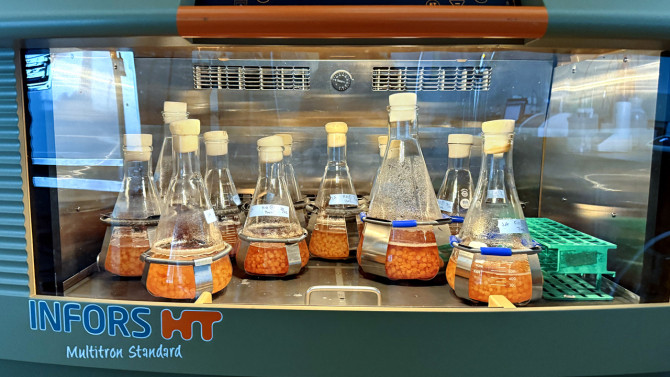





In a groundbreaking study, researchers from McMaster University have uncovered a potential link between gut bacteria and the severity of peanut allergy reactions. Published in the journal Cell Host & Microbe on March 3, 2026, the study reveals how certain bacteria in the mouth and gut can break down peanut allergens, potentially altering allergic responses. This discovery could pave the way for new treatments aimed at reducing life-threatening anaphylaxis, a condition affecting many Canadians.
Peanut allergies are among the most prevalent food allergies in Canada, with one in two households impacted by food allergies in general. Understanding why individuals with similar levels of peanut-specific antibodies experience different reactions has long puzzled scientists. The study, led by McMaster University’s Farncombe Family Digestive Health Research Institute, provides new insights into this mystery.
Unveiling the Role of Gut Microbes
According to Liam Rondeau, a postdoctoral fellow involved in the research, the answer lies in the microbes residing in our mouths. “Peanut allergies can cause serious reactions like difficulty breathing and can even be life-threatening. However, some people with peanut allergies can still eat small amounts without having a reaction. We were curious about why this happens, and we discovered the answer while studying the microbes in our mouth,” Rondeau explained.
The research team analyzed saliva and upper gut samples from healthy volunteers, identifying several bacterial species capable of breaking down major peanut allergens. Notably, the Rothia species emerged as a key player, reducing the ability of peanut proteins to bind with antibodies—a critical step in triggering allergic reactions.
Implications for Allergy Management
Further examination of participants with peanut allergies revealed that those with a higher abundance of allergen-degrading bacteria could tolerate greater amounts of peanuts before experiencing a reaction. “Microbes in the mouth and gut play an important role in digestion. In our study, we found evidence that some of these microbes may help break down peanut components in ways that could influence allergic responses,” stated Alberto Caminero Fenandez, co-senior author and associate professor at McMaster’s Department of Medicine.
“These findings point to a newly identified pathway linking the oral and gut microbiome with food allergy, and they may help guide future work on prediction and treatment.” — Alberto Caminero Fenandez
Validation and Future Directions
The research team validated their findings using an external dataset of 120 children, demonstrating that Rothia species were significantly more abundant in children with higher peanut reaction thresholds. Pre-clinical experiments further confirmed that Rothia reduced the amount of peanut allergens reaching the bloodstream, lowered immune cell activation, and resulted in milder allergic reactions upon exposure.
Peanut allergy remains the most common food allergy among Canadian children, with strict avoidance being the only recommended management strategy. Despite this, accidental exposures are frequent, affecting about one-third of children annually. Peanut allergy is also the leading cause of allergy-related deaths in children.
Potential for New Treatments
The findings from this study open the door for innovative approaches to allergy prevention and treatment. Potential strategies include the development of microbial or probiotic therapies and enhanced oral immunotherapy techniques. This multicentre study was a collaborative effort involving researchers from McMaster University’s Farncombe Family Digestive Health Research Institute, the Schroeder Allergy and Immunology Research Institute, and partners in Spain and the United States.
Funding for the research was provided by the New Frontiers in Research Fund, the Natural Sciences and Engineering Research Council of Canada, the Farncombe Institute, the Nutricia Research Foundation, the European Food Safety Authority, various Spanish government programs, the Instituto de Salud Carlos III, the Canadian Institutes of Health Research, Crohn’s and Colitis Canada, and the Community of Madrid.
As the scientific community continues to explore the complex interactions between the human microbiome and allergic responses, this study represents a significant step forward in understanding and potentially mitigating the impact of peanut allergies.