


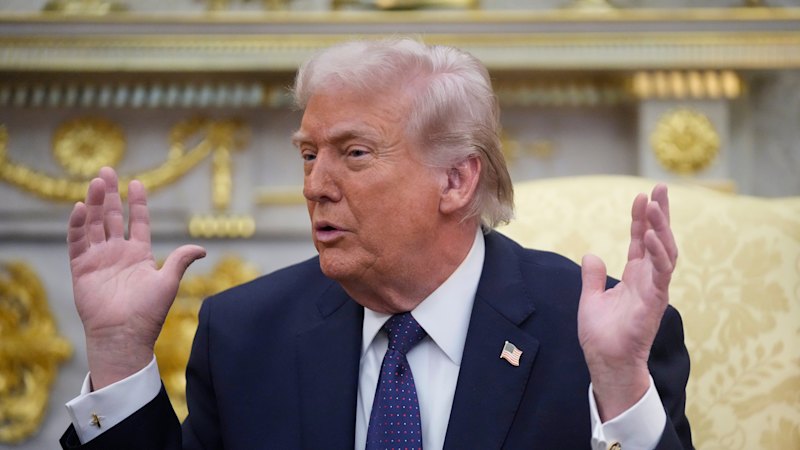
Washington: In a dramatic escalation of international tensions, U.S. President Donald Trump has announced that fresh Israeli strikes on Iran’s leadership have likely eliminated several potential successors to the country’s supreme leader. The strikes, which targeted a building in Tehran where Shia clerics were reportedly meeting, have intensified the geopolitical landscape, with Trump denying that Israel forced his hand in initiating the attacks.
Trump’s comments came during a White House briefing, where he also criticized British Prime Minister Keir Starmer for his stance on the use of UK military bases, stating, “This is not Winston Churchill that we’re dealing with.” The remarks underscore the growing friction between the U.S. and its allies over the ongoing military campaign.
Israeli Strikes and Leadership Vacuum
The Israeli Defense Forces have confirmed that a compound housing Iran’s “most senior forum” was struck, aiming to prevent the selection of a new supreme leader following the death of Ali Khamenei in earlier strikes. An Israeli official, speaking to Axios, noted the timing of the attack was strategic, designed to disrupt the leadership selection process.
Trump, addressing the potential fallout, remarked, “Most of the people that we had in mind are dead. Now we have another group, they may be dead also, based on reports. So, I guess you have a third wave coming in.” The president expressed concern about the possibility of a new leader who might mirror the previous regime’s policies.
U.S. Strategic Moves in the Gulf
Amidst the military operations, Trump announced measures to secure the Gulf region’s energy supply. He instructed the U.S. Development Finance Corporation to provide political risk insurance and guaranteed the financial security of shipping, particularly oil tankers, through the Strait of Hormuz. “No matter what, the United States will ensure the FREE FLOW of ENERGY to the WORLD,” Trump asserted on social media.
Despite declaring Iran “decimated,” Trump offered no clear timeline for the military campaign’s duration. His administration has provided varying estimates, ranging from two to six weeks, while emphasizing the U.S.’s extensive munitions stockpiles.
International Reactions and Diplomatic Strains
The strikes have complicated ongoing U.S.-Iran negotiations mediated by Oman. Secretary of State Marco Rubio cited an “imminent threat” from Iran, suggesting that Israeli actions were preemptive. However, Trump dismissed claims that Israel compelled U.S. involvement, stating, “I might have forced their hand.”
Meanwhile, Trump’s criticism of allies, particularly the UK and Spain, has strained diplomatic relations. Starmer’s reluctance to fully support U.S. military actions has led to public rebukes from Trump, who lamented the lack of cooperation from Britain and Spain. “We were very surprised. This is not Winston Churchill that we’re dealing with,” Trump reiterated.
Implications and Future Prospects
The unfolding situation raises questions about the future of U.S. foreign policy in the Middle East. The potential for further destabilization in Iran, coupled with strained alliances, could have significant implications for global security and economic stability.
As the military operation continues, the international community watches closely, awaiting further developments. The U.S. administration’s next steps will likely shape the geopolitical landscape for years to come.