


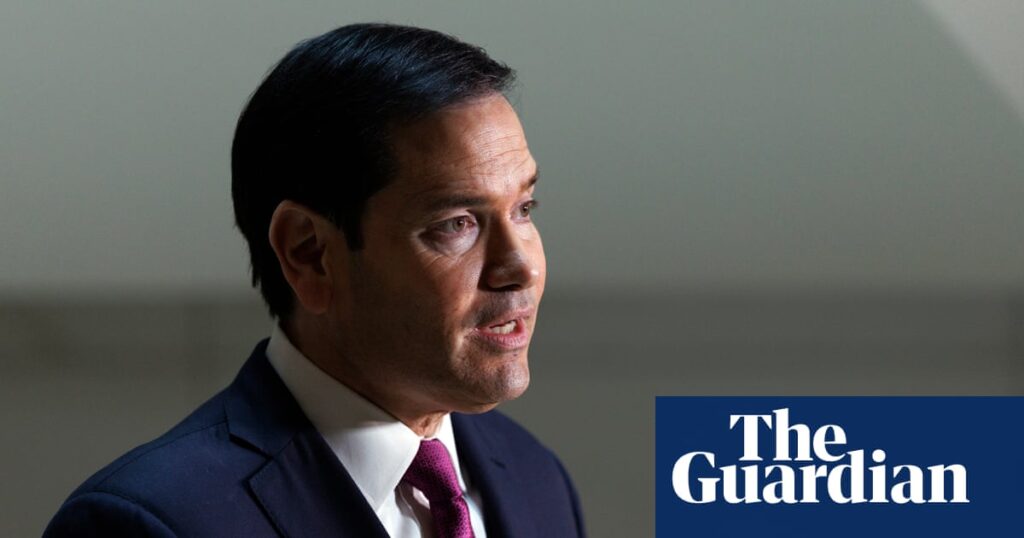
Israel’s determination to strike Iran and the ensuing certainty that U.S. troops would become targets prompted the Trump administration to initiate pre-emptive strikes, according to Secretary of State Marco Rubio. This new explanation sheds light on Washington’s unexpected entry into the conflict.
The announcement comes as top members of Congress received their first briefing from the Trump administration since the air campaign began over the weekend. The briefing, held behind closed doors in the Capitol, included Rubio, CIA Director John Ratcliffe, and Joint Chiefs of Staff Chair Dan Caine. Lawmakers are preparing for a vote on a war powers resolution that could compel President Trump to cease hostilities against Iran.
Divided Congressional Reactions
Reactions to the administration’s rationale for entering the conflict have split along party lines. Republicans have largely defended the president’s actions, while Democrats have criticized the move as an unnecessary conflict with ambiguous objectives.
“It was abundantly clear that if Iran came under attack by anyone – the United States or Israel or anyone – they were going to respond, and respond against the United States,” Rubio told reporters at the Capitol. “We knew that there was going to be an Israeli action. We knew that that would precipitate an attack against American forces, and we knew that if we didn’t pre-emptively go after them before they launched those attacks, we would suffer higher casualties.”
“This is Trump’s war. This is a war of choice. He has no strategy, he has no endgame,” said Senate Democratic Minority Leader Chuck Schumer.
Schumer expressed dissatisfaction with the briefing, stating that it raised more questions than it answered. Mark Warner, the Democratic Vice-Chair of the Senate Intelligence Committee, voiced concerns about the implications of the U.S. allowing Israel to effectively drag it into a new war.
Strategic Goals and Military Actions
Since the conflict began, the United States and Israel have conducted waves of airstrikes across Iran, which have resulted in significant casualties, including the death of Iran’s Supreme Leader, Ayatollah Ali Khamenei. The U.S. military has reported the deaths of six service members, while the Iranian Red Crescent Society claims over 500 people have been killed.
Vice President JD Vance, a notable opponent of military interventions within the Trump administration, emphasized the U.S. aim to prevent Iran from acquiring a nuclear weapon. “The president wants to make it clear to the Iranians and to the world that he is not going to rest until he accomplishes that all-important objective of ensuring that Iran can’t have a nuclear weapon,” Vance stated.
Meanwhile, Israeli Prime Minister Benjamin Netanyahu warned that Iran was constructing new underground sites that would soon make their missile and atomic programs immune to future attacks. “If no action was taken now, no action could be taken in the future,” he asserted.
Political and Legislative Implications
As the House prepares to consider a war powers resolution, the political landscape remains tense. The resolution, if passed, could force Trump to end hostilities against Iran, but it faces significant hurdles given the Republican majority in Congress.
Mike Johnson, the Republican Speaker of the House, defended the president’s decision as a “defensive operation” and expressed confidence that the resolution would not pass. “The idea that we would take the ability of our commander in chief, the president, take his authority away right now to finish this job, is a frightening prospect to me. It’s dangerous,” Johnson said.
“Israel was determined to act in their own defense here, with or without American support. Why? Because Israel faced what they deem to be an existential threat,” Johnson explained.
The move represents a critical moment in U.S. foreign policy, with significant implications for its relationships in the Middle East. As the situation develops, the world watches closely to see how these actions will affect regional stability and international relations.
Looking ahead, the administration’s next steps remain uncertain. The conflict’s objectives, exit strategy, and the broader implications for U.S.-Iran relations continue to be subjects of intense debate both domestically and internationally.