



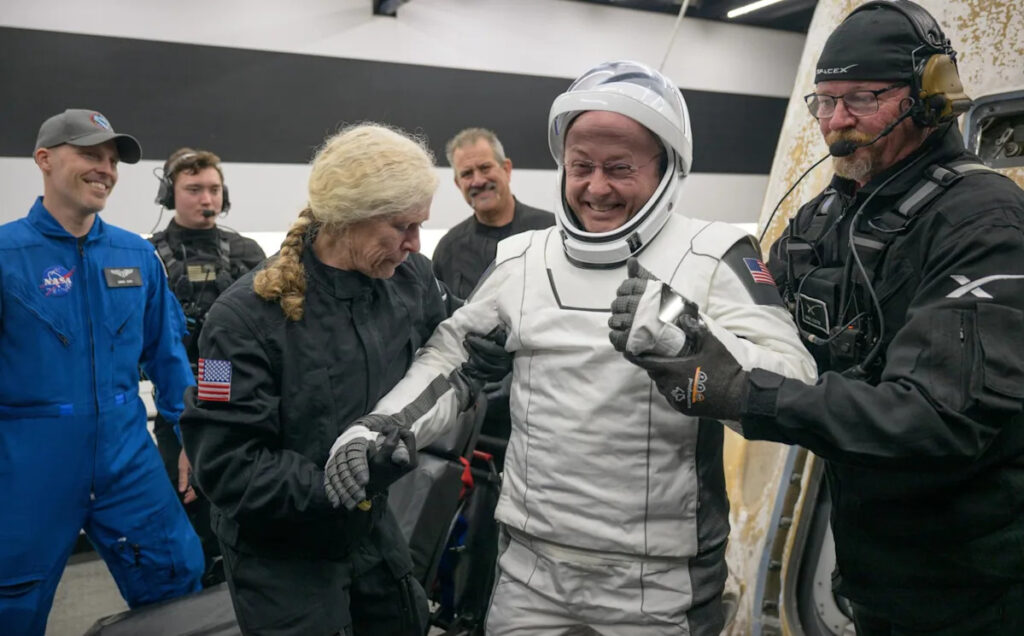
NASA recently concluded a manned mission to the International Space Station (ISS) a month ahead of schedule, citing a medical issue involving astronaut Mike Fincke. This marked the first medical evacuation in the history of the ISS, underscoring the inherent risks of space travel.
The space agency disclosed that Fincke experienced an unspecified medical event on January 7 that necessitated immediate attention from his fellow crew members. According to NASA’s statement, the astronaut’s condition “required immediate attention,” but thanks to the “quick response and the guidance” of flight surgeons, Fincke’s “status quickly stabilized.”
Impact on the ISS Mission
The incident led NASA to cancel a planned spacewalk on January 8. Shortly thereafter, the agency made the decision to conclude the Crew-11 mission a month early. The four-person crew, which included Fincke, NASA astronaut Zena Cardman, Japanese astronaut Kimiya Yui, and Russian cosmonaut Oleg Platonov, had been living and working aboard the ISS since August and were originally scheduled to remain until February. The crew returned to Earth on January 15, a decision made by NASA’s chief health and medical officer.
Upon their return, NASA Administrator Jared Isaacman described the situation as “serious” but refrained from providing further details. Fincke, however, assured the public that he is “doing very well” and is currently undergoing standard post-flight reconditioning at NASA’s Johnson Space Center in Houston. He expressed gratitude for the support received, stating, “Spaceflight is an incredible privilege, and sometimes it reminds us just how human we are.”
Historical Context and Expert Opinions
This unprecedented medical evacuation highlights the challenges and unpredictability of manned space missions. Historically, space agencies have meticulously planned for medical emergencies, but this event underscores the reality that not all contingencies can be anticipated. Dr. Emily Carter, a space medicine expert, noted, “While we have protocols in place, the human body can react unpredictably to the unique conditions of space, making medical readiness a critical component of mission planning.”
The decision to return the crew early reflects NASA’s commitment to astronaut safety, a priority that has been emphasized since the early days of human spaceflight. The agency’s swift response and the crew’s safe return demonstrate the effectiveness of current emergency protocols.
Looking Forward
As NASA and its international partners continue to explore the possibilities of long-duration space missions, including potential manned missions to Mars, the lessons learned from this incident will be invaluable. The agency is likely to review and enhance its medical protocols to better prepare for future contingencies.
Meanwhile, the space community remains supportive of Fincke and his crew. The incident serves as a reminder of the courage and resilience required of astronauts. As Fincke continues his recovery, the focus remains on advancing human space exploration while ensuring the safety and well-being of those who venture into space.
Though the specifics of Fincke’s medical issue remain private, the incident has sparked discussions about the importance of transparency and communication in space missions. As the world watches NASA’s next steps, the agency’s handling of this situation will likely influence future policies and public perception.
In conclusion, while the early return of the Crew-11 mission was unexpected, it highlights the dynamic nature of space exploration and the ongoing need for vigilance and preparedness. The space community wishes Mike Fincke a swift recovery and looks forward to his continued contributions to space exploration.