

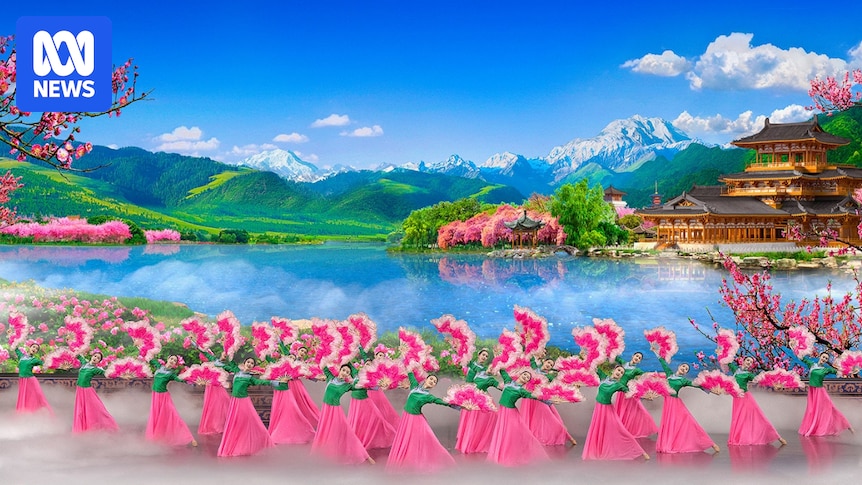
The Australian Prime Minister, Anthony Albanese, was forced to evacuate his residence earlier this week following a bomb threat linked to performances by Shen Yun, a classical Chinese dance group. The threatening emails demanded the cancellation of the shows and falsely claimed that explosives had been placed around the Lodge. Police are also investigating a separate bomb threat against a Gold Coast theatre hosting the group.
Shen Yun, known for its vivid portrayal of traditional Chinese culture, is closely associated with the Falun Gong spiritual movement. The group is currently performing across Australia, with shows scheduled throughout March.
Understanding Shen Yun
Shen Yun is a dance performance that aims to showcase Chinese traditional culture, arts, and history. Established by Li Hongzhi in New York in 2006, the troupe has been accused of serving as a propaganda tool for the Falun Gong movement. According to its official website, Shen Yun’s artists adhere to Falun Dafa (or Falun Gong) meditation exercises and teachings for self-improvement.
In January, Chinese consulates in Sydney and Melbourne described Shen Yun as “a political tool used by the Falun Gong cult under the guise of spreading traditional Chinese culture to promote its cult doctrines and amass wealth.” This perspective highlights the contentious nature of the group’s performances.
Chongyi Feng, an associate professor at the University of Technology Sydney, emphasized that Shen Yun is more than just a dance group. “Elements of the company’s repertoire directly reference or depict the Chinese Communist Party’s suppression of Falun Gong,” Mr. Feng noted. “This personal and political dimension arguably distinguishes the troupe from other dance or cultural companies whose performances are not so closely tied to contemporary political or religious conflict.”
The Falun Gong Connection
Founded in China in the 1990s, Falun Gong focuses on healing the body and mind through meditation and breathing, combining elements of Buddhist and Taoist traditions. “Falun Gong has grown into a transnational Chinese dissident movement with religious clout, a political message, and a cultural mission,” wrote RMIT professor Haiqing Yu for The Conversation.
The movement has been described as a quasi-cult, with founder Li Hongzhi claiming his teachings can heal followers from serious illnesses. Critics have pointed out the group’s controversial views, including its stance against modern medicine.
China’s Opposition to Falun Gong
The Chinese government has been a staunch opponent of Falun Gong since a crackdown in July 1999, labeling it a cult. The dance group Shen Yun, backed by Falun Gong, aims to revive traditional Chinese culture from before the communist period, which has led to tension with the Chinese authorities.
Experts suggest there is a symbolic competition between Falun Gong and the Chinese government over who has the authority to represent “authentic” Chinese culture. “The Chinese Communist Party has increasingly emphasized nationalism involving a renewed promotion of traditional Chinese culture,” Mr. Feng told the ABC. This shift marks a notable change from earlier periods, such as the Cultural Revolution.
“In an era of transnational media and diaspora mobilization, cultural performances can carry significant political weight – even in the form of classical dance and music,” Professor Yu argued.
Shen Yun’s Australian Tour
Shen Yun has been performing in Australia annually since 2008, under the tagline: “A show the world loves … but Beijing fears.” Despite public criticism from Chinese diplomatic missions, their performances have continued without interference.
This year, the troupe will tour cities including Sydney, Melbourne, Adelaide, and the Gold Coast. The group consists of seventy dancers, and eight equally large troupes are traveling to about 20 countries simultaneously on their current global tour, marking the 20th anniversary of the tour. Local Falun Gong associations support the costs of ticket promotion, accommodation, and travel.
While there is no evidence that the Chinese embassy or government was behind this week’s threats, a government source cautioned against “jumping to any conclusions” and suggested the threats could have originated from a community member hostile to Falun Gong.
As Shen Yun continues its performances across Australia, the intersection of art, politics, and cultural identity remains in the spotlight, highlighting the complex dynamics between traditional cultural expression and modern political narratives.