



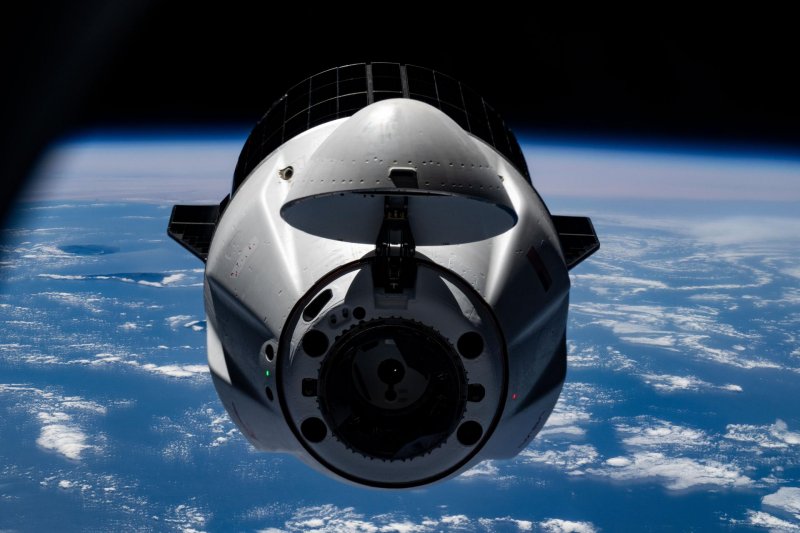
On Thursday, February 26, a SpaceX Dragon spacecraft is set to depart the International Space Station (ISS), marking the 33rd mission under NASA’s Commercial Resupply Services. The spacecraft will return to Earth, carrying scientific research samples and hardware for NASA and its international partners. The event will be covered live starting at 11:45 a.m. EST on NASA+, Amazon Prime, and the agency’s YouTube channel.
The Dragon spacecraft will autonomously undock from the Harmony module’s forward-facing port at 12:05 p.m., after which it will fire its thrusters to safely distance itself from the ISS. The splashdown is scheduled for later that evening at approximately 11:44 p.m. PST off the California coast. Although NASA will not stream the splashdown, updates will be available on its space station blog.
Scientific Contributions and Future Implications
The mission is not just a logistical maneuver; it carries significant scientific implications. Among the returning investigations is the Euro Material Ageing study, which exposed 141 samples to space conditions for a year. This research aims to understand how various materials degrade in space, offering insights that could lead to stronger spacecraft and improved materials for future missions.
Another experiment, Thailand’s Liquid Crystals, observed the stability of films used in electronics in microgravity, potentially leading to better displays and optical devices. Additionally, frozen samples from the Stellar Stem Cells Mission 2 experiment are returning to Earth to help study the effects of microgravity on brain and heart stem cell growth. This research could pave the way for improved treatments for diseases such as ALS and Parkinson’s disease.
“The SpaceDuino project is paving the way for more low-cost instruments after successfully measuring vibrations using a commercially available single-board computer and open-source software.”
The Moon Microscope also successfully tested a portable diagnostic kit for blood analysis in space, which could support future missions to the Moon and Mars.
Technological Advancements and Reboost Capabilities
The Dragon spacecraft supporting this mission introduced a new capability to reboost the space station, an essential function to maintain its altitude and counteract atmospheric drag. During its stay, Dragon performed six reboosts, including five in 2025 and a final maneuver on January 23, before preparations for its departure began.
The spacecraft arrived at the station on August 25, 2025, loaded with thousands of pounds of crew supplies, science experiments, and equipment. It launched a day earlier on a Falcon 9 rocket from Space Launch Complex 40 at Cape Canaveral Space Force Station in Florida.
The Broader Context of the ISS and Future Missions
For over 25 years, the International Space Station has been a hub of continuous human habitation and scientific research. It serves as a critical testbed for NASA to understand and overcome the challenges of long-duration spaceflight. The station also plays a vital role in expanding commercial opportunities in low Earth orbit.
As commercial companies focus on providing human space transportation services and destinations, NASA is dedicating its resources to deep space missions. The Artemis campaign, for instance, is a significant step towards future astronaut missions to Mars, with the ISS providing the foundational research necessary for such ambitious endeavors.
This development underscores the evolving landscape of space exploration, where collaboration between governmental agencies and private companies is crucial for the advancement of human presence beyond Earth. The successful completion of this mission will not only contribute valuable scientific data but also strengthen the infrastructure necessary for future explorations.
As NASA and its partners continue to push the boundaries of what is possible in space, the lessons learned from missions like this will be invaluable. The Dragon spacecraft’s departure is a testament to the ongoing commitment to innovation and exploration in the final frontier.