




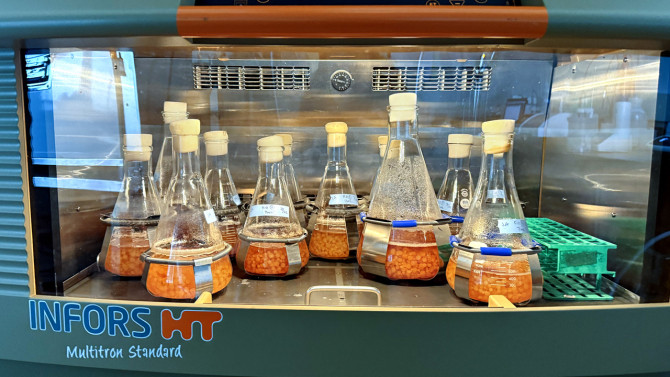
As the global population surges toward 10 billion and climate change increasingly strains agricultural resources, scientists are exploring innovative solutions to ensure food security. A team of researchers at Cornell University suggests that the answer may not lie in traditional agriculture but in the transformative potential of fungi to convert agricultural waste into nutritious food.
In a comprehensive review published on February 11 in Trends in Food Science & Technology, Ke Wang, an assistant research professor at Cornell AgriTech, along with her team, introduces the concept of an “emerging circular fungal biorefinery.” This system leverages fungal fermentation to transform low-value agricultural byproducts into high-protein, nutrient-rich foods.
Fungal Fermentation: A Sustainable Solution
“The main driver of this type of research is identifying new and sustainable food sources,” Wang explained. The team focused on understanding the technologies and research gaps necessary to convert waste streams from agriculture, food processing, and even household waste into valuable food products through precision fermentation.
Their findings indicate that fungal fermentation can effectively upcycle agricultural and food wastes into sustainable, nutritious foods. However, the success of this approach hinges on integrating advanced processing technologies to enhance yield, functionality, and product quality.
The Role of Biotechnology
Fungi have been traditionally used in foods like tempeh, miso, and cheese, but modern biotechnology is unlocking new potential. Certain fungal strains, such as those used in the production of Quorn, a popular meat substitute, have been commercially viable for decades. The review suggests that the field is evolving, with fungi now being seen as biological engines capable of converting food waste into next-generation meat analogues and functional foods.
Agricultural residues and food-processing byproducts, often discarded or underutilized, are rich in nutrients. Wang highlights materials like mixed green waste from farmlands or fruit pomace from the grape and apple industries as potential feedstock for fungal growth, provided they undergo appropriate pre-treatment.
“Fungi are remarkably efficient at converting complex biomass into structured proteins,” Wang stated. “They are the most promising substitute for animal-based protein, rich in minerals and other bioactive compounds beneficial to human health.”
Challenges and Innovations
The concept aligns with the broader movement towards a circular bioeconomy, where waste from one system becomes input for another. However, scaling up edible fungi production is complex. Fungal fermentation is a multifactorial process influenced by variables such as carbon-to-nitrogen ratios, temperature, aeration, and bioreactor design.
Advanced techniques like co-cultivation and genetic engineering could enhance productivity or tailor fungi to produce specific amino acids or bioactive compounds. The fibrous mycelium of fungi naturally mimics the texture of muscle fibers, providing a structural advantage over many plant-based proteins that require extensive processing to resemble meat.
Consumer Perception and Market Potential
Despite the potential, consumer perception remains a significant hurdle. Kalyani Sahoo, a postdoctoral researcher and first author of the review, notes that while younger consumers and “reducetarians” are interested in sustainability and waste upcycling, others may associate fungi with mold or decay. Overcoming skepticism towards novel food production methods will require strategic storytelling.
“If accomplished, these efforts could yield not just a meat substitute, but a distributed biorefinery model capable of converting regional waste streams into locally produced, high-value foods,” Kalyani Sahoo emphasized.
The Path Forward
This development represents a promising step towards sustainable food systems. By harnessing the power of fungi, researchers aim to create a model that not only addresses food security but also reduces waste and environmental impact. As the world grapples with the challenges of feeding a growing population, innovations like these could play a crucial role in shaping the future of food production.
Looking ahead, the focus will be on refining these technologies, enhancing consumer acceptance, and integrating these systems into existing agricultural frameworks. The potential of fungi to transform leftovers into lifelines could redefine how we think about food and sustainability.