



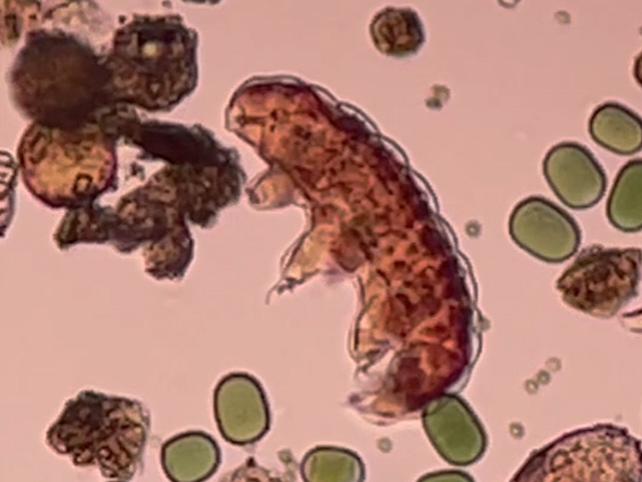
Tardigrades, often referred to as water bears, are gaining attention for their potential role in space exploration. These microscopic creatures, known for their resilience, are providing insights into how humans might utilize extraterrestrial resources, such as Martian regolith, to support long-term space missions. This research also explores the possibility of these resources offering protection against Earthly contaminants.
An international research team, co-led by Professor Corien Bakermans from Penn State Altoona, discovered that the activity of tardigrades—a critical indicator of their health—diminished significantly when exposed to simulated Martian regolith. This regolith, akin to Earth’s soil, consists of loose mineral deposits covering a planet’s surface. However, washing the regolith with water before introducing the tardigrades seemed to remove some harmful elements, thereby mitigating the negative impact on their activity. These findings, published in the International Journal of Astrobiology, mark a small yet significant step towards advancing human space exploration, according to Bakermans.
Understanding Environmental Impacts
“When considering sending people to non-Earth environments, we need to understand two things: how the environment will impact the people and how the people will impact the environment,” said Bakermans, who coordinates Penn State Altoona’s biology program. This research aims to identify potential resources for growing plants as part of establishing a sustainable community in space. Additionally, it examines whether inherent conditions in the regolith could protect against contamination from Earth, a key goal of planetary protection.
Planetary protection involves safeguarding extraterrestrial bodies from Earth contaminants and vice versa. This practice, agreed upon by multiple countries and regulated by space agencies like NASA, strives to maintain the integrity of scientific research conducted in space.
Potential Challenges for Space Missions
Bakermans highlighted that if a planet’s regolith contains its own defense mechanism against extraterrestrial invaders, it could alleviate concerns for space mission planners. However, such a mechanism might prevent humans from adapting the regolith to meet their needs, such as cultivating food. A robust defense could also pose direct risks to human health.
“We know a lot about bacteria and fungi in simulated regolith, but very little about how they impact animals—even microscopic animals, like tardigrades,” Bakermans explained. Simulated regolith is designed to closely mimic the mineral and chemical composition of Mars’ surface.
Implications for Future Exploration
This research underscores the need for further studies on the interaction between Martian regolith and living organisms. Understanding these dynamics is crucial for developing strategies to utilize Martian resources effectively while ensuring the safety of both humans and the extraterrestrial environment.
As space agencies continue to plan missions to Mars and beyond, the findings from Bakermans and her team could inform protocols for resource utilization and contamination prevention. The study exemplifies the intricate balance required to explore and potentially inhabit other planets without compromising their natural state or the safety of human explorers.
Looking ahead, the research community anticipates more detailed investigations into the biological interactions with Martian regolith. These studies will be vital for advancing our understanding of how to create sustainable living conditions on Mars, paving the way for future human settlements.