


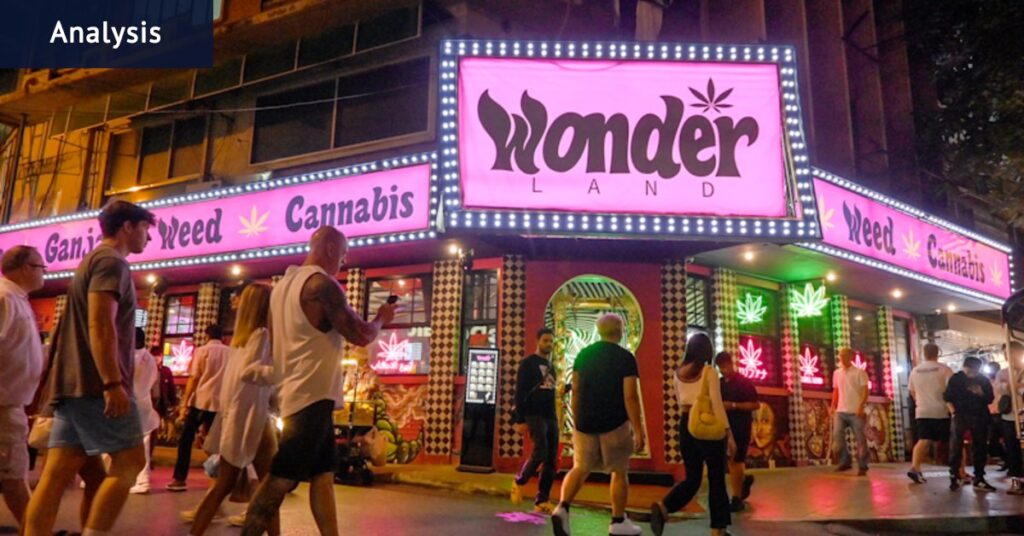
Bangkok, February 15, 2026 — The streets of Bangkok have become synonymous with the distinct aroma of marijuana over the past few years. Since Thailand made history in 2022 by becoming the first Asian nation to decriminalize cannabis, approximately 18,000 marijuana parlours have emerged across the country. However, recent political developments have cast uncertainty over the future of this burgeoning industry.
The decriminalization initiative aimed to rebrand Thailand as a wellness destination, provide farmers with a lucrative new crop, and alleviate overcrowding in prisons. Coming out of the COVID-19 pandemic, the move seemed timely, as tourism accounts for about 15% of Thailand’s GDP. Leading the charge was Anutin Charnvirakul, a businessman-turned-politician, who has served as Thailand’s prime minister since September in a caretaker capacity. His Bhumjaithai Party’s recent electoral success suggests he will continue in this role.
The Cannabis Conundrum
Despite initial optimism, the cannabis trade quickly spiraled into chaos due to a lack of regulation. The industry exploded in 2022, attracting a diverse clientele, including minors, and prompting concerns from family tourists. In response, the ruling Pheu Thai party imposed restrictions, allowing cannabis sales only with a doctor’s prescription, which severely impacted the industry.
The sudden regulatory change led to an oversupply of low-priced cannabis, an abundance of shops, and dwindling customer numbers. Many businesses shuttered, while others resorted to circumventing the prescription requirement, giving rise to a visible black market.
Adapting to Survive
In the face of adversity, cannabis shops have adopted innovative strategies to stay afloat. For instance, a shop in the Sukhumvit area has transformed its exterior to resemble a pharmacy. Ramil, a 26-year-old server at the shop, expressed cautious optimism about Bhumjaithai’s election victory, though he acknowledged the challenges the industry has faced since 2022.
Another unique approach is seen at Cloud Nine, where customers receive a “free prescription with every purchase.” The shop employs a telehealth service to connect customers with a doctor, ensuring compliance with the prescription law. “We won’t sell without [a] prescription. That’s the golden rule here,” a server explained, emphasizing their commitment to legal standards.
Future Prospects and Political Implications
The future of Thailand’s cannabis industry remains uncertain as the Bhumjaithai Party negotiates coalition terms. The party’s stance on the prescription law, introduced by the previous government, is yet to be clarified. Meanwhile, the Thai government’s handling of marijuana legalization has been criticized for its lack of foresight, with significant consequences for some stakeholders.
As Thailand navigates its political landscape, the cannabis industry stands at a crossroads. The outcome of these political negotiations will likely determine the industry’s trajectory and its potential to contribute to Thailand’s economy and tourism sector.
“The Thai government’s experiment with marijuana has not only been sloppy. For some people, it has been a disaster.”
For now, the industry and its participants can only wait and see how the political winds will shape the future of cannabis in Thailand.