



Groundbreaking “camera-on-a-chip” technology, initially developed at NASA’s Jet Propulsion Laboratory (JPL) for space missions, is now integral to billions of devices used daily worldwide. This transformation underscores the profound impact of space technology on everyday life.
In the 1980s, NASA’s Hubble Space Telescope and other space science applications relied on charge-coupled device (CCD) technology to produce high-quality images. However, Dr. Eric Fossum, hired at JPL in 1990, advanced an alternative: complementary metal-oxide semiconductor (CMOS) technology. This innovation not only served interplanetary missions but also revolutionized imaging in smartphones, webcams, automobiles, and medical devices globally.
The Evolution of Imaging Technology
In 1990, CCD sensors were the dominant technology for generating high-quality images. These sensors, made up of pixel arrays, convert light into electric charges, which are then aggregated to create an image. Despite their effectiveness, CCDs required significant power and efficient charge transfer processes.
CMOS sensors, by contrast, have signal amplifiers within each pixel, allowing direct signal reading and reducing power needs. Although present in the 1990s, CMOS sensors initially produced too much noise for scientific applications. Dr. Fossum applied a technique from CCD devices, known as “intra-pixel charge transfer with correlated double sampling,” to reduce this noise, significantly improving the signal-to-noise ratio.
The Commercialization of CMOS Technology
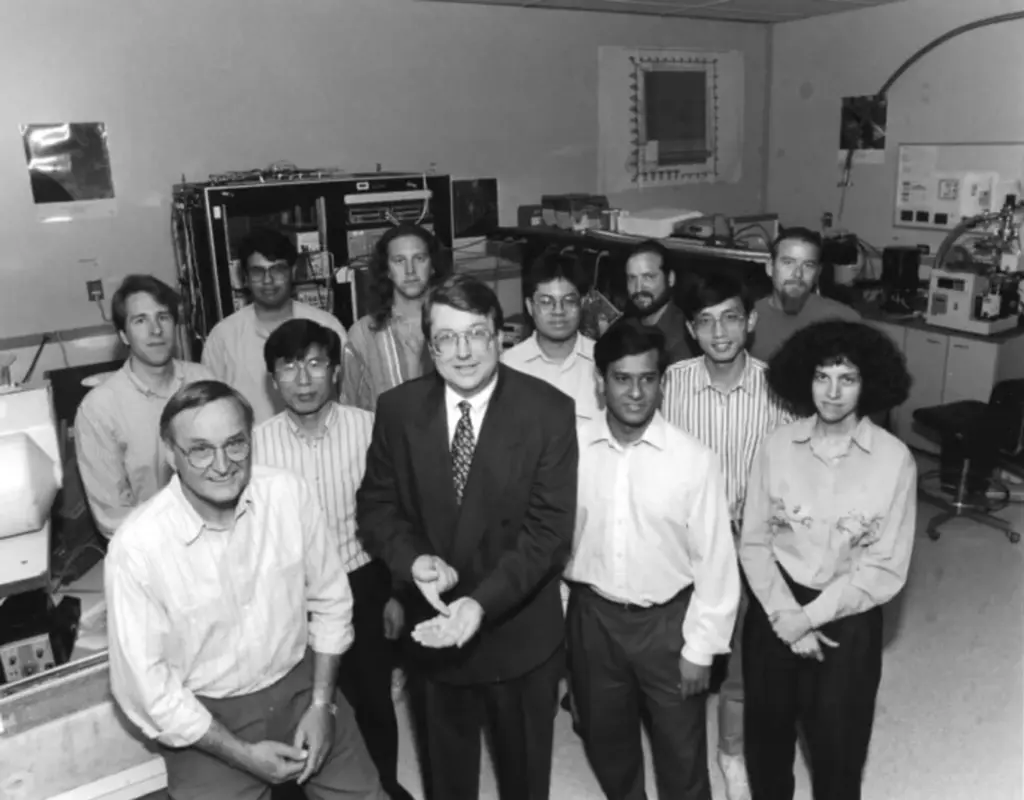
Following these advancements, several companies entered Technology Cooperation Agreements with JPL to develop CMOS technology further. In 1995, Dr. Fossum and Dr. Sabrina Kemeny licensed the technology from CalTech and founded Photobit to refine CMOS sensors. By 1996, Fossum had left JPL to focus on Photobit full-time.
Photobit enhanced CMOS technology, making it competitive with CCDs while reducing power requirements and manufacturing costs. This led to CMOS cameras being used in webcams, “pill cams,” and other applications. By 2001, Photobit was acquired by Micron Technology, which further accelerated CMOS development. With the rise of the cell phone industry, CMOS sensor production skyrocketed, reaching over a billion units annually by 2013 and approximately seven billion today.
CMOS Sensors: Ubiquitous in Modern Devices
The CMOS technology pioneered by Dr. Fossum has permeated numerous devices, transforming various aspects of daily life. Today, nearly all digital still and video cameras, including those in smartphones, utilize CMOS sensors. The technology is also crucial in automotive electronics, industrial equipment, security systems, and medical imaging.
Beyond consumer markets, CMOS imagers play vital roles in space exploration. They have been used in NASA’s Perseverance Mars rover, the OCO-3 mission, and the Parker Solar Probe. Future missions, such as the Europa Clipper and UVEX, will also rely on CMOS technology to enhance our understanding of the universe.
Acknowledging a Technological Milestone
In recognition of the transformative impact of CMOS technology, the National Academy of Engineering (NAE) awarded Dr. Fossum the 2026 Charles Stark Draper Prize for Engineering. This prestigious award honors engineers whose work has significantly enhanced the quality of life and access to information.
“For innovation, development, and commercialization of the complementary metal-oxide semiconductor (CMOS) active pixel image sensor ‘camera-on-a-chip.'” — National Academy of Engineering
The original efforts at JPL to develop CMOS technology were funded by JPL and NASA, highlighting the pivotal role of space agencies in advancing technologies that benefit society at large.
As CMOS technology continues to evolve, its applications are likely to expand further, offering new possibilities in both everyday devices and cutting-edge scientific research. The journey from space missions to daily life exemplifies the far-reaching impact of technological innovation.