



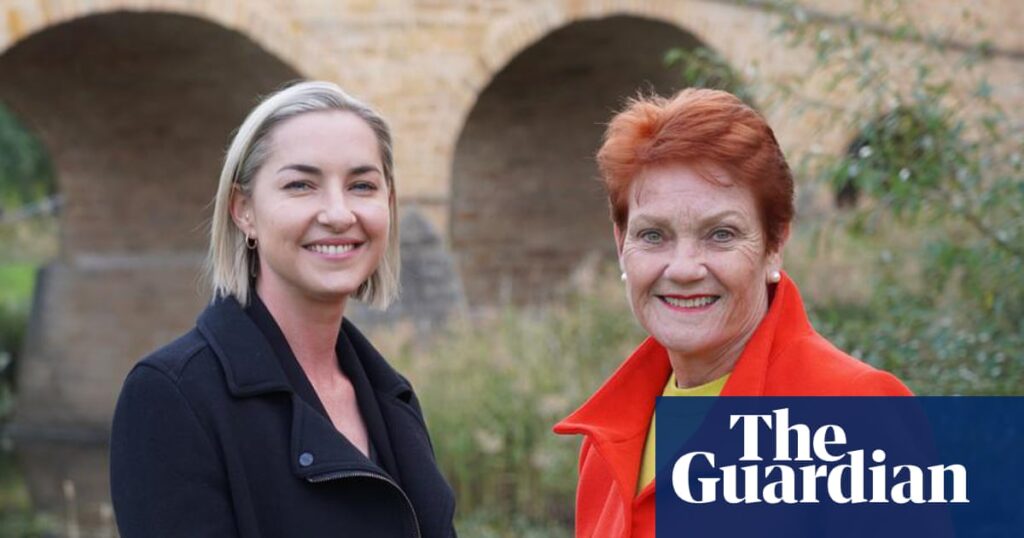
One Nation has appointed Pauline Hanson’s daughter, Lee Hanson, as a senior adviser to New South Wales Senator Sean Bell in a taxpayer-funded role that could earn her up to $180,000 annually. This revelation comes as Lee Hanson, who resides near Hobart, Tasmania, takes on a significant role in the party’s national operations.
Lee Hanson began her advisory role in October last year, shortly after Bell, previously a Queensland resident and a staffer for Pauline Hanson, assumed the NSW Senate position. This appointment followed the resignation of elected Senator Warwick Stacey, who stepped down due to health concerns after a brief six-week tenure.
Political Dynamics and Staffing Controversies
The employment of Lee Hanson highlights the intricate staffing dynamics within One Nation, especially after the party’s allocation of staff was reduced by Prime Minister Anthony Albanese. Lee Hanson is reportedly one of four personal staff members assigned to One Nation following the last election, a move that has sparked debate about the party’s staffing practices.
Under the Members of Parliament (Staff) Act, parliamentarians are prohibited from employing immediate family members, yet they can hire family members of other MPs. The party has not clarified whether Bell or Pauline Hanson is the employing office holder, nor how Lee Hanson’s role aligns with her responsibilities in Tasmania.
“Employment decisions within the elected offices of One Nation MPs and senators are based on merit and capability,” a party spokesperson stated, emphasizing their stance against diversity, equity, and inclusion quotas.
One Nation’s Strategic Expansion
Lee Hanson’s appointment coincides with her increased involvement in One Nation’s national strategy, as Pauline Hanson positions her as a key figure in the party’s future. Since joining the party’s national executive in July last year, Lee Hanson has been instrumental in expanding One Nation’s presence in Tasmania, where the party is reportedly outpacing the Liberal Party in federal voting intentions.
Despite her advisory role to a NSW senator, Lee Hanson’s activities have largely centered on Tasmania, where she has been actively promoting the party’s agenda and establishing new branches. Her social media posts reflect a commitment to maintaining momentum ahead of the next federal election.
Senator Bell’s Controversial Appointment
The appointment of Sean Bell as a NSW senator has not been without controversy. Criticism arose due to Bell’s Queensland residency at the time of his selection, raising questions about his suitability to represent NSW. Although there is no constitutional mandate for a senator to reside in the state they represent, the decision prompted debate in the NSW parliament.
Mark Latham, an independent state upper house MP and former One Nation member, criticized Bell’s appointment, citing it as a breach of a long-standing constitutional convention. Despite this, Bell was endorsed in a joint sitting of the NSW parliament, with assurances from One Nation that he was in the process of relocating to NSW.
Property records show Bell owns a house in Tivoli, Ipswich, but his Senate register lists a residential property on the NSW central coast, highlighting discrepancies in his residency status.
Implications and Future Prospects
The employment of Lee Hanson as a senior adviser underscores the complex interplay of familial ties and political strategy within One Nation. As the party navigates staffing reductions and strategic expansions, Lee Hanson’s role will likely be pivotal in shaping its trajectory.
Meanwhile, the unresolved unfair dismissal case involving Malcolm Roberts’ former staffer, Aidan Nagle, continues to unfold, potentially impacting the party’s staffing policies and practices. As One Nation positions itself for the next federal election, these developments will be closely watched by political analysts and constituents alike.
As the situation evolves, the focus will remain on how One Nation manages its internal dynamics and external perceptions, particularly in light of its strategic ambitions and the broader political landscape in Australia.