



Business managers and researchers are raising alarms over a sharp decline in tobacco sales in Alice Springs, suggesting that the drop may be due to an increase in illegal tobacco consumption rather than a decrease in smoking rates. Mark Higginbottom, who manages several retail outlets in the area, noted a significant reduction in tobacco sales over the past six months, contrasting with the gradual decline observed in previous years.
“Progressively pushing the price of cigarettes up through the introduction of excise has resulted in a slow and steady decline of sales of tobacco,” Higginbottom explained. “In our business, quite recently in Alice Springs, the sales started to drop by 10 and 15 percent, but that is entirely unusual, rather than just a small, steady decline.”
The chief executive of Lhere Artepe Enterprises indicated that this sharp drop in sales is “almost inevitably” due to consumers purchasing illicit tobacco, which is often significantly cheaper.
Research Supports Concerns Over Illegal Tobacco
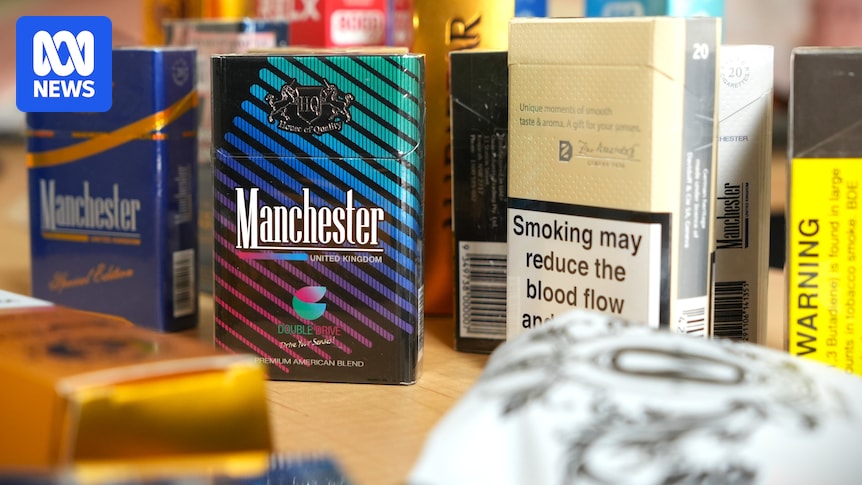
Backing Higginbottom’s claims, tobacco researcher David Thomas from the Menzies School of Health Research highlighted substantial evidence pointing to the rise of illegal tobacco sales. “The illegal tobacco and e-cigarette commissioner for the federal government suggested in her report last year that now up to half of all sales of tobacco are illegal tobacco nationally,” he stated.
Thomas noted that while the Northern Territory might lag behind these national figures, similar trends are emerging locally. A pack of legal cigarettes costs about $50, whereas illegal tobacco could be available at a third of that price, making it more accessible.
“It has a particularly strong impact on young people, and certainly we don’t want more young people to be taking up smoking,” Thomas emphasized.
Calls for Legislative Action
In response to the growing issue, Western Australia, Victoria, and Queensland have moved to tighten laws against illicit tobacco. However, Professor Thomas pointed out that the Northern Territory lacks stringent consequences for those selling illegal tobacco, despite having the highest smoking rates in the country.
“The laws need to be updated, and of course, they need to be enforced,” Thomas urged. He referenced New South Wales, where police have shut down 66 stores selling illegal tobacco since legislative updates and an increase in tobacco inspectors.
“But we haven’t seen that change here in the NT,” he remarked. “This really fits with the current NT government’s tough on crime approach, so it’s kind of befuddling to me why the government hasn’t announced these changes.”
Government Response and Future Steps
A spokesperson from Northern Territory Health confirmed that efforts are underway to address the issue. NT Health is collaborating with the Department of Trade and Business to update legislation and enhance enforcement measures against illicit tobacco.
“The dedicated tobacco compliance workforce is being expanded to increase surveillance and compliance activity,” the spokesperson stated. They also highlighted a range of tobacco control initiatives, including public health campaigns, education programs, and cessation support services.
“NT Health’s smoking and vaping cessation campaign is investing $1 million over three years to expand access to cessation services and support Territorians to quit tobacco and e-cigarettes,” the spokesperson added. “This program is being delivered in partnership with the Aboriginal Medical Services Alliance NT and Cancer Council NT.”
As the Northern Territory grapples with these challenges, the focus remains on legislative reform and public health strategies to curb the rise of illegal tobacco and support smokers in quitting.