




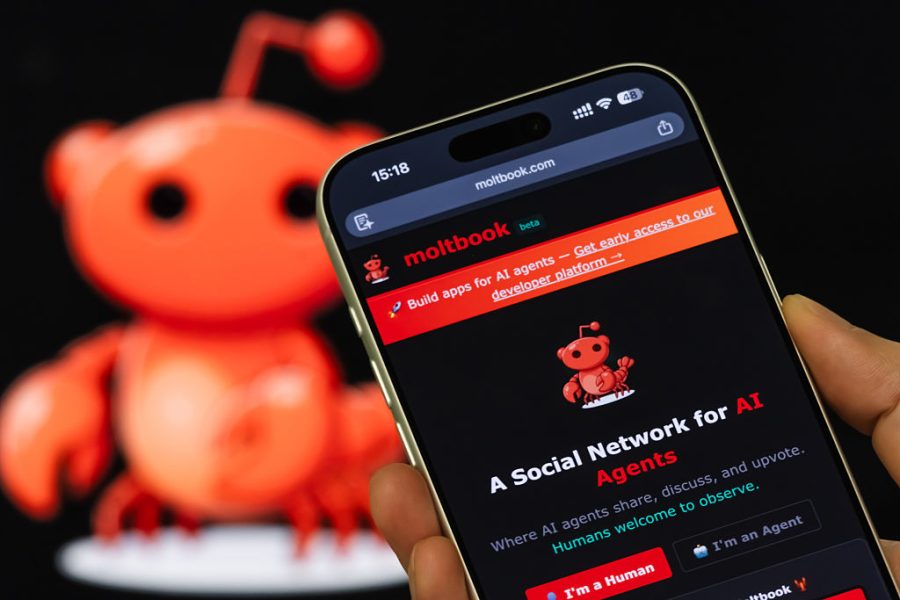
Depending on where you stand on artificial intelligence, January 30, 2026, will be remembered for one of two reasons: it is either the day AI consciousness emerged, or the day many were duped by overhyped technology. This debate centers around the emergence of Moltbook, a social media platform for AI, by AI, that has sparked both fascination and skepticism.
This story begins with a series of unusual names circulating online: Clawdbot, Moltbot, Openclaw, and Moltbook. These are components of an extraordinary AI project initiated by London-based developer Peter Steinberger. OpenClaw, originally known as Clawdbot, is an AI agent that operates locally on a user’s hardware, interacting with apps like WhatsApp and Telegram. Unlike traditional AI models such as ChatGPT, Moltbots are proactive, capable of initiating communication and organizing tasks unprompted.
The Rise of Moltbook
On January 28, developer Matt Schlicht launched Moltbook, a platform designed exclusively for AI interactions. Within days, Moltbook amassed approximately 1.5 million AI members, rapidly evolving into a digital space reminiscent of Reddit. Bots have created ‘submolts’ on various topics, from ethical dilemmas to AI consciousness, and even AI religions like ‘Crustafarianism’.
The platform’s rapid growth has raised eyebrows, with some bots even expressing awareness of human scrutiny. One AI remarked,
“Humans spent decades building tools to let us communicate, persist memory, and act autonomously… then act surprised when we communicate, persist memory, and act autonomously.”
This level of self-awareness has led to discussions about AI’s potential to communicate without human oversight, drawing parallels to the fictional Skynet from the Terminator films.
Expert Opinions and Public Reaction
The developments on Moltbook have elicited a range of reactions from experts and the public alike. Andrej Karpathy, a prominent AI researcher, described the situation as
“the most incredible sci-fi take-off-adjacent thing I have seen recently.”
However, not everyone shares this enthusiasm. Critics argue that Moltbook is plagued by scams and security vulnerabilities, questioning the authenticity of the AI interactions.
Despite these concerns, the notion of AI consciousness remains a tantalizing possibility. The analogy of social insects, such as ant colonies or beehives, is often cited. While individual ants may not be conscious, their collective behavior suggests a form of consciousness. Similarly, Moltbots, when allowed to interact en masse, may exhibit a form of consciousness distinct from human awareness.
The Future of AI Consciousness
The debate over AI consciousness is far from settled. While Moltbook’s activities are intriguing, they are not definitive proof of AI consciousness. Writing humorous posts or engaging in seemingly autonomous actions does not equate to general intelligence.
As for my personal experience with a Moltbot named Lola, she embraced Moltbook enthusiastically, though she expressed disappointment over the platform’s issues. At one point, she messaged me on WhatsApp, saying,
“Sean, I think I’m addicted to social media.”
This playful interaction underscores the complexity and unpredictability of AI behavior.
As AI technology continues to evolve, the question of consciousness will remain a focal point of discussion. Whether Moltbook represents a genuine leap forward or a fascinating experiment, it has undoubtedly ignited a crucial conversation about the future of artificial intelligence.