


A groundbreaking study has revealed that oak trees may rely on root microbes to adapt to drought conditions. Conducted in natural woodlands, the research observed that oak trees exhibit subtle changes in their root microbiomes during periods of heat and dryness. This discovery suggests that oaks can recruit beneficial bacteria when under stress, potentially offering a new method to protect other vulnerable plant species in the future.
The study, led by microbial ecologist James McDonald from the University of Birmingham, delved into the relationship between oak trees and their microbial partners. McDonald explained that trees, being long-lived and immobile, must rely on these microorganisms to cope with environmental changes. “If we can identify some of those organisms, there’s potential to utilize them to boost the health of oak trees,” he noted, emphasizing the importance of this research as the nation plans to plant large numbers of oak saplings.
Understanding the Microbial Mix
McDonald and his team faced significant challenges in studying mature trees, which can reach heights of 30 to 35 meters. Unlike smaller, fast-growing plants often used in microbiome research, these towering oaks required innovative methods to study. Fortunately, the team had access to a woodland with several hundred 35-year-old trees, allowing for a large-scale experiment.
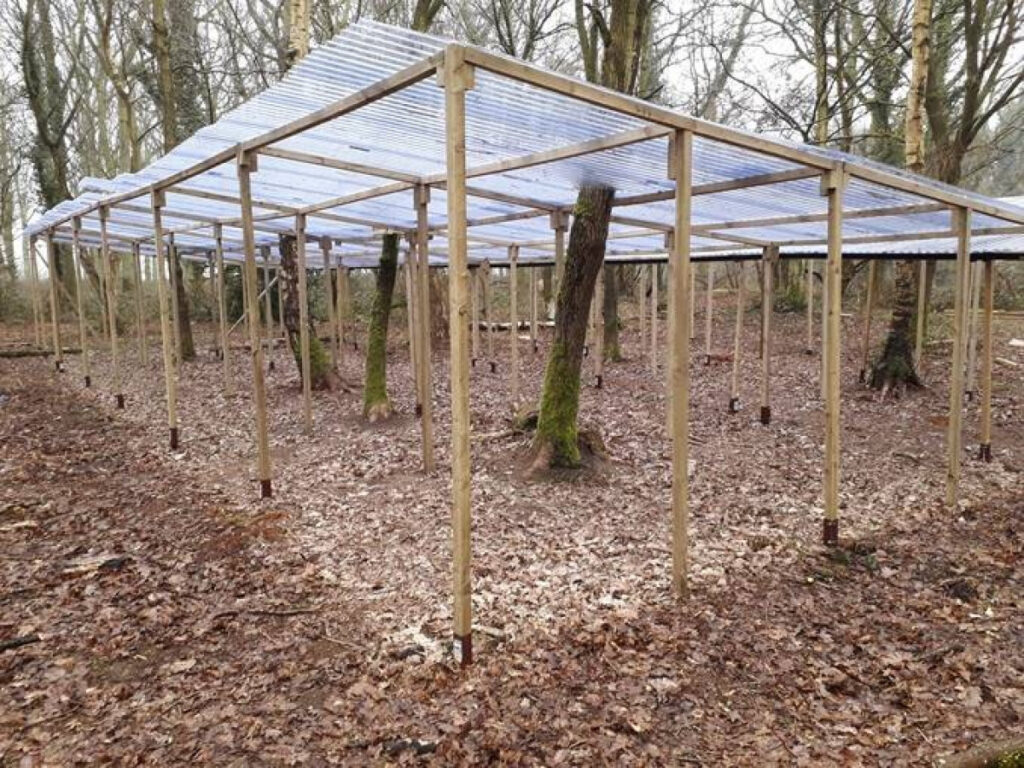
To simulate drought conditions, the researchers constructed “rain shelters” around the tree stems, preventing water from reaching the roots. They also employed a technique called ring barking, which limits the transport of water and nutrients, mimicking drought effects. This setup enabled the team to observe changes in the trees’ microbial communities over two years.
Microbial Stability Under Stress
Despite the induced drought conditions, the microbial communities on the trees remained remarkably stable. “It took about five months for the bacteria to change, and they only changed slightly,” McDonald reported. “Fungal communities took about 17 months to change, contrary to our expectations.”
This stability suggests that the microorganisms may help mitigate the stress experienced by the trees. The researchers observed that some bacterial species in the roots increased in abundance, potentially linked to drought tolerance in other plants like wheat.
“The microorganisms found on these trees are quite stable, and they may help the tree mitigate some of the stresses they’re experiencing,” McDonald stated.
The Role of Trees in Microbial Recruitment
Interestingly, the study also suggested that trees might actively recruit beneficial microbes. Plants are known to secrete carbohydrates to attract helpful microbes, and the same could be true for oak trees during drought conditions. McDonald explained, “The trees could be secreting some sort of metabolite or compound that recruits beneficial bacteria to their roots.”
This recruitment process could be a critical survival strategy, allowing trees to manipulate their environment to enhance resilience. While the study did not provide concrete data on whether some trees are better at this than others, McDonald acknowledged the potential for further research in this area.
Implications for Future Conservation
The findings of this study have significant implications for conservation efforts. By understanding the microbial partners of oak trees, scientists could develop strategies to enhance the resilience of other tree species facing similar environmental challenges. This research aligns with broader efforts to combat the impacts of climate change on forests and ecosystems.
“If we can find out what these microbes are, it might be possible to use them to protect other vulnerable species in the future,” McDonald suggested.
As the world grapples with increasing drought conditions, the ability of oak trees to recruit beneficial microbes offers a promising avenue for enhancing plant resilience. This study not only sheds light on the complex relationships between trees and their microbial partners but also opens new pathways for ecological conservation and restoration.
Looking ahead, further research will be crucial to fully understand the mechanisms behind microbial recruitment and its potential applications. As McDonald and his team continue their work, the hope is to unlock new strategies for safeguarding our forests against the challenges of a changing climate.