

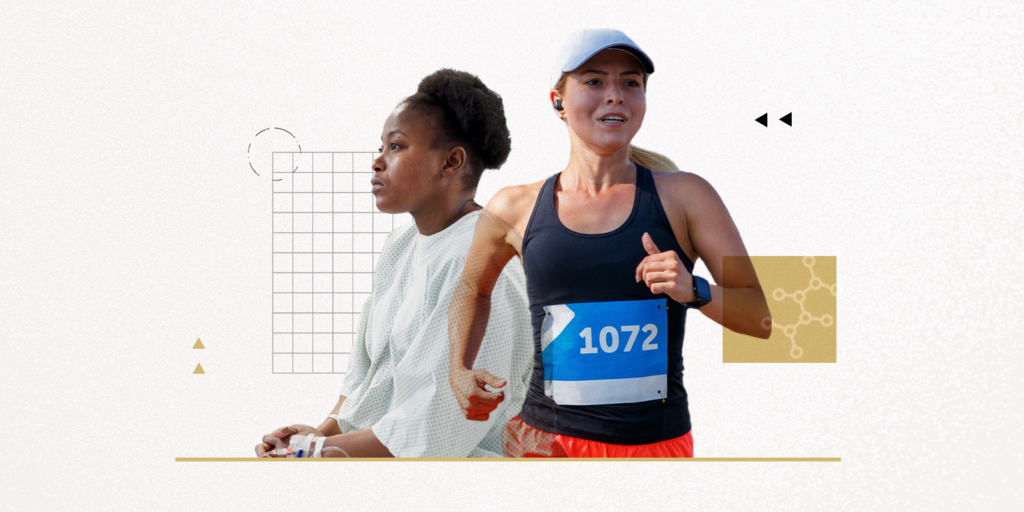
Extreme endurance running may cause significant damage to red blood cells, potentially impacting their functionality, according to a recent study published in the journal Blood Red Cells & Iron by the American Society of Hematology. While the precise duration and long-term effects of this damage remain uncertain, the findings contribute to a growing body of evidence suggesting that ultra-endurance activities might be detrimental to overall health rather than beneficial.
Previous research has indicated that ultramarathon runners often experience a breakdown of red blood cells during races, which can lead to anemia. However, the underlying causes of this phenomenon have largely been unclear. The latest study reveals that athletes’ red blood cells become less flexible after long races, potentially impairing their ability to effectively transport oxygen, nutrients, and waste products throughout the body. Furthermore, the research team has developed the most comprehensive molecular map to date, illustrating how endurance racing alters red blood cells.
Understanding the Impact on Red Blood Cells
The study, led by Dr. Travis Nemkov, an associate professor at the University of Colorado Anschutz, examined markers of red blood cell health before and after athletes participated in two renowned races: the Martigny-Combes à Chamonix (40 kilometers) and the Ultra Trail du Mont Blanc (171 kilometers). Red blood cells, which are responsible for oxygen and waste transportation, must maintain flexibility to navigate small blood vessels efficiently.
Researchers collected blood samples from 23 runners immediately before and after these races, analyzing thousands of proteins, lipids, metabolites, and trace elements in their plasma and red blood cells. The results consistently showed evidence of damage from both mechanical and molecular sources. Mechanical damage likely stemmed from variations in fluid pressure during circulation, while molecular changes were attributed to inflammation and oxidative stress, which occurs when antioxidant levels are insufficient to counteract harmful molecules that damage cellular DNA.
“Participating in events like these can cause general inflammation in the body and damage red blood cells,” said Dr. Nemkov. “Based on these data, we don’t have guidance as to whether people should or should not participate in these types of events; what we can say is, when they do, that persistent stress is damaging the most abundant cell in the body.”
Implications for Athletes and Blood Preservation
The observed damage, which effectively accelerates the aging and breakdown of red blood cells, was evident after 40-kilometer races and intensified in those who completed the 171-kilometer races. This suggests that as the length of a run increases, athletes may lose more blood cells and experience greater damage to those remaining in circulation.
“At some point between marathon and ultra-marathon distances, the damage really starts to take hold,” noted Dr. Nemkov. “We’ve observed this damage happening, but we don’t know how long it takes for the body to repair that damage, if that damage has a long-term impact, and whether that impact is good or bad.”
Further research could help develop strategies to enhance athletic performance or mitigate the potential negative effects of endurance exercise through personalized training, nutrition, and recovery protocols. Additionally, insights into how the body responds to the extreme conditions of endurance exercise could inform methods for handling and preserving stored blood, which begins to degrade after several weeks, limiting its usability for transfusions.
Future Research Directions
Study co-author Dr. Angelo D’Alessandro emphasized the significance of these findings for both athletes and transfusion medicine. “Red blood cells are remarkably resilient, but they are also exquisitely sensitive to mechanical and oxidative stress,” he said. “This study shows that extreme endurance exercise pushes red blood cells toward accelerated aging through mechanisms that mirror what we observe during blood storage. Understanding these shared pathways gives us a unique opportunity to learn how to better protect blood cell function both in athletes and in transfusion medicine.”
The study’s limitations include a small participant pool and a lack of racial diversity, as well as the collection of blood samples at only two time points. Researchers plan to conduct studies with more participants and additional measurements during the post-race period. They also intend to explore opportunities for improving the shelf life of stored blood, which is crucial given U.S. Food and Drug Administration regulations that deem stored blood unusable for transfusions after six weeks.
As the research community continues to explore the complex relationship between extreme endurance exercise and red blood cell health, these findings could pave the way for more informed decisions regarding athletic participation and blood preservation techniques.