




Exclusive: Australia’s national birth rate is projected to hit a record low of 1.42 this year, as more Australians opt for smaller families or choose not to have children at all. The decision is heavily influenced by the ongoing cost-of-living crisis, housing shortages, and global uncertainties.
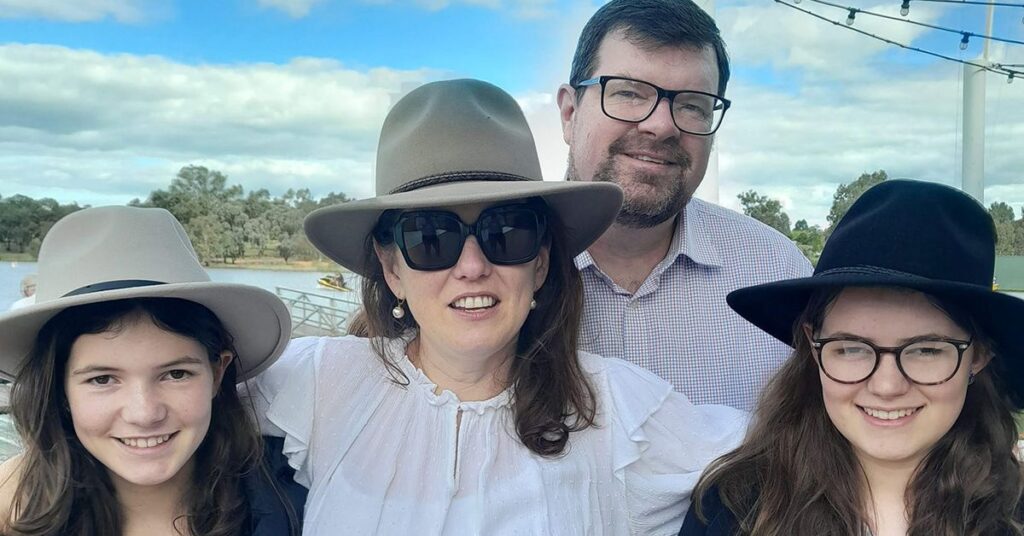
However, some families are defying this trend by having three, four, or even more children despite the financial and societal pressures. Rosina Gordon, 53, along with her husband, a teacher, relocated to regional New South Wales to raise their six children, aged between 10 and 20.
Choosing a Larger Family Amid Economic Pressures
Growing up as one of six siblings, Gordon cherished the sense of community a large family provided and wanted the same for her children. Her Catholic faith also played a significant role in her decision.
“Is it faith that helped me to overcome the fear, the unforeseeable financial burden and instability that looms with the prospect of children? Well, yes,” she told nine.com.au. “Having a large family has also definitely made my faith stronger.”
This choice sets her apart from many Australian families. According to the 2021 Census, only 19.6% of couple families and 15.3% of one-parent families had three or more children, a decline from 21.6% and 15.6% respectively in 2015.
The Financial Reality of Raising a Large Family
Raising six children on a single income has been challenging for the Gordon family. Research indicates that raising one child in Australia can cost between $164,000 and $370,000, with expenses increasing significantly for larger families.
Despite the high costs, the Gordons manage to make ends meet. Their children wear hand-me-down clothes, their home is furnished with thrifted items, and family outings are carefully budgeted. For Gordon, the joys of a large family outweigh the hardships, although she acknowledges the sacrifices involved.
“We are focused on individual goals and consumerism [and] motherhood is not promoted as glamorous or fulfilling,” she said.
The Support Networks Behind Large Families
Over the past two decades, Gordon has cultivated a small but supportive community of mothers who also have large families. This network has been crucial for her emotional and mental well-being.
“I have always sought out and surrounded myself with families living similarly to us,” Gordon said. “It can’t be done without a solid, committed, loyal friendship circle.”
Jangelah Frew, 33, also finds support within her large family. Initially uncertain about having many children, she discovered her purpose with the birth of her first child nine years ago. Now expecting her fifth, she embraces the chaos and joy of a big family.
“We wanted a big family and we got all of the joy, love, chaos, and stress that comes with it,” she said.
Navigating Economic Challenges
Inflation and the rising cost of living have tightened the Frew family’s budget. At times, Frew and her partner juggled multiple minimum wage jobs to make ends meet. Currently self-employed and receiving government support, they continue to find ways to manage their finances.
They have sacrificed luxuries like annual holidays, dining out, and technology upgrades. Frew home-schools her children in their Victoria rental, preparing meals from scratch on a $300 weekly grocery budget.
“The support for having a large family is already there and we’re proof,” she said. “We utilise government support, my partner and I are solid, and we make life work within our means while we strive towards providing more for our family.”
Challenging Stereotypes and Looking Forward
Frew also challenges stereotypes that large families are necessarily religious, impoverished, or reliant on benefits. Amid the cost-of-living crisis and housing shortages, many Australians feel unable to afford a large family and the lifestyle they desire.
Both Gordon and Frew exemplify that it is possible to raise a large family successfully. They advocate for increased support for Australians who wish to have more children, such as enhanced childcare funding and tax deductions.
Their stories underscore the resilience and adaptability of families who choose a different path, despite societal and economic pressures.