



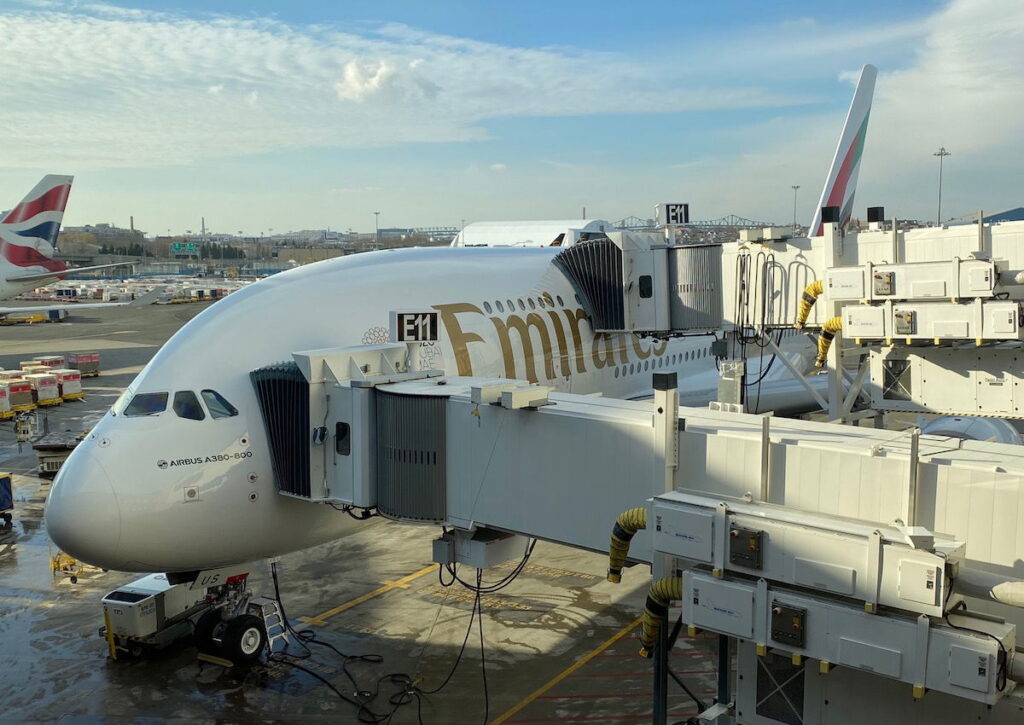
Emirates is embarking on an ambitious retrofit project to upgrade the interiors of its aircraft, introducing a new product standard and rolling out premium economy seating. In a significant move, the airline has announced plans to reconfigure its highest capacity aircraft, the Airbus A380, marking the end of commercial planes with over 600 seats. This development will see the densest A380s in Emirates’ fleet transition from 615 to 569 seats.
Emirates, which operates a fleet of over 100 Airbus A380s, has 15 planes configured without a first-class cabin, primarily for short and medium-haul flights with lower premium demand. These aircraft, currently the world’s highest capacity planes, feature 615 seats, including 58 business class and 557 economy class seats. The airline’s retrofit project aims to introduce a premium economy class across its A380 fleet, starting with these high-density models.
Details of the Reconfiguration
As part of the reconfiguration, Emirates plans to start modifying its A380s without first class in the coming months, with the revamped planes expected to enter service by spring. The changes will see overall capacity reduced by approximately 8%, from 615 seats to 569 seats. The new configuration will include:
- Business class: Increased by 18 seats, from 58 to 76 seats.
- Premium economy: Introduction of 56 seats.
- Economy class: Reduced by 120 seats, from 557 to 437 seats.
The business class cabin will expand to 76 seats, aligning with the configuration of Emirates’ A380s that include first class. The premium economy will occupy the space typically reserved for first class, offering 56 seats in place of the previous 14 first class seats. This adjustment means the upper deck of Emirates’ A380s will be entirely dedicated to premium seating, while the lower deck will continue to house 437 economy seats.
Strategic Implications and Industry Context
The decision to reconfigure these high-density A380s is not surprising, given the evolving dynamics of the aviation market. Emirates aims to cater to markets where first-class demand is limited but business and premium economy demand is robust. The airline’s strategy reflects a broader industry trend of increasing premium travel demand, prompting airlines to rethink aircraft layouts.
According to aviation analyst John Strickland, “The introduction of premium economy is a logical step for Emirates, as it aligns with global trends of diversifying cabin offerings to capture a wider range of customer preferences.” The premium economy class, with its location at the front of the upper deck and a 2-3-2 seating layout, is expected to enhance the travel experience significantly.
By the Numbers: “Emirates’ A380 reconfiguration will reduce capacity by 8%, while expanding business class by 31% and introducing a new premium economy class.”
Historical Parallels and Future Outlook
This move is reminiscent of past shifts in the aviation industry, where airlines have adapted cabin configurations to meet changing passenger demands. In the early 2000s, many airlines introduced premium economy as a response to the growing middle market between economy and business classes.
Looking ahead, Emirates’ decision to streamline its A380 fleet with a focus on premium offerings could set a precedent for other airlines operating large aircraft. As travel demand continues to evolve, airlines may increasingly prioritize flexibility and passenger comfort over sheer capacity.
In conclusion, Emirates’ reconfiguration of its high-density Airbus A380s represents a strategic shift to align with current travel trends. By enhancing business class capacity and introducing premium economy, the airline is poised to meet the needs of a changing market, offering a more tailored and comfortable travel experience for its passengers.