


In a bold move, Italy embraced the challenge of hosting a decentralized Winter Games, with events spread across various venues, primarily in Milan and Cortina, but extending to other mountain towns like Livigno. This ambitious approach, initially met with skepticism, ultimately proved successful as Italy navigated logistical hurdles and delivered a memorable Olympic experience.
From the outset, doubts loomed over Italy’s ability to manage such a complex arrangement. The ice hockey stadium was completed just in time, and protests questioned the feasibility of distributing the Games across northern Italy. Yet, Italy defied expectations, transforming these potential pitfalls into a captivating spectacle that highlighted the country’s diverse landscapes.
Overcoming Challenges and Embracing Diversity
The decision to decentralize the Winter Games did not detract from the event’s success. Instead, it enriched the experience, offering a unique blend of venues that added to the drama and allure. Notably, the Games witnessed a series of compelling moments, including American skier Lindsey Vonn’s dramatic crash during her comeback attempt.
While the Games were not without controversy—marked by scandals and unexpected confessions, such as a Norwegian skier’s admission of infidelity—they also delivered thrilling sporting narratives. The climax came with the USA’s ice hockey team upsetting Canada in a nail-biting finale.
The Closing Ceremony: A Historic Venue
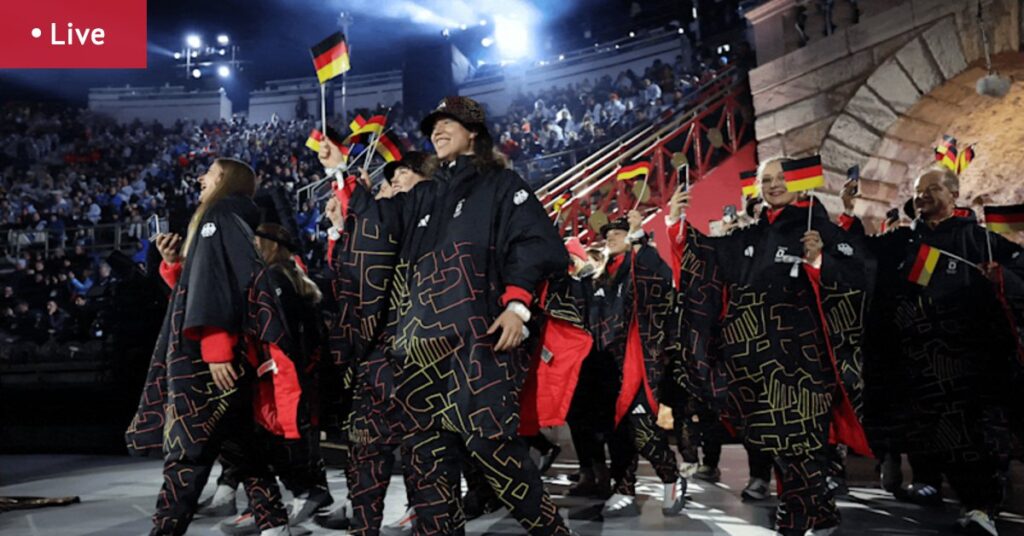
The Games concluded in Verona, with a ceremony that, while less grandiose than the opening, was distinguished by its setting in the ancient Verona Stadium. This historic venue, dating back to Roman times, provided a fitting backdrop for the closing events, which, although subdued, celebrated Italy’s successful hosting of the Games.
The contrast between the closing and the opening ceremonies was stark. The opening at Milan’s San Siro Stadium featured an extravagant display with operatic performances and a poignant speech by actress Charlize Theron, who invoked Nelson Mandela’s call for world peace. In contrast, the closing was more intimate, focusing on cultural performances and formalities.
Performances and Highlights
Despite the scaled-down nature of the closing, it included notable performances, such as operatic nods to classics like “La Traviata” and “Madame Butterfly,” and a ballet from a local troupe. The highlight was Joan Thiel’s rendition of “Il mondo” by Jimmy Fontana, which resonated with the audience.
The ceremony also featured the national anthems of Italy, Greece, France, Sweden, and Norway, marking belated medal presentations for cross-country skiing events. The formal speeches of gratitude from the organizers and IOC President Kirsty Coventry underscored the Games’ success.
Reflecting on Italy’s Achievement
Italy’s ability to host a decentralized Winter Games without major issues was a testament to its organizational prowess. The country’s effort to balance tradition with innovation paid off, as the Games set new audience records and avoided the predicted calamities. While the closing ceremony may not have matched the spectacle of the opening, it was a fitting end to a superb Winter Games.
As Italy reflects on its achievement, the country’s successful hosting of the Games stands as a significant milestone, demonstrating its capability to manage complex international events. This accomplishment sets a precedent for future hosts, illustrating that with careful planning and execution, even the most challenging Olympic endeavors can be realized.