


Updated February 21, 2026 — 5:33am, first published 2:20am
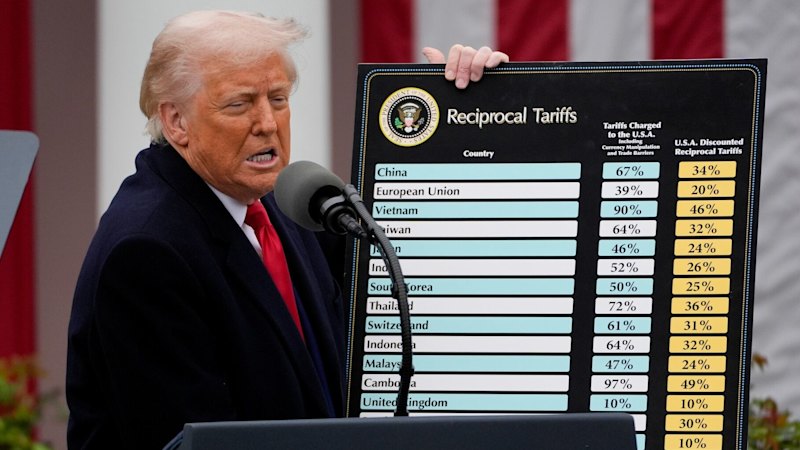
In a landmark decision, the United States Supreme Court has declared former President Donald Trump’s global tariffs illegal, effectively dismantling one of his most significant economic policies. The ruling, delivered with a 6-3 majority on Friday morning in Washington, found that Trump had overstepped his presidential authority, as the power to impose tariffs during peacetime resides solely with Congress.
The decision has far-reaching implications, potentially leading to billions of dollars in refunds and creating what Trump described as a “complete mess.” The former president, visibly frustrated, labeled the ruling as “incorrect,” “terrible,” and “deeply disappointing,” suggesting that the court was influenced by foreign interests, though he did not elaborate on this claim.
Legal Grounds and Immediate Reactions
The Supreme Court’s ruling specifically targeted the “reciprocal tariffs” initiated by Trump under his emergency powers. Other tariffs, such as those on steel and aluminum, remain unaffected. In response, Trump announced his intention to impose a new 10 percent global tariff using Section 122 of the Trade Act of 1974, which permits temporary levies up to 15 percent for 150 days, extendable by Congress.
Trump criticized the justices who ruled against him, particularly Neil Gorsuch and Amy Coney Barrett, whom he appointed during his first term. He expressed “shame” over their decision, contrasting it with the “strength and wisdom” shown by the dissenting justices, including Brett Kavanaugh, whose opinion Trump frequently cited.
Implications for Presidential Power
The Supreme Court’s decision marks a significant check on presidential authority, underscoring the constitutional limits on executive power. Chief Justice John Roberts, writing for the majority, emphasized that Congress has only delegated tariff powers under explicit and limited terms. The ruling stated,
“When Congress has delegated its tariff powers, it has done so in explicit terms and subject to strict limits.”
This decision underscores the court’s stance against an expansive interpretation of presidential powers in tariff policy.
In his dissent, Justice Kavanaugh argued that the president should have the authority to impose tariffs, drawing parallels with past instances where similar powers were upheld. He noted,
“The tariffs at issue here may or may not be wise policy. But as a matter of text, history, and precedent, they are clearly lawful.”
Economic and Political Ramifications
The ruling has significant economic and political ramifications. Australian exports to the US, previously subjected to a 10 percent tariff, were among those affected. Prime Minister Anthony Albanese had criticized the tariffs, calling them “not the act of a friend.”
The Tax Foundation, a Washington-based think tank, estimated that the reciprocal tariffs had generated $160 billion and projected they would have raised $1.4 trillion by 2035. Trump, however, made no commitments regarding the repayment of these funds, predicting prolonged litigation.
Financial markets responded positively to the ruling, with the Dow Jones Industrial Average rising over 100 points by midday in New York. The decision also comes amid reports from the Department of Commerce indicating that the US trade deficit remained largely unchanged in 2025, despite the tariffs.
Looking Ahead
The administration has signaled its intent to explore alternative legal avenues to implement similar tariff policies. National Economic Council Director Kevin Hassett mentioned ongoing discussions to identify other legislative tools that could achieve the same objectives.
As the nation grapples with the implications of this decision, the debate over the balance of power between the executive and legislative branches continues. The Supreme Court’s ruling serves as a reminder of the constitutional checks and balances designed to prevent any single branch of government from wielding excessive power.