

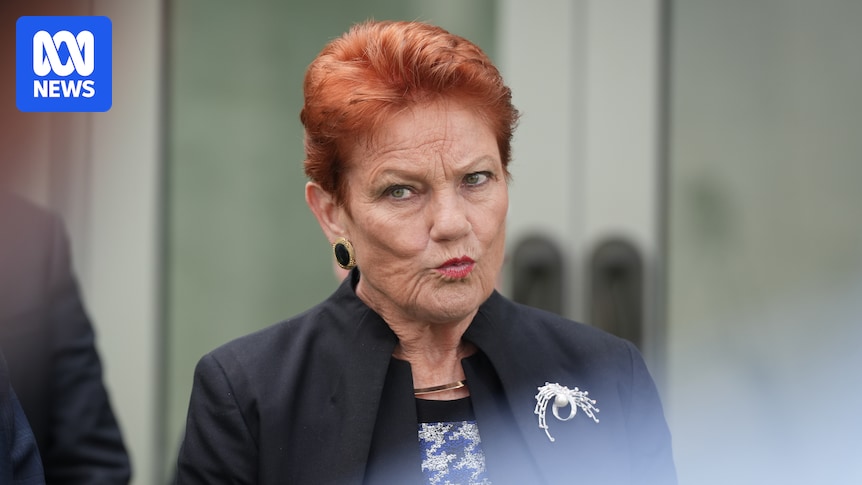
One Nation leader Pauline Hanson has issued a partial apology following her controversial remarks suggesting there are no “good” Muslims. Her comments, made during a late-night discussion on Sky News about the potential return of Islamic State militants’ families, have sparked widespread condemnation across the political spectrum and from Islamic leaders.
During the discussion, Hanson stated, “I’ve got no time for radical Islam. Their religion concerns me because of what it says in the Koran. They hate Westerners. That’s what it’s all about.” She questioned the existence of “good” Muslims, asking, “How can you tell me there are good Muslims?”
Her remarks were swiftly rejected by politicians, including Nationals senator Matt Canavan, who described them as “divisive, inflammatory [and] un-Australian.” Islamic leaders also condemned the comments as hateful.
Hanson’s Partial Apology and Continued Stance
In an interview with the ABC, Hanson clarified that she did not believe there are no “good” Muslims, citing a non-practising Muslim woman who stood for One Nation. She apologized if she “offended anyone out there that doesn’t believe in sharia law, or multiple marriages, or wants to bring ISIS brides in, or people from Gaza that believe in a caliphate.”
However, Hanson maintained her position, stating, “In general, that is what they want — a world caliphate. And I am not going to apologise … I will have my say now before it’s too late.” She further suggested that government policies were overly influenced by Muslim voters and called for stricter vetting of migrants.
“People are in fear. We don’t know who these people are. You’ve got 18,000 people on ASIO’s watchlist. Doesn’t that tell you something?”
Hanson alleged that Australians were unwelcome in certain suburbs with significant Muslim populations, such as Lakemba in Sydney’s west. Her comments were reiterated in a social media post, emphasizing her stance against political correctness.
Political Reactions and Calls for Apology
Home Affairs Minister Tony Burke responded to Hanson’s remarks, urging her to apologize. He described the comments as “wrong and cruel,” stating they were “not worthy of someone who holds public office.”
Hanson’s history of controversial statements on Islamic migration is well-documented. Following her 2016 re-election, she warned of Australia being “swamped by Muslims,” and she has previously been suspended from the Senate for wearing a burka to protest face coverings in Australia.
One Nation’s Rising Popularity and Upcoming Challenges
Despite criticism, Hanson and One Nation have seen a surge in popularity, with recent opinion polls placing the party ahead of the Coalition. The upcoming by-election in Farrer, triggered by former Liberal leader Sussan Ley’s resignation, will be a critical test of One Nation’s ability to draw votes from the Liberal and National parties.
Historically, One Nation has struggled to secure lower house seats, capturing just over 6 percent of votes in last year’s federal election. Currently, the party has one representative in the lower house, former Nationals leader Barnaby Joyce, who joined One Nation last year.
Hanson attributed some of the party’s recent success to Joyce, describing him as “just an average bloke out there fighting for the Australian people.” Joyce, when asked about Hanson’s remarks, did not explicitly condone or reject them but expressed agreement with her broader concerns.
“I’m not going to say I don’t have people that are friends of the Islamic faith, because I do, but I’m not going to say because of that I am going to put so many people at risk,” Joyce stated on Nine Network’s Today show.
As One Nation prepares for the by-election, the party’s stance on Islamic migration and its broader political strategy will continue to be scrutinized. The results will likely indicate whether Hanson’s controversial rhetoric resonates with a broader segment of the Australian electorate.