



Dark energy, an enigmatic force driving the accelerated expansion of the universe, has long puzzled scientists. While its effects are observable, such as the universe’s accelerating expansion, recent findings suggest that our understanding of dark energy may be evolving. Physicists are now questioning the consistency of this narrative, pointing to data discrepancies that challenge existing models. A new pre-print paper by Dr. Slava Turyshev, available on arXiv, explores the possibility that these inconsistencies may stem from inaccuracies in measuring cosmological features like supernovae.
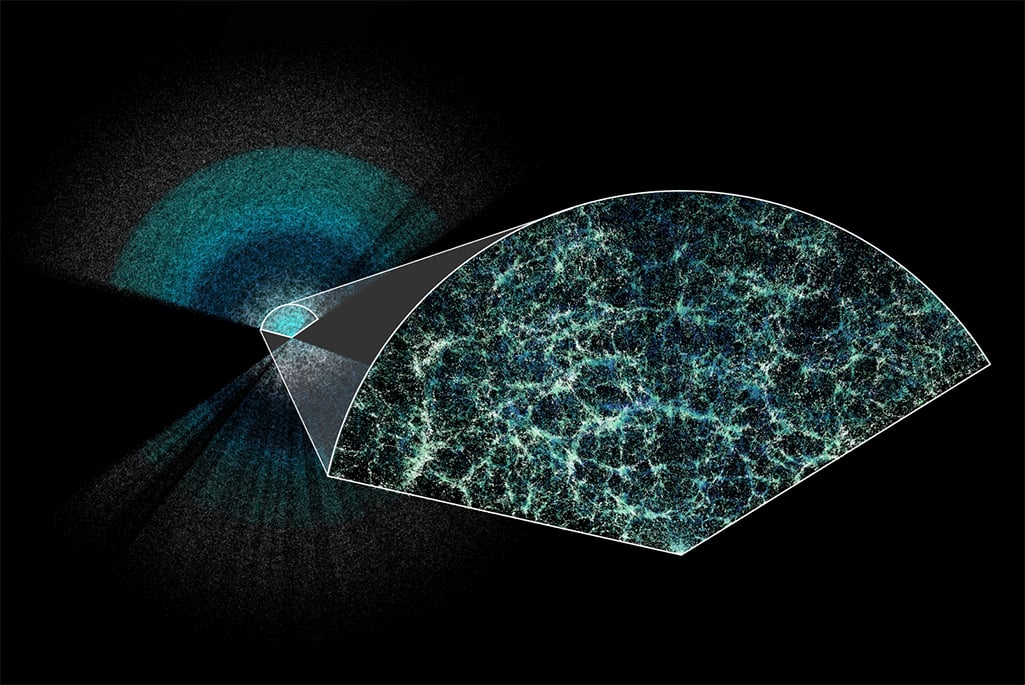
The debate has gained momentum following the release of the second data batch from the Dark Energy Spectroscopic Instrument (DESI), known as DR2. Previous studies identified a mismatch between DESI’s galaxy maps and the Cosmic Microwave Background (CMB), remnants of the Big Bang. One hypothesis is that dark energy might be “evolving,” either intensifying or diminishing over billions of years.
Challenging the Narrative
Dr. Turyshev cautions against jumping to conclusions, emphasizing that extraordinary claims require extraordinary evidence. He highlights a potential measurement error that could explain the disconnect between DESI DR2 and the CMB. If supernovae measurements are off by even 0.02 magnitudes, it could account for the discrepancy. Supernovae are crucial for distance measurements at cosmological scales, and Dr. Turyshev, along with other astrophysicists, questions whether current telescopes can achieve the necessary precision.
The Role of Cosmic Rulers
Another potential source of error is the “cosmic ruler” used in these calculations. Known as the “sound horizon,” it measures the distance a clump of matter would travel from its starting point at the speed of sound in the early universe’s hot plasma. These waves, called Baryon Acoustic Oscillations, lasted for approximately 380,000 years before the universe cooled enough for atoms to form, effectively freezing them in place.
Dr. Turyshev proposes an alternative method, the Alcock-Paczynski (AP) diagnostic, which utilizes a calculated shape of the universe rather than relying on potentially inaccurate measurements from the universe’s early history. This approach could mitigate errors and provide a clearer understanding of dark energy’s behavior.
Exploring New Models
If dark energy continues to fluctuate despite these adjustments, Dr. Turyshev offers potential explanations. He introduces the Late-Transition Interacting Thawer (LTIT) model, which suggests dark energy could “thaw” over time, gradually interacting more with the universe and contributing to its expansion.
Another intriguing theory is the “Phantom Crossing,” where dark energy might become extremely powerful, transitioning into “phantom” energy. If true, this would necessitate a new set of physics, as it doesn’t conform to the standard model.
Looking Forward
As scientists continue to gather evidence on dark energy, new data is emerging. Euclid, another cosmological probe, recently released its first dataset, providing astrophysicists with fresh insights into this mysterious force. Additionally, DESI is actively collecting data for its third release, expected to include data from the first three years of the main survey later this year.
The ongoing research and new findings promise to shed light on dark energy’s true nature, potentially revolutionizing our understanding of the universe. As Dr. Turyshev and his colleagues delve deeper into these mysteries, the scientific community eagerly anticipates the discoveries yet to come.