



Sam Mackaway’s future has been mapped out for as long as he can remember. As a third-generation cattle farmer in Walcha, New South Wales, he is living his dream of raising a family on the farm. “I always wanted my family to grow up on a farm,” he says, reflecting on a vision that has now become reality. The property, spanning 2,800 acres, has been in his family for 27 years and offers a picturesque setting for his children to grow up.
However, with the inheritance of the family business comes the weighty discussions of succession planning, debt management, and the desire to leave a personal mark. According to the Australian Small Business and Family Enterprise Ombudsman, seven out of ten businesses in Australia are family-owned. In the agriculture, forestry, and fishing sectors, family businesses employ 25% of the workforce, underscoring their significance in these industries.
Balancing Tradition and Innovation
While Mackaway’s path seemed predetermined, he was encouraged to gain external experience before returning to the farm. “My brother and I were told to get a trade or go to uni before coming back,” he shares. He pursued a career as an electrician, a skill that has proven valuable in farm operations. “I don’t use it every day, but I use it quite a lot on the farm,” he notes.
Embracing modern technology, Mackaway has integrated GPS and auto-steer systems into his farming practices, a stark contrast to his father’s traditional methods. “I’m driving around in a tractor with a GPS, whereas Dad’s using his eyes,” he explains. Additionally, he is developing a farm management app to streamline processes, such as tracking cattle weights and growth.
“I’m a few weeks away from releasing a farm management app. We do have a fair few headaches just tracking our cattle.”
Legacy and Pressure: A Shared Experience
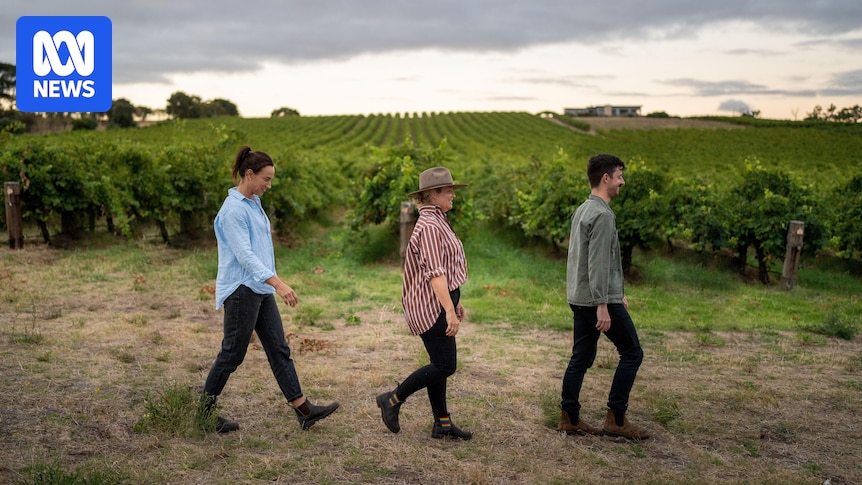
Corrina Wright, the sixth generation at Oliver’s Taranga Vineyards in McLaren Vale, South Australia, echoes similar sentiments about the blend of privilege and pressure in running a family business. “It’s a privilege to continue the legacy, but there’s pressure because you don’t want to be the generation to mess it up,” she says.
Wright’s focus has been on expanding the business from merely selling grapes to establishing their own brand. This transition required adapting to new roles and responsibilities, including marketing and customer engagement. “The generational difference is huge,” she remarks, acknowledging the evolution from a simple farm operation to a multifaceted business.
“Now you’re running a business that can employ a whole pile of different people, not just tractor drivers.”
Strategic Planning for the Future
Every five years, Mackaway and his family engage in succession planning discussions, a process influenced by his father’s experiences. “My grandfather wasn’t ready to retire, which delayed my dad’s plans,” he recalls. This history informs their current approach to ensure a smoother transition.
Despite the complexities, family support has been instrumental in managing the financial burdens of expansion. “As long as we’re happy to all work together, we can get that debt down a lot quicker,” Mackaway explains. This collaborative effort is crucial for sustaining the business and preparing it for future generations.
Wright also emphasizes the importance of having external advisers to maintain the business’s vision. Looking ahead, she is eager to create opportunities for future family members, noting that roles within the business have diversified beyond traditional farming tasks. Her daughter, already involved in the company, represents the potential for continued family involvement.
“Her daughter is already working for the company one day a week.”
Meanwhile, for Mackaway, the prospect of a fourth generation joining the family business remains uncertain, but the foundation laid today will undoubtedly shape its future.