


An international team of researchers, co-led by a scientist from ETH Zurich, has successfully drilled the longest sediment core ever retrieved from beneath an ice sheet in West Antarctica. This groundbreaking discovery, which spans millions of years of climate history, promises to enhance predictions about the West Antarctic Ice Sheet’s response to ongoing global warming.
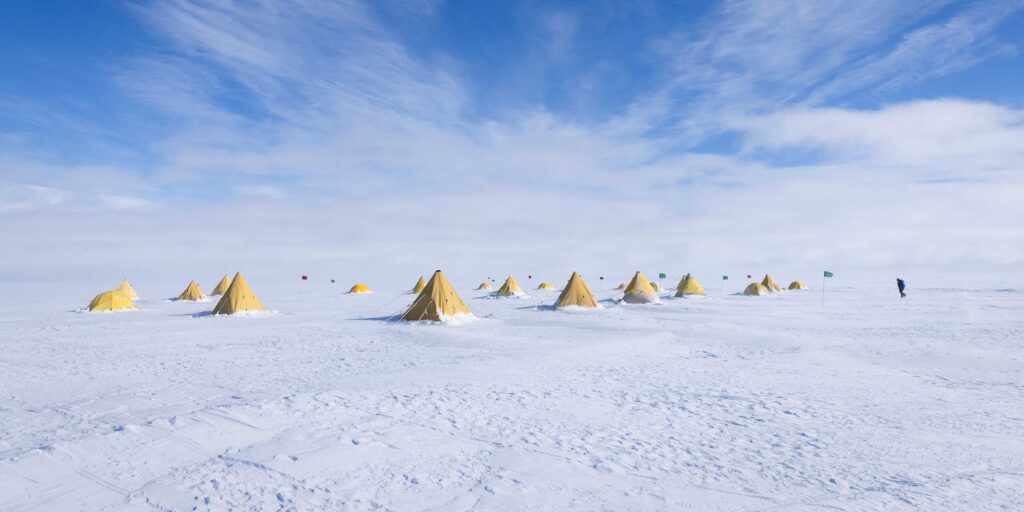
The sediment core, measuring an impressive 228 meters, was extracted from beneath the ice at Crary Ice Rise, located about 700 kilometers from the nearest Antarctic research stations. The core contains layers of mud and rock that serve as a geological archive, documenting environmental conditions during past warm periods when the region was partly or entirely ice-free.
Unlocking Climate Secrets Beneath the Ice
The sediment core is a product of the international SWAIS2C project, which aims to understand the sensitivity of the West Antarctic Ice Sheet to a 2°C temperature rise. The core’s layers are believed to span the past 23 million years, offering direct evidence of how the ice-sheet margin behaved during earlier warm intervals.
“This record will give us critical insights about how the West Antarctic Ice Sheet and Ross Ice Shelf is likely to respond to temperatures above 2°C,” says Huw Horgan, SWAIS2C Co-Chief Scientist from Te Herenga Waka – Victoria University of Wellington, ETH Zurich, and WSL. Initial analysis suggests that some periods recorded in the core experienced global average temperatures significantly higher than 2°C above pre-industrial levels.
Reconstructing Past Climate Conditions
As the team drilled through the ice, they encountered a variety of sediment types, from fine-grained muds to firmer gravels. These findings indicate that the area, now covered by thick ice, was once an open ocean. The presence of shell fragments and marine organism remains suggests that parts of the region were ice-free, supporting theories of past retreats of the Ross Ice Shelf and potential collapses of the West Antarctic Ice Sheet.
Determining the timing and environmental factors behind these retreats is a key focus for the SWAIS2C team. Molly Patterson, Co-Chief Scientist and Professor of Geology at Binghamton University, USA, emphasizes the importance of understanding these past events to predict future changes.
Overcoming Challenges to Achieve a Scientific Breakthrough
The successful extraction of the sediment core marks a significant achievement, especially after two previous drilling attempts were thwarted by technical challenges. The team of 29 scientists, drillers, engineers, and polar specialists worked tirelessly in shifts, using a custom-designed drilling system to reach their target depth.
“To our knowledge, the longest sediment cores previously drilled under an ice sheet are less than ten meters. We exceeded our target of 200 meters. This is Antarctic frontier science,” says Patterson. The team employed a hot-water drill to melt through 523 meters of ice before lowering over 1300 meters of riser and drill string pipe to access the sediment.
Implications for Future Climate Predictions
If the West Antarctic Ice Sheet were to melt completely, global sea levels could rise by four to five meters. Until now, projections relied mainly on satellite observations and geological records from areas adjacent to the ice sheet. The new core provides a more comprehensive record of past warm periods, crucial for refining these predictions.
Horgan expresses optimism about the project’s future: “Our multi-disciplinary international team is already collaborating to unravel the climate secrets hidden in the core. With our drilling system having been put to the test under these tough Antarctic conditions and passing with flying colours, we’re looking ahead to plan future drilling to continue our mission to learn more about the sensitivity of the West Antarctic Ice Sheet to global warming.”
Looking Forward: Next Steps in Antarctic Research
The team is already planning future drilling projects to expand their understanding of the West Antarctic Ice Sheet’s response to climate change. The insights gained from this record-breaking core will be instrumental in preparing for the impacts of global warming.
This article is based on a media release from the SWAIS2C project, edited for clarity and length.